Freshwater Bullheads(With Pics)

Paradise3

Fish Aficionado
Joined
Jan 13, 2010
Messages
4,828
Reaction score
4
Points
38
Location
GB
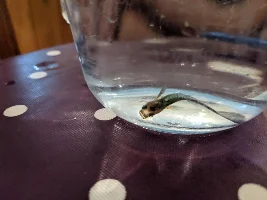
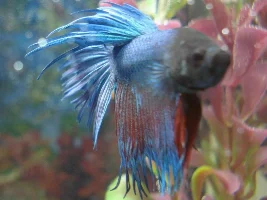
How big do they get? I did abit of research i had to get a pic of the ones i mean, because there is a bullhead catfish aswell.
Here's the pics.
I think they are also named millers?
bullhead.jpg

bullhead1.jpg


Any advise on them is brilliant.I want to know how big they get beause i would like to see if i can have my custom built tank made the right dimensions for them.

~AJ~
 
i dont know nothing about fresh water bullheads but the us record is 7lb 70z so thats gotta be a mega tank ur haveing biult .
 
bullheads are cold water river fish found in the UK so unless your tank is a cold water tank i cant see them enjoying their time in it.....
 
Cottus gobio" Ive never even looked into keeping native freshwater fish, there is a fish shop in dorset which has a native tank inside, the fileration is very fast as most of of what i have read is they need very fast flowing well oxygenated water,and obviously the water temp in the uk is pretty cool, id imagine you'd keep like a sub tropical species..like my channa where the temp changes as room gets warmer,as does are seasons..

Occurs in freshwater streams, rivers and lakes with hard stony substrates and shows a preference for fast flowing, shallow water bodies
 
Cottus gobio has various names including miller's thumb, but I'm not sure precisely why. In medieval times the "miller's thumb" was proverbial and mentioned, for example, by Chaucer. But how that got connected to this little fish is unknown to me.

Maximum length is less than 20 cm, often half that. Usually found in clean, clear brooks with a sandy or gravelly substrate rather than silt or mud. Feeds on small fish and invertebrates. Like a lot of fish from clean streams and brooks, this fish is a lot less common now than it once was. It is tolerant of slightly brackish water, which is good to know if you need to treat for whitespot or fungus.

The excellent Magri MacMahon in his classic book on British fish, Fishlore, reports that Cottus gobio is easy to keep and hardy, though it needs live foods, will eat small tankmates, and in common with other coldwater fish should be kept relatively cool. I'd try to keep the tank below 18 C in summer, and more like 15 C if at all possible. Weaning it onto wet-frozen foods should be doable, especially if you use favoured foods such as bloodworms, but earthworms and river shrimps may be needed initially.

Cheers, Neale

How big do they get? I did abit of research i had to get a pic of the ones i mean, because there is a bullhead catfish aswell.
I think they are also named millers?
 
Very informative Nmonks :good: do you happen to know which fish from our native waterways are possible to keep in home aqauriums?
Would be very nice to have a native tank, but i understand it can prove quite difficult,well oxygenated fast flowing water,id imagine minnows/stickleback/dace? what others could prove a nice display?just intrested thats all
 
Native from British waterways is the shoppingus trollias. They are very metalic.
 
Sticklebacks are certainly fun but highly aggressive, so they have to be kept on their own. They've very hardy, and I've kept them indoors several times. The males are gorgeous when spawning, almost like coral reef fish!

Minnows are easy too, but sensitive to low oxygen and high water temperature, so you need a cold room, like an unheated basement, to keep them successfully. On the other hand, crucian carp, common carp and especially tench are generally easy to keep. Tench are incredibly tough, and they're also sold in aquarium shops, usually as pond fish. All three species tolerate room temperature well. Bream, dace and roach will also do well, though they're a bit more sensitive to warm water, so you'll need to watch them in summer. All these are cyprinids and will eat just about anything, much like goldfish. Some are fairly big fish, and most need to be kept in small groups or schools, so choose wisely.

Perch and ruffe do well in aquaria, but they're predators, and need live, fresh or wet-frozen foods, at least to begin with. Both are territorial when mature, and tend to be quite hard on their tankmates unless the aquarium is very big.

I've seen pike kept in aquaria, and they're fairly robust, but obviously feeding presents some challenges here since they really only go for live foods, and since minnows and cyprinids generally contain thiaminase, you can quickly end up with vitamin deficiency problems. There is some evidence from wild pike populations that pike populations suffer health problems if the only prey available to them are those containing thiaminase.

Bitterling do very well in aquaria. They aren't native to the UK but several species are traded periodically, and these could be kept as dither fish for non-predatory native species. Likewise rosy-red minnows would work well too. If water quality was good, you might even consider the bearded corydoras Scleromystax barbatus, a species happier at room temperature than in a tropical aquarium. The black-banded sunfish, Enneacanthus chaetodon, is a beautiful North American fish for unheated tanks. It's delicate though, and needs soft water to do well, so approach with caution. On the other hand, the standard weather loach is a hardy and easy addition to any unheated tank. Keep it in groups for best results.

Various sturgeons are offered in the trade. These are poor choices because they get too big and are too sensitive to high water temperatures to do well indoors.

Cheers, Neale

Very informative Nmonks :good: do you happen to know which fish from our native waterways are possible to keep in home aqauriums?
Would be very nice to have a native tank, but i understand it can prove quite difficult,well oxygenated fast flowing water,id imagine minnows/stickleback/dace? what others could prove a nice display?just intrested thats all

 
Sticklebacks are certainly fun but highly aggressive, so they have to be kept on their own. They've very hardy, and I've kept them indoors several times. The males are gorgeous when spawning, almost like coral reef fish!

Minnows are easy too, but sensitive to low oxygen and high water temperature, so you need a cold room, like an unheated basement, to keep them successfully. On the other hand, crucian carp, common carp and especially tench are generally easy to keep. Tench are incredibly tough, and they're also sold in aquarium shops, usually as pond fish. All three species tolerate room temperature well. Bream, dace and roach will also do well, though they're a bit more sensitive to warm water, so you'll need to watch them in summer. All these are cyprinids and will eat just about anything, much like goldfish. Some are fairly big fish, and most need to be kept in small groups or schools, so choose wisely.

Perch and ruffe do well in aquaria, but they're predators, and need live, fresh or wet-frozen foods, at least to begin with. Both are territorial when mature, and tend to be quite hard on their tankmates unless the aquarium is very big.

I've seen pike kept in aquaria, and they're fairly robust, but obviously feeding presents some challenges here since they really only go for live foods, and since minnows and cyprinids generally contain thiaminase, you can quickly end up with vitamin deficiency problems. There is some evidence from wild pike populations that pike populations suffer health problems if the only prey available to them are those containing thiaminase.

Bitterling do very well in aquaria. They aren't native to the UK but several species are traded periodically, and these could be kept as dither fish for non-predatory native species. Likewise rosy-red minnows would work well too. If water quality was good, you might even consider the bearded corydoras Scleromystax barbatus, a species happier at room temperature than in a tropical aquarium. The black-banded sunfish, Enneacanthus chaetodon, is a beautiful North American fish for unheated tanks. It's delicate though, and needs soft water to do well, so approach with caution. On the other hand, the standard weather loach is a hardy and easy addition to any unheated tank. Keep it in groups for best results.

Various sturgeons are offered in the trade. These are poor choices because they get too big and are too sensitive to high water temperatures to do well indoors.

Cheers, Neale

Very informative Nmonks :good: do you happen to know which fish from our native waterways are possible to keep in home aqauriums?
Would be very nice to have a native tank, but i understand it can prove quite difficult,well oxygenated fast flowing water,id imagine minnows/stickleback/dace? what others could prove a nice display?just intrested thats all

Thankyou for the infomation, my sister has asked me if i can help her and the boyfriend build a pond in the garden,were looking at having a raised pond,but i feel this may get warm in the summer months as apposed to a sunken pond, but this infomation might be good to have some smaller varietys of uk natives..
 
Does that mean that if i get a big aquarium i would probably(probably not) be able to keep 1? I would be able to feed it live foods because i breed guppies and i will soon be breeding mollies as well. So i could pop a few in everyday for it to eat and chase around. 20cm is about 8" isn't it? So would one fit in a 3 or 4 ft tank? Like i said i will be having the tank custom built after i find somewhere to get one.

~AJ~
 
How about rudd?I have Golden Rudd- beautiful shoaling fish pale gold with red fins and tails. Do well outdoors most of the year though I brought mine indoors and kept them at 12-14 degrees in Winter.
 
20 cm is 7.5 inches. That is a big fish. A fish that size would require a large tank for routine maintenance. As a practical matter, keeping enough small fish to serve as lunch for the larger fish would be quite difficult. That means that you will frequently be paying a visit to the LFS to buy fish suitable to use as food. That also means that any resolution to this issue must be placed on hold until then transfer of fish has actually happened.
 

I think probably a 48"x24"x24"? If i build up a good enough stock of adult guppies and mollies using 2 different tanks to separate males and females before i get the fish itself, i could just use them and keep their parents breeding so i would have a constant supply of food.

Missy x.
 
7.5" is this big.
____________________________________________
I think probably a 48"x24"x24"? If i build up a good enough stock of adult guppies and mollies using 2 different tanks to separate males and females before i get the fish itself, i could just use them and keep their parents breeding so i would have a constant supply of food.

Missy x.
i dont think the guppy fry are the issue...

its a cold water fish that requires fast flow, so unless this is how you plan to set up your tank then i would say give it a miss.
 
Quite right. Maintaining coldwater fish in tropical tanks isn't going to work. If the tank gets much above 15 C, the fish will become stressed and eventually die. It's all to do with the solubility of oxygen as a function of water temperature. The warmer the water, the less oxygen it contains. That's fine for tropical fish used to such conditions, but coldwater fish are not so adapted, and anyone who's walked along a canal during a heat wave will have seen the gasping and often dead fish at the surface.

Cheers, Neale

i dont think the guppy fry are the issue...
its a cold water fish that requires fast flow, so unless this is how you plan to set up your tank then i would say give it a miss.
 

Most reactions

Back
Top