Tropical Community Tanks

kelseybelsey1013

New Member
Joined
Feb 27, 2008
Messages
25
Reaction score
0
Points
0
I have a Tropical Community tank (whootwhoot!), and currently am looking on expanding my species of fish. Check my signature for a listing; I can house a lot more, am I correct? I have a 55g, Fluval4plus Filter, Some really good brand of heater (lol), river-rock as substrate, and live plants (with CO2 system & lighting, not to worry!). I heard rule of thumb is 1 inch a fish per gallon, and I have all fairly small fish apart from maybe the molly and platies (and can't forget that QUICKLY GROWING PLEC!!), so, I need some more fish. I like a lot of color, but ofcourse, not dyed, and I want something peaceful. I am friends with a very very experienced fishy friend, and I am considering getting another 75g and filling it with Discus. Oooh! (: Does anyone know where to get some? Anyways...back to my current tank. I want gourami's, not only because they are beautiful and compatible...but because they eat Hydra's (yaya!)..although I don't even think I have any, but w/e. They're pretty! Haha. And I am interested in getting more loaches...I have a Yo-Yo but it's pretty lonely, and I REALLY REALLY want Angelfish. I know a place that sells them really small and I've always had good experiences with them; but I was fairly unknowledgable when buying them and didn't even test the water once. Even still, they lasted amazingly long for such bad ammonia! I now have cycled my tank and test it once or twice a day and all levels are perfecto!
Are Angels and Gourami's a good idea?
Any other tropical wonders to search for?
***ALSO: Are glowlight danios (the brightly colored pink and yellow and orange zebras) dyed?!
Thanks for the help!
 
There are a lot of community fish you could add. Tetras, danios, some types of barbs, corys, loaches, ranibows, rasboras, guppies, etc. Angel fish should be fine also although the tank may not be large enough once they get bigger.

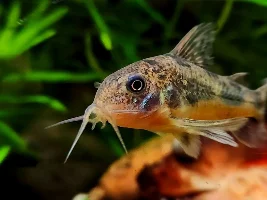
You have a couple compatibility issues with the fish you already have though. Mollies and the flounder would really prefer salt in their water and the flounder probably needs a brackish tank. It may not fair well in fresh water. The other fish however, won't do well with the salt. The hatchetfish, tetras, danios corys and botia all need to be in groups of at least 3 and preferably 5 or more.

Glowlight danios are not dyed. They are genetically engineered.
 
I would get a couple angels in the least. That way if your guppies or platies breed you won't have problems ridding yourself of the babies. Unless you have some really good hiders. You are going to want some fry-eaters or you may find yoursel;f with guppy/platy overload. I am just assuming you do not have all males but I could easily be wrong.
 
Before you add any new fish i would get more of the fish you have.
Danios, cories, hatchetfish, tetras
and
botia (depending on type)
are all schooling fish and would be much more comforatable and happy if they were in groups of atleast 3 preferable 5+
 
Before you add any new fish i would get more of the fish you have.
Danios, cories, hatchetfish, tetras
and
botia (depending on type)
are all schooling fish and would be much more comforatable and happy if they were in groups of atleast 3 preferable 5+


Ditto that.
As rdd already said.. glolight danios are genetically altered, not dyed.
 
Thank you so much!
I'll add two more hatchets,
One clown loach and one chain loach,
2 Black or white skirt tetras
-edit- 2 glowlight danios
Anything else?
Also, what other species of tetra would be good with mine?!
Thanks for the help everyone!!!
PS: There's a loach called gold duli or something? It's long and it's a part of the goldfish community...would it be O.K for a tropical community?
Pic below:
DojoLoachGoldWFLo_Ap4A.jpg
 
The pic you have is a coldwater weather loach (or also called dojo loach) The commonly available species is best suited to much cooler water conditions that tropicals need. I would suggest getting at least 2 of the clown loaches, they will interact with your other loaches to an extent but they do much better being with their own kind.

Getting the right number of each species is just as important as getting compatible fish, e.g. shoaling species need to be kept in groups not pairs or singularly.
And as said you will need to rehome the flounder, or set up a brackish tank for it
 
A few of your current fish need to be in groups for security and wellbeing.

I suggest you get some more danios, some more corys and some more hatchetfish.


- Genesis
 
Eh..I can't exactly "rehome" my flounder. It's supposed to be Freshwater, that's in it's name. Plus, it's just more suited to brackish conditions. It's a completely different breed then those found in marine enviroments, otherwise it'd of died by now, and it'd appear much lighter and grow much bigger. It is fine for now, and the pet store had it in fresh water, and I'm not made of money. I did quite a bit of research. Although I appreciate your opinion, I did infact get my background information and aquarium salt is added as needed anyway. Thanks, though. Do you own a flounder?
-x-
Also, I will look into getting more fish, however, if you look on the "Tropical Emergencies" section, I'd just gone through an ammonia spike, and so...better wait, am I right?
(Ammo is at 1ppm!)
-x-
THANKS FOR EVERYONE'S ADVICE!
PS: I am not trying to offend you, Davo, and you may be correct! I am just gonna stick with my gut and my research for now :good:
 
Thank you so much!
I'll add two more hatchets,
One clown loach and one chain loach,
2 Black or white skirt tetras
-edit- 2 glowlight danios
Anything else?
Also, what other species of tetra would be good with mine?!
Actually, you need to add the same species you already have. Adding a chain loach and a clown loach will just raise the number of loaches that need tank mates from 1 to 3. Same goes for the tetras although I would not buy any more fruit tetras. Those are actually dyed fish. They are injected with dye to give them their color. The color will fade and they will live a much shortened life. You really need to get a total of 5 of the botias and 5 or more of either the black skirt or white skirt tetras but not a cobination of 5. Same goes for the danios. If what you have is glowlights, get more of those but if they aren't get the same thing you already have.

Eh..I can't exactly "rehome" my flounder. It's supposed to be Freshwater, that's in it's name. Plus, it's just more suited to brackish conditions. It's a completely different breed then those found in marine enviroments, otherwise it'd of died by now, and it'd appear much lighter and grow much bigger. It is fine for now, and the pet store had it in fresh water, and I'm not made of money. I did quite a bit of research. Although I appreciate your opinion, I did infact get my background information and aquarium salt is added as needed anyway. Thanks, though. Do you own a flounder?
-x-
Also, I will look into getting more fish, however, if you look on the "Tropical Emergencies" section, I'd just gone through an ammonia spike, and so...better wait, am I right?
(Ammo is at 1ppm!)
-x-
THANKS FOR EVERYONE'S ADVICE!
PS: I am not trying to offend you, Davo, and you may be correct! I am just gonna stick with my gut and my research for now :good:
I do not own a flounder but do know that they really need to be in a brackish tank and that is one of the reasons I don't have one. Here is the species profile on them, written by someone that has kept them and has first hand knowledge of them. And the salt you are adding (are you adding marine salt) for the flounder is not good for the other freshwater fish. Below is a great post by Bignose about salt and freshwater fish.

This question comes up quite a lot, and here's my same response every time. silverchild, I do hope you set aside and take the time to read through all this... there is some very good information in these links and texts I am going to post:

There are several good threads on salt going around, please read through these, they'll give you all the reasons against salt.

[URL="http://www.fishforums.net/content/Tropical-Discussion/210955/http-www-fishforums-net-index-php-showtopic-210955/"]http://www.fishforums.net/content/Tropical-Discussion/210955/http-www-fishforums-net-index-php-showtopic-210955/[/URL]
[URL="http://www.fishforums.net/content/Tropical-Discussion/211791/http-www-fishforums-net-index-php-showtopic-211791/"]http://www.fishforums.net/content/Tropical-Discussion/211791/http-www-fishforums-net-index-php-showtopic-211791/[/URL]
[URL="http://www.fishforums.net/content/Tropical-Discussion/168186/http-www-fishforums-net-index-php-showtopic-168186/"]http://www.fishforums.net/content/Tropical-Discussion/168186/http-www-fishforums-net-index-php-showtopic-168186/[/URL]
[URL="http://www.fishforums.net/content/Tropical-Discussion/155280/http-www-fishforums-net-index-php-showtopic-155280/"]http://www.fishforums.net/content/Tropical-Discussion/155280/http-www-fishforums-net-index-php-showtopic-155280/[/URL]
[URL="http://www.fishforums.net/content/Tropical-Discussion/157186/http-www-fishforums-net-index-php-showtopic-157186/"]http://www.fishforums.net/content/Tropical-Discussion/157186/http-www-fishforums-net-index-php-showtopic-157186/[/URL]

and specifically I'll just take a quote from some of my older posts:

Primary freshwater fishes are those that have remained, as far as we can tell from the fossil record, in fresh waters throughout their evolutionary heritage. Fishes that fall into this category include Characins, Carps and Catfishes.

Secondary freshwater fishes are those that had marine ancestors at some point in past time, but which moved into freshwater in order to occupy various niches. Cichlids are an example of secondary freshwater fishes - their nearest relatives are the marine Damselfishes of the Family Pomacentridae, and it's highly likely that both Families shared a common (and marine) ancestor.

Consequently, the secondary freshwater fishes still have at least some degree of osmoregulatory capacity for dealing with salt in the water, while the primary freshwater fishes never evolved it in the first place. So, placing primary freshwater fishes into water containing salt is a bad idea, and even modest amounts will kill them. Secondary freshwater fishes, on the other hand, can tolerate small amounts of salt, and indeed some members of secondarily freshwater Families are brackish in nature - the Cichlid fish Etroplus suratensis springs to mind as one example. Cyprinodontiformes also fall into this category - both the egg-laying Cyprinodontidae and the live-bearing Poeciliidae are also secondarily freshwater, some of the latter Family being fully brackish in the wild (indeed, the Giant Sailfin Molly, Poecilia vivipara, is fully euryhaline, and can live in fully marine water, as specimens captured in seawater off the Yucatan Peninsula in Mexico testify eloquently).

Quite simply put, if your aquarium contains any primary freshwater fishes, do NOT add salt, as those fishes will suffer considerable stress if exposed to salt, and may even die. Even in the case of secondarily freshwater fishes, salt is only a good idea if the fishes concerned are KNOWN to inhabit brackish waters in the wild.

Most fishes fall into the category of being stenohaline, namely, they are either freshwater or fully marine. These fishes should only be exposed to the kind of water in which they occur in the wild with respect to salt content. Euryhaline fishes, that can migrate with some degree of freedom between freshwater, brackish and fully marine environments, are much fewer in number, and tend to be conspicuous in this regard when encountered in the textbooks - fishes such as Scats, Monos, Therapon jarbua, velifera Mollies and one or two of the Puffer Fishes are notable for this. Within the euryhaline division, there are those that can migrate more or less at will, and those that do so developmentally - the Puffer Fish Tetraodon nigroviridis is developmentally euryhaline, spending its juvenile stages in freshwater before migrating at a steady pace to increasingly saline waters until, as adults, they are strongly brackish or fully marine fishes. Once again, and I cannot stress this enough, it pays to do the research and find out what your fish is!

The main point is that many fish evolved in an a very low-salt environment and do not have the physical mechanisms to handle salt. Will it kill them immediately... No. But, it puts a significant amount of additional stress on the fish, with all the additional problems extra stress lead to: increased susceptibility to disease, shorter lifespan, less color, less likely to spawn, etc. If you have fish that do have the capabilities to deal with salt, it won't be as bad -- though if everything is healthy and fine now, why the need for a change? But, if you have fish that are intolerant of salt, it will lead to problems down the road.

And you definitely don't need to add any more fish until your ammonia and nitrite are both at zero for a full week, especially with the flounder in the tank. A reading of 1 ppm of ammonia is very toxic. You should be doing water changes as needed to keep the ammonia and nitrite levels at .25 ppm or below until they finally drop to zero. The flounder is unlikely to make it through the cycling process with levels that high. The angels, gouramis and corys are also not going to fair well in an uncycled tank. Even if they make it, that will have definitely suffered damage and harm that will shorten their life span.
 
The ammonia stayed at one for about an hour. I changed the water afterward. They will survive with frequent water changes. Also the flounders are generally hardy. My friends had experience with them for 8 years. In a freshwater tank, thanks.
-x-
I'll add more fish later, but Danios are Danios, why do they have to be the same color and everything to get more to make them happy? :dunno:
-x-
My tank IS cycling with Hagen Cycle Shmikel. Is that a good choice?!

Thanks again!(:
 
Cycle and the other bacteria in a bottle products that you buy off the shelf are pretty useless. The bacteria can't survive the heat and cold they are exposed to over time. The only products that seem to work are Bio-Spira in the US and Bactinettes in the UK. They are both refrigerated and have a relatively short shelf life.
 

Most reactions

Back
Top