New tank set up ideas - BN Pelco & Guppies

Jellybean123

New Member
Joined
Jan 5, 2023
Messages
44
Reaction score
4
Points
8
Location
UK
Hi,
I am looking to set up a new large tank I currently have two tanks and am looking to get a large one so I just have one.
My current tanks :
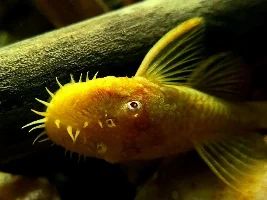
One a single BN Pelco male
Two has has one BN Pelco female and one BN Pelco juvenile, 12 guppies and 6 assassin snails.
Both tank have drift wood, floating plans, caves etc.

The reason I have decided to do this is because I did have a BN Pleco pair with the male unfortunately the female died during spawning. It’s been two months and I now can’t get the PH of the tank under control despite regular water changes, PH lowering chemicals, almond leaves, using bottled water with lower PH if it drop it’s then rises again. Oddly the other tank uses the same water source and has less water changes despite having more fish and is still Lower PH and more stable. I am wondering if something in there is leaching making PH rise. I wanted to put my other female in to breed but this isn’t possible with the PH instability and there isn’t enough room in tank two for the male.

So I have decided to get a new tank. I will continue to try get a lower PH in the other tank while the new one cycles.
I will be getting a 146 liters tank it comes with a filter and light. Will also get a new heater and airstones (how many for this set up?) .

I am looking for a minimal maintenance tank I.e. no complexed plant care requirements that will keep a stable environment as I want my pelcos to breed.

A friend has suggested creating a sump in the cabinet, I thought this was a saltwater thing but he said he heard it can help with large tanks ? Has anyone had any experience ?

I am thinking of doing a sand base but am undecided on how best to set up the rest . I will want to add some of the floating plants, alongside driftwood , moss balls and Pelco caves . But what else should I include or do . Maybe some low care plant suggestion.

Open to ideas and recommendations.

I will keep tank two for if we get any pelco babies in future . TIA
 
While many people do this bn are fundamentally imcompatible with guppies given that guppies love hard water and bn prefer soft acidic water.

You should NOT focus on PH which is largely a by product of water condition. I wish people new to aquariums had never been introduced to PH. What is important is kh/gh - carbonate and general hardness of the water. There is a correlation between kh and ph and at the extreme level can impact the type of bacteria that lives in the water. This is more relevant to wc fishes as how it relates to the fishes immunity but fishes that prefer soft water can have issues with minerals building up in the fish organs causing long term health issues. Conversely some fishes require higher concentration of minerals for growth reasons. Isn't evolution confusing how different animals learn to live in the environment they are given.

Instead of trying to 'lower ph' you should measure kh/gh/tds (tds is a crude approxmation of kh+gh) and go from there. The only sane way to lower kh/gh is via distill or ro water. If they are nativly high you should just accept that and focus on fish that appreciate the higher concentration of minerals. While most people with high mineral content tend to focus on lake african or live bearer fishes there are also a huge selection of very interesting fishes from central america that do not get enough attention. The only real negative of these fishes is they prefer lower temperatures (if you live in a warm climate) and some (not all) can be quite aggressive.

The same is true with regards to plants. There are some plants (mostly crypts) that love hard water and other that will pretty much require very soft acidic water. While most commonly sold plants can live in both hard and soft water they were never really thrive unless they are in the correct type of water.
 
What is the current pH, and more importantly, what is the water hardness? Trying to control pH with additives, without getting to the root source of the current pH (mineral content in the source water) simply stresses fish and solves nothing.

For any fish researching you'd want to do, Ancistrus are Ancistrus. Plecos are a different group of fish, tagged after Hypostomus plecostomus, a large, messy and common fish. Ancistrus in general are smaller and infinitely nicer fish. But searching for info on them via the word "pleco" is going to get you the worst, mixed up info.

I wouldn't worry about a sump for a tank that size. It may look huge after having smaller ones, but it can be adequately filtered by standard canisters or hang on the back filters.

I've bred bristlenoses. I think they're probably Ancistrus cirrhosis here, and they just seem to produce young when they feel like it. They're great little fish.

I use no airstones. With good flow from a powered filter, you don't need them at all.
 
Thank you the odd things is all the other parameters stay stable it’s just PH that at 8.2. If we get it down it comes back up very quickly?

The tap water is lower at 7.0. I have also tried distilled water. As the other thank stays at stable at 7.2 I am really unsure what causes.

Yes they are Ancistrus cirrhosis.
What is the current pH, and more importantly, what is the water hardness? Trying to control pH with additives, without getting to the root source of the current pH (mineral content in the source water) simply stresses fish and solves nothing.

For any fish researching you'd want to do, Ancistrus are Ancistrus. Plecos are a different group of fish, tagged after Hypostomus plecostomus, a large, messy and common fish. Ancistrus in general are smaller and infinitely nicer fish. But searching for info on them via the word "pleco" is going to get you the worst, mixed up info.

I wouldn't worry about a sump for a tank that size. It may look huge after having smaller ones, but it can be adequately filtered by standard canisters or hang on the back filters.

I've bred bristlenoses. I think they're probably Ancistrus cirrhosis here, and they just seem to produce young when they feel like it. They're great little fish.

I use no airstones. With good flow from a powered filter, you don't need them at all.
 
Thank you the odd things is all the other parameters stay stable it’s just PH that at 8.2. If we get it down it comes back up very quickly?

The tap water is lower at 7.0. I have also tried distilled water. As the other thank stays at stable at 7.2 I am really unsure what causes.
This likely means something in your tank is leaching mineral. It could be the substrate or something else you placed in the aquarium. Many substrates are designed for lake african fishes or coral and will leach (release) carbonate (kh). Conversely many rocks have calcium or magnesium veins and will leach such into the water.
 
I rarely measure pH anymore. What I do check constantly as a fish breeder is hardness, whether it's measured via hardness test kits, tds, or conductivity. The mineral content of the water causes the pH, as a general rule. pH is just an indicator of possible water hardness, or not.
 
I rarely measure pH anymore. What I do check constantly as a fish breeder is hardness, whether it's measured via hardness test kits, tds, or conductivity. The mineral content of the water causes the pH, as a general rule. pH is just an indicator of possible water hardness, or not.
This likely means something in your tank is leaching mineral. It could be the substrate or something else you placed in the aquarium. Many substrates are designed for lake african fishes or coral and will leach (release) carbonate (kh). Conversely many rocks have calcium or magnesium veins and will leach such into the water.
My water tests from today including the KH and GH . I have also put some items in buckets of water from the tank to see if anything rose PH the only thing that changed after 4 days was the airstones slightly .
Kh 240
GH 180
Ph 8.4
Ammonia 0
Nitrate 0
Nitrites 0
 
What is tap water KH? If that too is high it will stabilise pH - anything added to lower pH will only have a temporary effect than it will rise again.

Re the tap water pH - is that water that's been freshly run? If yes, can I suggest leaving a glass of water to stand for 24 hours then test the pH. In hard water/high pH areas it is known that water providers often add something to the mains water to prevent limescale building up in the pipes. This chemical dissipates on standing and the pH returns to it's natural level.
 
My water tests from today including the KH and GH . I have also put some items in buckets of water from the tank to see if anything rose PH the only thing that changed after 4 days was the airstones slightly .
Kh 240
GH 180
Ph 8.4
Ammonia 0
Nitrate 0
Nitrites 0
240 is quite high way too high for the fishes you are keeping.
 
I have also put some items in buckets of water from the tank to see if anything rose PH
To do this test, the items should be in buckets of tap water not tank water and there should also be a bucket with just tap water in. This is the control; it gives the baseline to compare the other test results with. Test each bucket as soon as they've been set up and again after several days.
If the pH in the control bucket changes, you know it's the water itself. If the pH in the control bucket changes but one with items in changes more you'll know that item is also having an effect. If the control bucket pH remains constant then something else is changing the pH.
 
STOP measuring PH - measure kh/gh. measure if kh/gh are changing in the buckets. PH is a worthless value for what you are trying to determine.
 

Most reactions

Back
Top