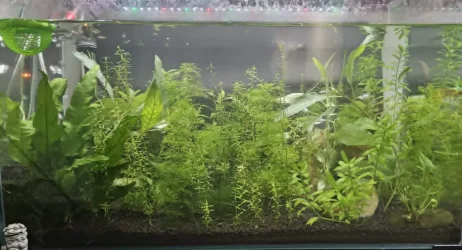
Tank is slowly dying off

Riri

New Member
Joined
Feb 10, 2025
Messages
7
Reaction score
0
Points
1
Location
Australia
Content warning: This is a fairly lengthy post as I wanted to include as much relevant information as possible. It also contains photos of my betta after he passed away, so please don't scroll to the end if you're sensitive to images of deceased fish

My male betta Malcolm X died today and I need help figuring out what caused his death.

I started my first planted tank in February and, after a few months of cycling, added a betta and 11 pygmy corydoras.

The tank is 70L but is filled to around 60L. I test the water every two weeks because the bio-load is so low that I've never had any significant issues with my water parameters. They usually sit around:
  • Temperature 24-26C
  • pH: 6.4–6.6
  • Ammonia: 0 ppm
  • Nitrite: 0 ppm
  • Nitrate: 5–10 ppm
  • GH: 3–5 dGH
  • KH: 0 dKH (it's a planted tank with aquasoil)
For the past three weeks I've noticed a gradual change in my betta's behaviour. He stopped being interested in his usual pellets and would instead just swim around the tank aimlessly. He also seemed to be sleeping more and spending more time near the surface. Throughout this time I never noticed any visible changes to his body, but over the last few days his fins became clamped.

I'm a first-time fish keeper and today I wondered whether low oxygen from insufficient surface agitation could have been the cause. I did my usual water change, added some new plants, cleaned the filter and increased the flow. I was working on the tank for around two hours, although I wasn't constantly disturbing the tank during that time.

When I finished, I noticed he was floating vertically but would occasionally correct himself and swim normally again. Around two hours later I found him dead.

Although I mentioned oxygen as one possible cause, my main concern is that this may instead be a bacterial infection or some other underlying issue.

The reason I'm worried about this is because I've had ongoing problems with my pygmy corys as well. I originally ordered 11 online, but when the box arrived there was nothing on the outside indicating that it contained live fish. Although they were packed well, they seemed very stressed from shipping.

Two died within the first week. Then, over the following two months, the others continued dying off randomly. Two of those deaths I attributed to swim bladder disease because they lost the ability to stay upright, but the rest died without any obvious symptoms.

Of the five I have remaining, one is missing an eye but otherwise appears healthy. Another two have become noticeably rounder, which has me worried they may also have swim bladder issues.

What I'm struggling to understand is why my fish keep dying despite the tank appearing to have suitable conditions for both species. The tank is planted, the water parameters are consistently stable, they're kept at the correct temperature and they're fed an appropriate diet.

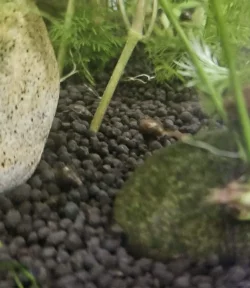
The only other inhabitants are bladder snails that hitchhiked in on some plants I bought. They don't seem to cause any issues apart from occasionally eating the corys' food.

Has anyone experienced something similar? Does this sound like a bacterial or parasitic infection, a problem introduced with the original shipment of corys or could there be something I'm missing about my tank despite the stable water parameters? Is there anything I should do before deciding whether to keep or rehome my remaining fish?

I know five pygmy corys isn't an ideal group size, but after everything that's happened I don't want to introduce any more fish until I understand what's going on. Otherwise, I'm considering rehoming the remaining fish.

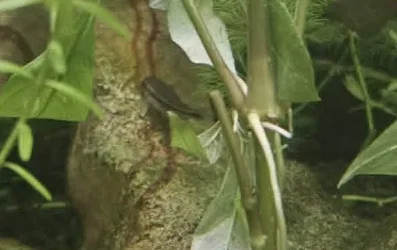
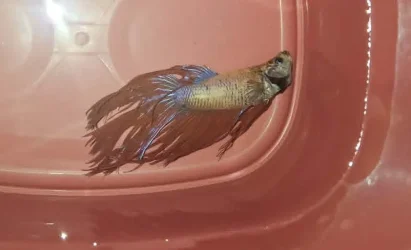
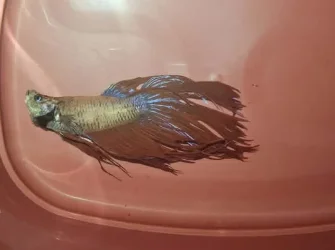
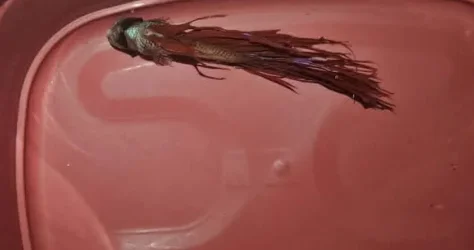
I'll attach photos of the tank, other tankmates and my betta after he passed away for reference.
 

Attachments

  • bladder snails.webp
    bladder snails.webp
    80 KB · Views: 67
  • pygmy cory.webp
    pygmy cory.webp
    28.2 KB · Views: 47
  • side profile 1 .webp
    side profile 1 .webp
    29.5 KB · Views: 41
  • side profile 2.webp
    side profile 2.webp
    27.1 KB · Views: 44
  • underside.webp
    underside.webp
    15.6 KB · Views: 53
  • tank.webp
    tank.webp
    153.6 KB · Views: 49
Two questions i would ask - how old was the fish and how often do you do water changes ? As for the pygmy - with one missing an eye (esp if that happened after you received it) i would suspect the betta had a distinct dislike for them (territorial) which can happened and killed some of them. This is fairly common issue with adding fishes after a betta; though it can be a bit unpredictable.
 
Sorry you lost your betta, looks like he was a lovely one too 💔

With bettas being anabantoid fish (they have a special labyrinth organ that allows them to breathe air from the surface if necessary) low oxygen doesn't sound like a problem to me, especially with all those plants in the tank.
 
Two questions i would ask - how old was the fish and how often do you do water changes ? As for the pygmy - with one missing an eye (esp if that happened after you received it) i would suspect the betta had a distinct dislike for them (territorial) which can happened and killed some of them. This is fairly common issue with adding fishes after a betta; though it can be a bit unpredictable.
I got him around Feb, the place he was from seems to have treated him well he was bought in person and was kept in an individual small tank with filter and adequate lighting. I do water changes every two-three weeks. The tank is heavily planted and parameters have been maintained for about 2.5 months before this happened so I didn't see the need to do water changes more frequently. I also can see your point about the betta killing the corys, he would never chase them during the day but I would notice that he sometimes got territorial at night time.
 
Sorry you lost your betta, looks like he was a lovely one too 💔

With bettas being anabantoid fish (they have a special labyrinth organ that allows them to breathe air from the surface if necessary) low oxygen doesn't sound like a problem to me, especially with all those plants in the tank.
Thanks for the reply he was the best fish :( and it's good to know that the filter wasn't the issue that eases my mind a bit
 
What physical condition was he in? I see he was a crowntail betta so it might have been hard to notice but did you see any tears or signs of fin rot present?

Something we as first timers in the hobby dont realise is the importance of water changes, we think that changing water is only necessary when things are off or nitrates are high etc but actually, regular weekly water changes are the first step into preventing issues arising in the first place.

Its hard to give you the reason why your fish died but a lot of the time, most things originate from poor water quality. The cleaner and fresher we can keep the water, the stronger and healthier our fish are in the long term
 
You gave a lot of info, which was good. The losses weren't good, but I suspect the betta will have died of a bacterial infection, and may have killed some of the corys.

He was an air breather. Their inner ears have become a sort of a lung structure called the labyrinth. So your logical concern about oxygen isn't a worry with that species.

The info missing is the water change routine, which should run at about 30% weekly. Believe it or not, in that sized tank, you had a fairly high stocking level.

I would stay the course and give it a few weeks to see if the corys stabilize before I replaced losses. Will another Betta attack the corys? Most of the time, no, but Bettas in communities can be a gamble. Individual character can be variable...
 
You gave a lot of info, which was good. The losses weren't good, but I suspect the betta will have died of a bacterial infection, and may have killed some of the corys.

He was an air breather. Their inner ears have become a sort of a lung structure called the labyrinth. So your logical concern about oxygen isn't a worry with that species.

The info missing is the water change routine, which should run at about 30% weekly. Believe it or not, in that sized tank, you had a fairly high stocking level.

I would stay the course and give it a few weeks to see if the corys stabilize before I replaced losses. Will another Betta attack the corys? Most of the time, no, but Bettas in communities can be a gamble. Individual character can be variable...
Thanks for the reply.

I wanted to ask how you were able to tell it was likely bacterial, and in your experience whether that usually comes from fish health issues, plants, or other animals introducing pathogens. Also, what would you recommend to help protect the remaining corys from getting sick or stabilise them moving forward?

For water changes, I was doing roughly 25% every 2–3 weeks rather than weekly. I’ll definitely adjust that going forward.

It’s interesting to hear that the stocking may have been high. I did quite a bit of research before setting the tank up and it seemed fairly conservative for a 70L tank, so I’d be interested to know where that guidance comes from. I want to get a better sense of realistic stocking levels for future setups so I can avoid similar issues.
 
It's not the size of the tank which counts for stocking, it's the volume of water. You say it was filled to 60 litres - did you measure that amount or is it estimated by filling the tank to a slightly lower level?
 
Sorry for your losses.
Just another perspective to consider……
Imo, many of the unexplained fish deaths with seemingly healthy tanks/parameters are wrongly blamed on bacteria and parasites. Of course that can and does happen, but don’t rule out viruses…..which, sadly, are indefensible.

I agree it’s not an O2 issue.
Yes….the Corycats could have come with something.

You mentioned having put in new plants with the snails as hitchhikers. I know I will upset some, but that is why I no longer add live plants to my tanks. I think many different pathogens (all three types) are introduced that way into an enclosed environment (aquarium) where such pathogens become concentrated. New fish can also be problematic which is why we try to alleviate with QTing.

Something weird happened with my “what seemed like a perfectly healthy” Cardinal Tetra tank last spring and I had all but two of the 40 die off (a few a day). The Corycats in the tank were unaffected and lived through it wo issues. I kept the two CTs alone with the cats for about 6 weeks, then started slowly adding more CTs. Currently, I have around 28 in the tank with another 12 in QT. Every few years, unexplained deaths happen and one must investigate, use common sense, and continue on. It would be SO cool if such die offs could have the deceased fish autopsied, but that’s not gonna happen anytime soon.

Btw….your knowing the parameters you listed initially is very helpful and important in this hobby. Much can be learned, acted upon, or ruled out from knowing these.
 
For bacterial, I went with the law of averages, and, frankly, that he was a Betta splendens. It seems with them that you either lose them in the timeline you did, or have them for many years. It isn't inbreeding as is often claimed, but good old fashioned disease. Viral is unlikely because of the timelines. Many Bettas suffer from Mycobacteriosis, which is a slow working untreatable bacterial disease they bring from the fishfarms.

Online stocking apps play to what we want, and when we start out, we want more fish. You weren't overstocked, but in 60 litres, you were full. This is purely opinion, and many will disagree with me. I'd suggest you need to be stocked at a level where if life gets crazy, it isn't a disaster to miss a water change.
 
It could also have been age - the picture of him makes him look quite old and betta do not have the longest life span to begin with - if i were to buy a betta my preference would be a young fish hobby bred.
 
Your temp range is a factor as well. 24C is fine for the cories but too cool for the betta. 26C is too warm for the cories for the long haul and just warm enough for the betta. Bettas are best kept at 26C to 28C. It improves their immunity and metabolism. I'd also consider expanding the diet for your next betta by adding frozen (not freeze-dried) foods. A pellet-only diet can cause constipation and bloat which are killers. And as others have stated, increase the water change regimen to weekly not only to maintain parameters but also to reduce the bacterial load.

And welcome!
 
Last edited:
Ah yes...temperature is a good point!
 
What physical condition was he in? I see he was a crowntail betta so it might have been hard to notice but did you see any tears or signs of fin rot present?

Something we as first timers in the hobby dont realise is the importance of water changes, we think that changing water is only necessary when things are off or nitrates are high etc but actually, regular weekly water changes are the first step into preventing issues arising in the first place.

Its hard to give you the reason why your fish died but a lot of the time, most things originate from poor water quality. The cleaner and fresher we can keep the water, the stronger and healthier our fish are in the long term
The day before he passed I noticed he had an issue on his body where it looked like one singular scale was lifted or a tiny grey spot but other than that I never noticed any physical changes.

Disappointing to hear that it could have been the water quality. Again, I read a lot of forums before I got him and most people were saying that in a tank of my size and with that stocking frequent changes weren't necessary. At least I know now :/
 

Most reactions

Back
Top