VioletThePurple

Fish Crazy
Joined
Jul 8, 2022
Messages
316
Reaction score
39
Points
28
Location
US
I started with 9 platies; I'm now down to three. I've had at least one platy die each day, a couple days I lost two in just one day. Heated tank (75F), sponge filter, 20 gallons, lightly planted, over 2 years old. Parameters are as just tested today: Alkalinity 40 mg, ph 7.6, nitrate 0, nitrite 0, ammonia 0, gh 100-250. Symptoms: Lethargy, clamped fins, sudden death. Sometimes sudden death happens without these symptoms; the healthy-looking ones will just collapse. Nothing abnormal observed on the bodies: no spots, abnormal coloring, none of that. Tank mates: Three mystery snails and an assortment of neocardnia shrimp. The deaths had paused for a day, and I thought all the weak fish had died off, but I just had another death today.
 
Nightmare 😟 my first port of call whenever something is 'off' in my tank is a big water change...it seems a bit odd to me to have a zero nitrate reading, sometimes the agent bottles need a really good shaking to get an accurate reading.

What else can you tell us? Any gasping? Is your heater working?
 
How long have you had them? How many of each gender? What has been your water change schedule? I too wonder about a zero nitrate reading in what you describe as a 'lightly planted' tank.
 
Last edited:
Hello Violet. Small tanks don't leave any room for a mistake in tank management. From my limited experience, most tank problems are water related. You must keep the tank water chemistry close to the condition it was when it first came out of the tap. So, large, frequent water changes are a must. Work up to the point you remove and replace at least half the water every two to three days. I think you'll find you keep your fish alive longer.

10
 
..it seems a bit odd to me to have a zero nitrate reading

I too wonder about a zero nitrate reading in what you describe as a 'lightly planted' tank.
I agree with these two people, 0 nitrate does not make sense at all in your case unless you are doing large frequent water changes. This suggests that something is wrong in the testing. As others have mentioned the nitrate test is particularly troublesome because one reagent needs to be thoroughly shaken, I have also personally experienced where even following the shaking guidelines that the test gave invalid results (ie I performed a test on a known concentration of nitrate). Unfortunately, when the nitrate test fails it fails to a value you want to see. Just off the top of my head with your tank description I would expect a nitrate level of at least 5 ppm. As others have mentioned large water changes are likely the best bet now.
 
I’m about to lose my Mickey Mouse platy’s . All that’s left of my original two pairs from December 2024 is two runt males that were born from those . At the peak I had about a dozen and they’ve been croaking slowly but surely . The Endler’s population in the same aquarium is thriving and growing . My only aquarium that isn’t species only is doing it on its own .
 
Nightmare 😟 my first port of call whenever something is 'off' in my tank is a big water change...it seems a bit odd to me to have a zero nitrate reading, sometimes the agent bottles need a really good shaking to get an accurate reading.

What else can you tell us? Any gasping? Is your heater working?
Yes my heater is working. And now my favorite fish is missing. These results were just after a water change. Now my nitrates are 10 ppm. Assuming my favorite fish is dead (most likely atp) I'm now down to two fish and am likely to lose all my platies.
 
I agree with these two people, 0 nitrate does not make sense at all in your case unless you are doing large frequent water changes. This suggests that something is wrong in the testing. As others have mentioned the nitrate test is particularly troublesome because one reagent needs to be thoroughly shaken, I have also personally experienced where even following the shaking guidelines that the test gave invalid results (ie I performed a test on a known concentration of nitrate). Unfortunately, when the nitrate test fails it fails to a value you want to see. Just off the top of my head with your tank description I would expect a nitrate level of at least 5 ppm. As others have mentioned large water changes are likely the best bet now.
I had just done the test after a water change. Now my nitrates are sitting at 10ppm. And still losing fish unfortunately. I only have two left, gonna lose all of them atp and assuming I do, not sure if I'm gonna want to keep platies again
 
Hello Violet. Small tanks don't leave any room for a mistake in tank management. From my limited experience, most tank problems are water related. You must keep the tank water chemistry close to the condition it was when it first came out of the tap. So, large, frequent water changes are a must. Work up to the point you remove and replace at least half the water every two to three days. I think you'll find you keep your fish alive longer.

10
So I should keep doing frequent water changes even though my parameters check out?
 
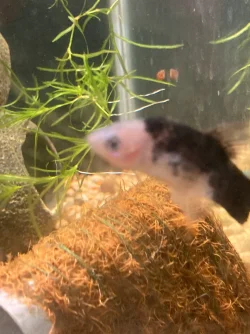
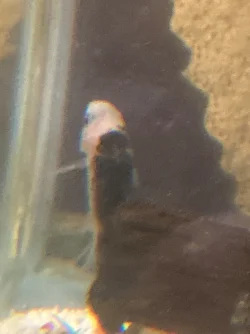
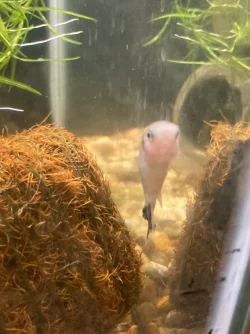
Update: I found the missing platy. He’s alive, but not in good condition. His whole body seems droopy. Can’t really get a good pic of him cause he’s swimming frantically, but this is what I got
 

Attachments

  • IMG_2433.webp
    IMG_2433.webp
    213 KB · Views: 23
  • IMG_2434.webp
    IMG_2434.webp
    129.5 KB · Views: 41
  • IMG_2435.webp
    IMG_2435.webp
    198.6 KB · Views: 27
Update: I found the missing platy. He’s alive, but not in good condition. His whole body seems droopy. Can’t really get a good pic of him cause he’s swimming frantically, but this is what I got
The fish in your photo appears to be what commerce calls a 'panda platy.' Were they all this type---white front half with black posteriorly? If so, they are swordtail crosses and the black areas become cancerous in almost all individuals. That would explain the hollow-belly which would otherwise suggest TB or internal parasites. If they are pandas, there's nothing you can do. This pattern in platy/swordtail crosses has periodically taken the hobby by storm in its various incarnations going back to the legendary red jet swordtail of the 1950s (see below). The strains always die out because the black areas produce melanomas.

The Red Jet swordtail, circa 1957

red jet.webp
 
The fish in your photo appears to be what commerce calls a 'panda platy.' Were they all this type---white front half with black posteriorly? If so, they are swordtail crosses and the black areas become cancerous in almost all individuals. That would explain the hollow-belly which would otherwise suggest TB or internal parasites. If they are pandas, there's nothing you can do. This pattern in platy/swordtail crosses has periodically taken the hobby by storm in its various incarnations going back to the legendary red jet swordtail of the 1950s (see below). The strains always die out because the black areas produce melanomas.

The Red Jet swordtail, circa 1957

View attachment 382593
No, I believe he was the only one of this type. Does TB/internal parasites not show any other symptoms?
 
. Does TB/internal parasites not show any other symptoms?
Wasting away and hollow belly are common to both. Parasites usually produce white stringy poop. TB usually features body sores.

What types/colors were the others? Even if they weren't 'pandas', did they all have black pigment on them?
 
Wasting away and hollow belly are common to both. Parasites usually produce white stringy poop. TB usually features body sores.

What types/colors were the others? Even if they weren't 'pandas', did they all have black pigment on them?
I do think they all had some black pigment on them, yeah. Mickey mouse and red wag
 

Most reactions

Back
Top