CosmicMuffin
New Member
Tank size: 13gal
tank age: 2 years+
pH: 7.0-7.5 ~
ammonia: 0
nitrite: 0
nitrate: normally ~10mg, after 2 weeks without water change - climbs up to 50mg~
kH: n/a (water hard with high chalk content = tons of residues)
gH: n/a (water hard with high chalk content = tons of residues)
tank temp: 24c-26c (75.2F - 79F), currently I keep it at 79F during treatment attempt.
Tap water (not chlorinated, its hard water with ph around 7.5, medium-high carbonate content)
External filter, bacteria established long time ago. Never had a single ammonia spike.
Filter amount is overkill for this size of a tank. (filter designed for 80gal)
I vacuum and refresh water weekly. (30%)
I feed only good quality food which I buy from local breeder.
Hi everyone,
So I basically found 1 long fin bronze cory, took him and put straight into tank...
After 3+ days he was gone.
After 7+ days 1 C. Paleatus died out of nowhere (2+ years old)
After 10+ days 1 C. Sterbai died (2 y old)
After 14+ days my biggest C. Paleatus female died ;( (I still can't accept the fact my Big Momma is gone)
Then I went to shop bought some medication based on metronidazole with some other additives which are not disclaimed (Protosol)
Bough new heater, new termometers (my one was a piece of **** stuck and not actually showing any temperature, same with heater, which was set into 26C, but actual water temperature was 21-20C)
Crazy how I missed this...
Now I treating them, every 48hours I change 30-40% water and add another dose of medication, while totally vacuuming sections of tank to eliminate all the dead pockets and clean from anaerobic bacteria.
Today I found one Albino Paleatus dead..
And the most infuriating thing is that they all die with different symptoms.
My Big Momma swollen completely in few hours, just in the morning she was all happy, in the evening she was double in size, then went upside down and in the morning - gone. (looking like dropsy)
That newcomer died and sinked to the bottom, no swelling or smth.
Paleatus Albino started sinking to the bottom like a rock, in the morning he died, no swelling signs, NO bruises, open wounds, fungal or any other symptoms. Just dropped dead.
Now my 3 Sterbai is a mystery.
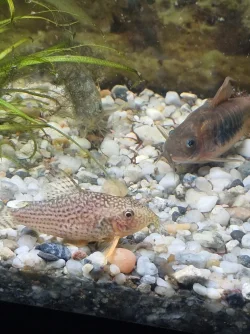
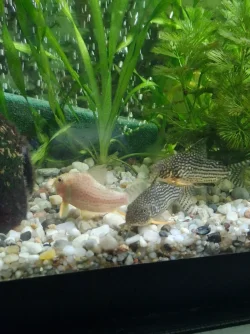
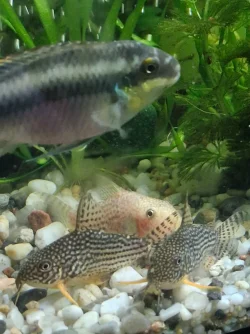
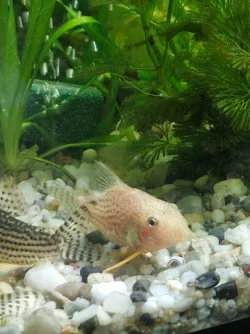
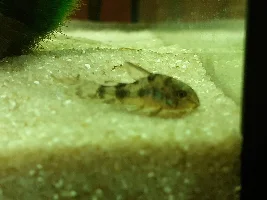
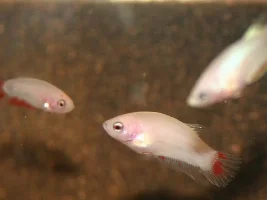
2 of them are completely fine, but 1 female is pale and losing color pigment, currently she looks like albino. (attached photos)
While my 2 bronze cories are doing totally fine, female is happy and chonky, jumping around tank like nothing would happen.
Meanwhile 2 sterbai showing eratic behaviour, tripping around the glass and pale female - just calmy sit in one place. She eats.
And kindergarten of glo-tetras are completely fine, they just chilling / fighting as usually.
Maybe someone can guide me, what the hell did I brought into the tank ?
I blame myself every minute for skipping quarantine of new fish...
How to stop this madness???
Would be more than grateful for any help.