
Struggling to cycle a crashed 30lt tank with two comet goldfish in since forever - need advice?

NinjaZX14

New Member
Joined
Oct 14, 2025
Messages
10
Reaction score
11
Location
Polokwane, South Africa
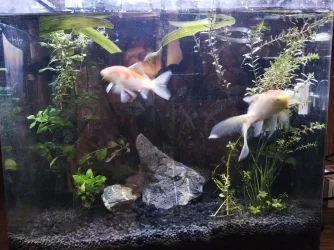
Hi everyone, new at this both fish and forums so please excuse me if I get it all wrong. Had a filter break down while at work. By the time I got home it had already been standing for a couple of hours. Could only get a new filter the following day. By this time the oxygen was a huge issue, bought new filter and an air pump and stone. Added this, and here everything went pear shaped. Been trying to get the balances sorted since the 11th of October but according to all the tests - I am failing. Add Seachem Prime and API Quick Start every day, have done two 30% water changes. Air stone is running full taps. Filter is also going. But the readings stay critical. Have not fed them either. any other advice? Can't afford a new tank right now - then this is also an issue because it would not have cycled yet either??? At my wits end, and between DeepSeek and ChatGPT I'm in trouble.... If one is to trust AI? So, I'm coming to you all for help. Hope you have some guru advice for me. I am very new to this....🐟💨💨 (pH 7.8, Hardness 250, Ammonia Nitrogen 0, Nitrate 10-25 and then 50, Nitrite 1, Total Chlorine 0, Carbonate Root 80, Total Alkalinity 120) these readings were done about an hour ago after a 30% water change and adding the Prime and Quick Start. Also add - they have not been fed in 4 days to try and solve the water issues.
 

Attachments

  • goldfish.jpg
    goldfish.jpg
    286.3 KB · Views: 156
I was hoping someone else would jump in because I didn't want to be the one to tell you what you likely will not want to hear. Attempting to keep two comets in 30 litres--about 8 US gallons--is a losing proposition. For comets and commons a minimum of 40 gallons for the first fish and 20g for each additional is considered barest minimum. Furthermore, the fish on the left appears not to be a comet but rather a koi/goldfish hybrid whose requirements are even greater in terms of water per fish. The photo is blurry; does that fish have 2 barbels?
 
Thank you for the response, really appreciate it. I realised it was an issue (size) when I started researching what I possibly got... Yes, it was a huge error. But, now I have a dilemma. I am sure had it not been for the filter packing up. I would have eventually got to this point. I know I need a bigger tank. But, how do I expedite the cycling? It doesn't help current issues with the water. I have everything except a tank to start anew. Also not to sure about the species. I believe you are correct. They or it could very well be a koi? I am learning lessons on my first try. I have grown quite fond of these 2...
 
Keep doing water changes. Goldfish can handle frequent large water changes. I do 75% on mine. Did you seed the new filter with the old filter medium? BUT, once again, the bio-load from two single-tailed goldfish in a tank that size will likely overwhelm any filtration and you are unlikely to achieve an enduring cycle.
 
Unless you moved the filter media/ materials from your old filter into the new filter, you are cycling the aquarium with fish in it the tank (fish in cycle). This means you will probably get ammonia and nitrite readings for the next 4-6 weeks while the new filter develops colonies of good bacteria that can break down the ammonia and convert it into nitrite and then nitrate.

The easiest way to deal with this is with big (75-90%) daily water changes to keep the ammonia and nitrite levels low while the filter develops the colonies of good bacteria. Once the filter has established you can reduce the water changes to once or twice a week.
Make sure any new water is free of chlorine/ chloramine before it's added to the aquarium.

If you moved the old filter media into the new filter, it will take a few weeks to recover and you should do daily water changes until you don't get an ammonia or nitrite reading.

---------------------

Most of the test results are nothing to worry about. Your pH is above 7 and you have medium hard water, which is ideal for goldfish.

Ammonia is the most toxic substance we test for, and you want to keep that on 0ppm at all times. Ammonia is more toxic in water with a pH above 7.0 but if you do big daily water changes, the level should stay low enough so it doesn't harm the fish.

Nitrite is the next most toxic substance we test for, and it is less toxic in water with a pH above 7.0. Again we try to keep the levels on 0ppm.

Nitrate is less toxic than ammonia or nitrite and you want to keep the levels as close to 0ppm as possible and under 20ppm at all times. Don't bother testing for nitrate while an aquarium filter is cycling because nitrate test kits read nitrite as nitrate and give you a false nitrate reading. If you are using a paper test strip for the testing then just ignore the nitrate reading until the tank has finished cycling.

You should check the tap water for ammonia, nitrite and nitrate. Some tap water has nitrate in and this will mean your tank will always have nitrates because it will come from the tap water. Hopefully your tap water doesn't have nitrates.

You can contact your water supply company and find out if they add chlorine or chloramine to the drinking water. If you have chloramine in the water you will need to use a dechlorinater that neutralises chloramine. It's normally the same dechlorinater that gets used for chlorine but a higher dose rate for chloramine.

---------------------

Just feed the fish a little bit once a day and do big daily water changes. The fish won't starve and the new filter will be good in a month or so.

Unlike mammals and birds that use most of the food they eat to keep warm, most fish take their body temperature from the surrounding water. This means any food they eat is used for movement and growth. This allows fish to go for long periods of time without eating. Fish starving is not common, but fish dying from polluted water caused by too much food is very common.
 
Thank you so much for your advice, you have no idea how I have been stressing for these two fishes.... I want to start a bigger tank asap, thinking to use some of the filter bacteria for the new tank to start it off?

The water changes are going to be a challenge, but I will do it. (I have to collect water elsewhere as we only have borehole water at home) - anything to make these fishies happy? (water has a high lime Schale content).

Again, thank you!
 
Can you test the bore water for anything and everything?
If your bore water is good, you could use that in the fish tank or mix it (maybe 50/50) with the other water source.

If you do get a bigger aquarium, just move the gravel, filter, water and fish into the new tank and it will be cycled.
 
Your tank is not is that much trouble based on the readings. However, you do need a much bigger tank as what you have will be in trouble sooner or later.

I have to makes a few assumptions here as you did not include the information. So, I am going to assume that you do not have nitrate in your tap water. However, you have nirate in the tank which is the rend product of the cycle which begins with ammonia which you say you do not have. Next you report 1 ppm of nitrite and this is the enxt step after ammonia on the way to becoming nitrate.

Your use of Prime is not needed and the best places for the API Quick start is left in the store. It does not contain the right bacteria for dealing with nitrite in tanks. Wither Dr. Tim's One and Only or Tetra's Safe Start or Safe Start plus do contain the right bacteria.

I want you to read two articles here. The first is on doing a fishless cycle. I want you to read this to get a basic understanding of cycling. The more important article to read is the second one below:
https://www.fishforums.net/threads/cycling-your-new-fresh-water-tank-read-this-first.421488/
https://www.fishforums.net/threads/rescuing-a-fish-in-cycle-gone-wild-part-il.433778/

The second article will tell help you deal with ammonia and/or nitrite.

Dechlors like SeaChem's slow a the establishment of a cycle by reducing ammonia, often when it is not yet at a harmful level. The best thing for dealing with nitrite is a relatively small amount of salt.

Also, water changes during cycling also act to slow things. However, for elevated ammonia levels which require remedial action, water changes are usually the best solution. However, for nitrite issues water changes can actually do more harm than good in some cases. The chloride in salt prevents nitrite from entering a fish. Water changes may reduce nitrite levels but still allow it to enter the fish.

One last comment. I have cycled about 200 tanks over the years. How many tanks have DeepSeek and ChatGPT cycled?
 
Your tank is not is that much trouble based on the readings. However, you do need a much bigger tank as what you have will be in trouble sooner or later.

I have to makes a few assumptions here as you did not include the information. So, I am going to assume that you do not have nitrate in your tap water. However, you have nirate in the tank which is the rend product of the cycle which begins with ammonia which you say you do not have. Next you report 1 ppm of nitrite and this is the enxt step after ammonia on the way to becoming nitrate.

Your use of Prime is not needed and the best places for the API Quick start is left in the store. It does not contain the right bacteria for dealing with nitrite in tanks. Wither Dr. Tim's One and Only or Tetra's Safe Start or Safe Start plus do contain the right bacteria.

I want you to read two articles here. The first is on doing a fishless cycle. I want you to read this to get a basic understanding of cycling. The more important article to read is the second one below:
https://www.fishforums.net/threads/cycling-your-new-fresh-water-tank-read-this-first.421488/
https://www.fishforums.net/threads/rescuing-a-fish-in-cycle-gone-wild-part-il.433778/

The second article will tell help you deal with ammonia and/or nitrite.

Dechlors like SeaChem's slow a the establishment of a cycle by reducing ammonia, often when it is not yet at a harmful level. The best thing for dealing with nitrite is a relatively small amount of salt.

Also, water changes during cycling also act to slow things. However, for elevated ammonia levels which require remedial action, water changes are usually the best solution. However, for nitrite issues water changes can actually do more harm than good in some cases. The chloride in salt prevents nitrite from entering a fish. Water changes may reduce nitrite levels but still allow it to enter the fish.

One last comment. I have cycled about 200 tanks over the years. How many tanks have DeepSeek and ChatGPT cycled?
Thank you so much for the information, I will read the articles right now, I was about to change water again - new reading that I took now before change, pH 7.8, Hardness 250, Ammonia Nitrogen 0, Nitrate 25, Nitrite 1, Total Chlorine 0, Carbonate Root 80, Total Alkalinity between 80-120.

I think our local pet shop has Tetra Safe Start; I will go and have a look in the morning.

I have to apologize if this is in the articles - going to ask anyhow, salt and how much?

Yes, DeepSeek and ChatGPT.... I know, I was desperate?! (but now I have you all?) :)

In other news, am I wrong in thinking to transfer it all (the filter / rocks everything) to a 110lt container while waiting to cycle a bigger glass tank the right way? Then they will have more space, and this should sort most the issues out?

As always thank and hoping to hear your views.
 
Can you test the bore water for anything and everything?
If your bore water is good, you could use that in the fish tank or mix it (maybe 50/50) with the other water source.

If you do get a bigger aquarium, just move the gravel, filter, water and fish into the new tank and it will be cycled.
I was just saying this in response to the above post, I have been looking at a 110lt plastic container as a means to sort the current issue out while getting a glass tank sorted?

Like you say, taking it all over including the current water - everything, only thing I am not sure on how to deal with the substrate. Does one move this too? I have new soil that I can use in the container.

Looking forward to hearing your thoughts regarding.
 
Keep doing water changes. Goldfish can handle frequent large water changes. I do 75% on mine. Did you seed the new filter with the old filter medium? BUT, once again, the bio-load from two single-tailed goldfish in a tank that size will likely overwhelm any filtration and you are unlikely to achieve an enduring cycle.
I didn't seed the new filter; I totally missed the brief! But I know now.... Lessons? Thank you so much for your replies and advice. Much appreciated.
 
I was just saying this in response to the above post, I have been looking at a 110lt plastic container as a means to sort the current issue out while getting a glass tank sorted?

Like you say, taking it all over including the current water - everything, only thing I am not sure on how to deal with the substrate. Does one move this too? I have new soil that I can use in the container.
You normally move the old substrate into the new tank when you move the fish, filter and water across.

If you are getting a different type or colour of substrate, then you can just clean the new stuff and put it in the new tank. However, if you are using the same type of substrate that is in the old tank, then move the old stuff across and add more to make it the right depth.

If you plan on keeping the old tank running along with the new tank, then leave the old gravel/ substrate in the smaller tank and just add new substrate to the new tank.
 
You normally move the old substrate into the new tank when you move the fish, filter and water across.

If you are getting a different type or colour of substrate, then you can just clean the new stuff and put it in the new tank. However, if you are using the same type of substrate that is in the old tank, then move the old stuff across and add more to make it the right depth.

If you plan on keeping the old tank running along with the new tank, then leave the old gravel/ substrate in the smaller tank and just add new substrate to the new tank.
Thank you so much for the advice, will do. Have a good day!
 
Attempting to keep two comets in 30 litres--about 8 US gallons--is a losing proposition. For comets and commons a minimum of 40 gallons for the first fish and 20g for each additional is considered barest minimum. Furthermore, the fish on the left appears not to be a comet but rather a koi/goldfish hybrid whose requirements are even greater in terms of water per fish. The photo is blurry; does that fish have 2 barbels?
How large of a glass tank are you considering? Really, you might consider donating these fish to an outdoor pond keeper. They will be much happier in a pond.
 

Most reactions

Back
Top