Need help choosing fish

Barry Tetra

Fish Aficionado
Pet of the Month 🎖️
Joined
Dec 23, 2019
Messages
3,425
Reaction score
1,907
Points
113
Location
Thailand
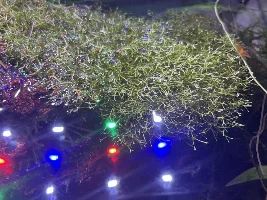
I need help choosing fish for my next aquarium. It will be 60×30×36cm, substrate will be mud, silt, clay, dirt, soil. No cap. Foreground and midground open, background filled with native Cyperaceae. No filter, No aeration.
 
No filtration, no aeration puts you in the hunt for swamp fish. I would suggest an Anabantoid, and those in tiny numbers (the smaller Betta spp for example). You need fish that don't dig and get their oxygen from the air. They would go with native Cyperaceae, since native for you is Thailand.

Bear in mind that a natural swamp gets movements and currents via wind across its large surface, and that is generally lacking on the surface of 60cm tanks. That is going to be an extreme environment.
 
No filtration, no aeration puts you in the hunt for swamp fish. I would suggest an Anabantoid, and those in tiny numbers (the smaller Betta spp for example). You need fish that don't dig and get their oxygen from the air. They would go with native Cyperaceae, since native for you is Thailand.

Bear in mind that a natural swamp gets movements and currents via wind across its large surface, and that is generally lacking on the surface of 60cm tanks. That is going to be an extreme environment.
I think oxygen will be no problem since plants also leaks oxygen through roots and the submerged part. I want like 10 not so colorful schooling fish.
It will be something like this, found this on Facebook.
 
I can't get the image you posted, but I'll step aside here and leave the field for others. There's no shoaling fish I would keep in that sort of set up.
 
While some may disagree, I strongly believe even anabantoids that *can* take in oxygen from the air should still have aeration

If the water is still, there is no gas exchange. That means even if the plants are producing oxygen, co2 cannot escape, and your fish can still die.

That being said, the only fish that I think you could even remotely humanely keep in this setup would be an anabantoid fish, such as betta or small species of gourami. The tank, at approximately 15 gallons once substrate etc is taken into account, is much too small for species of lung fish, which can also take air from the surface. The size and lack of aeration make most stocking options impossible.

The tank you are describing is absolutely inadequate for any schooling or shoaling fish. I personally believe if you attempt it, it is irresponsible fishkeeping.

If you add a filter or aeration of some kind to allow for gas exchange, you may have more stocking options, like ember tetras or other small brightly colored fish. But almost all shoaling fish come from water with currents and higher oxygen levels, still, stagnant water can be detrimental for them.

 
Plants only produce oxygen during the day, and stop at night. And plants also consume oxygen continuously. So if plants + animals both consume oxygen 24/7, but the plants only create oxygen for a few hours each day, your animals can quickly suffocate.

Also, the amount of oxygen created my plants is so small in comparison to the main way that water gets oxygen—especially in an enclosed tank- is through gas exchange at the waters surface, which is created by disturbance of the water. This allows oxygen into the water, and co2 to leave the water

Just having plants in still water is not enough to reliably oxygenate an aquarium, especially at night. Many fish deaths that happen overnight are actually due to oxygen depletion when the plants stop producing it and it runs out in the water

Imagine being locked in a small room with no ventilation, no windows or doors. You might have a few dozen houseplants in that room, but the oxygen the plants are making is not enough oxygen to survive on. And even if it was, you still aren’t having anywhere for the buildup of co2 to go. You would need to open a window. Water agitation is like the window for your aquarium. It lets the oxygen in, and the stale, toxic co2 out
 
The dirt bottom stagnant tank is a fading internet fad that was strongly advocated for my one forceful old guy. I used to know him online, and he had faith. There was no debating, no possible argumentation - he simply would not answer inconvenient questions. He knew what he believed and that was that. People with sincere questions were ignored. He wanted followers.
But he also liked getting people riled up.

These tanks are deadly for most fish, but if you find a narrow range of swamp evolved species, they can linger in the set ups for a few months. Father Fish would never answer the question of what fish he kept in his miraculous boxes. It was a simple question asked many times he just sidestepped.

With all due respect to the OP, there are many scientifically grounded sites with information gathered by experienced hobbyists on the needs of fish species, based on their wild environments and their adaptations to them. It's easy information to find. Asking a blanket question on what fish you should get seems odd. It doesn't seem to reflect any research. It isn't a choice between options.

It's a statement of tank type, which I think is what's up for discussion. I'll throw out a few questions to the OP.

What fish species did you decide you wanted to design a tank of this type for?

Is this a no water change concept, and if so, how will you manage water quality? Will it magically sort itself out?

How will you emulate natural water movement?
 
I think you’re underestimate how much emergent plant roots produce oxygen enough for night time, my outdoor bucket pond for example, have all sorts of native life in it. And most have been running for years without water changes. Only some top off. Maybe you lack experiences yourself?

IMG_4483.webp
 
I have lots of emergent plants in and on indoor aquariums - most of the people posting here deal with winters that keep them from being to do what you are doing outdoors. I wouldn't think of those buckets as aquariums though. My seasonal outdoor bins (70 litres) teem with short lived, seasonal Canadian insect and bacterial life, but wouldn't be good fish habitats due to their small size. They are low and flatter than a bucket, so they do get ripples on the surface, and rain overflow water changes. You won't get that on an indoor aquarium.

I do get flowers coming out of tanks all winter, and like my emergent plants as added support to the biological filtration and above all water movement provided by mechanical means. I recently collected killifish in a deep mud, plant bordered habitat in West Africa - sun exposed, hot and apparently still til I realized leaves on the surface were moving by current patterns in the metre to 2 metre in the middle deep water, even on an almost windless humid day. The habitat covered a few km, as irrigation ditches on a hot pepper farm. We caught three species of fish, but populations were incredibly low compared to those in quicker moving streams. The fish were just a couple of cm long, but the habitat probably supported one tiny fish per 500 litres.

We caught the same species in traditional brooks, and the population density was far higher. I think that says something about how we can keep fish.
 

Most reactions

Back
Top