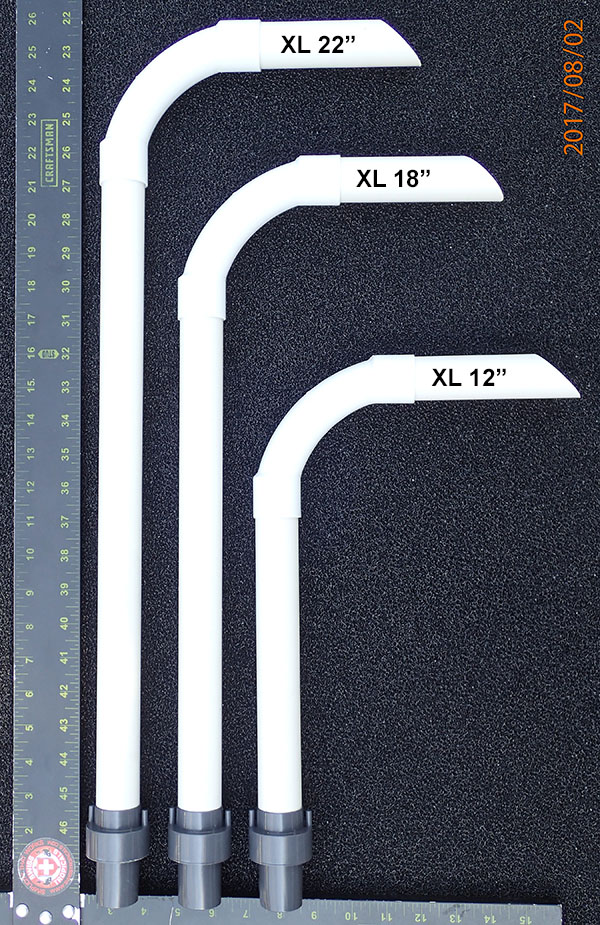
I am planning a 29 gallon tank setup using a UGF and an oversized HOB (I like belt and suspenders). I always thought airstones improved lift, but the Google AI suggests in tall lift tubes bare tubing produces more flow than airstones while in short sponge filters the opposite is true. I found this counterintuitive, but the explanation was interesting. What is the consensus here about air-powered filters, stones or no stones, or depends as here.
OH! PLEASE do not turn this into a discussion about AI. Their is a thread for that already. Please limit your response to the airstone/no airstone question. Thanks.
I've copied the discussion below:
==========
Yes, bare tubing absolutely moves more water volume than an air stone. This concept often surprises hobbyists because it feels counterintuitive. The common belief is that a massive column of thousands of tiny bubbles must pull more water up a wide lift tube than a few large bubbles. [1, 2]
However, fluid dynamics and mechanical physics prove that large bubbles are far superior for driving high-volume water flow, particularly in deep, wide lift tubes. [1]
In a modern wide lift tube, large bubbles form a rapidly rising, turbulent central core. This turbulence creates a powerful low-pressure vacuum behind each bubble that violently pulls water up from the undergravel plate. [2]
However, if the tank is in a bedroom or a quiet living room, the popping noise of large bubbles might drive you crazy. In that case, use your Ziss adjustable air stones and dial them to make the largest bubbles you can tolerate without the noise becoming annoying. You will lose some flow rate, but a UGF has such a massive surface area that it will still filter the tank effectively. [1, 2, 4, 5]
Where do you plan to place this 29-gallon tank? If noise is a big concern, I can share a few tricks for dampening surface popping sounds.
[1] https /www.reddit.com
[2] https/www.facebook.com
[3] https/www.youtube.com
[4] https/forum.aquariumcoop.com
[5] https/aquariumscience.org
Question from me, Does this apply to sponge filters, too?
Yes, the core physics remain identical, but the outcome actually reverses for standard sponge filters. [1, 2]
For a standard sponge filter, using an air stone moves more water than a bare tube. [3, 4]
This shift occurs because the design of a standard sponge filter differs fundamentally from a large, wide undergravel lift tube. The key distinctions dictate which method delivers optimal performance.
[th]
Feature [1]
[/th][th]
Undergravel Filter (UGF)
[/th][th]
Standard Sponge Filter
[/th]
[1] https/www.aquariumcoop.com
[2] https/www.reddit.com
[3] https/www.aquariumcoop.com
[4] https/www.instagram.com
[5] https/www.aquariumcoop.com
[6] https/www.reddit.com
[7] https/www.facebook.com
[8] https/www.reddit.com
[9] https/www.youtube.com
OH! PLEASE do not turn this into a discussion about AI. Their is a thread for that already. Please limit your response to the airstone/no airstone question. Thanks.
I've copied the discussion below:
==========
Yes, bare tubing absolutely moves more water volume than an air stone. This concept often surprises hobbyists because it feels counterintuitive. The common belief is that a massive column of thousands of tiny bubbles must pull more water up a wide lift tube than a few large bubbles. [1, 2]
However, fluid dynamics and mechanical physics prove that large bubbles are far superior for driving high-volume water flow, particularly in deep, wide lift tubes. [1]
The Physics: How Air Lifts Water
An airlift pump (which is exactly what an undergravel filter lift tube is) does not suck water up; it pushes it.- The "Piston" Effect of Large Bubbles: When a large bubble exits bare tubing, it expands to nearly fill the diameter of the lift tube. It acts like a solid mechanical piston or a plunger. As buoyancy forces the large bubble upward, it physically traps a "slice" of water above it and forces it up the tube. [1]
- The "Slip" Effect of Small Bubbles: Small bubbles from an air stone lack the surface area to act like a piston. Instead, they are highly aerodynamic. As they rise, they effortlessly slice through the water column rather than pushing it. The water slips around the sides of the tiny bubbles, resulting in a much lower net volume of water being dragged to the surface. [1]
- Friction and Restriction: Air stones are physically restrictive. Pushing air through a porous material blocks a massive percentage of the air pump's actual output volume, introducing backpressure. Bare tubing lets 100% of the pump’s volumetric airflow dump directly into the lift tube, optimizing mechanical energy. [2]
Why Wider Tubes Make Bare Tubing Even Better
The wide lift tubes popular today actually make bare tubing even more effective. In a narrow tube from 50 years ago, a large bubble could easily get stuck or create an obnoxious chugging noise.In a modern wide lift tube, large bubbles form a rapidly rising, turbulent central core. This turbulence creates a powerful low-pressure vacuum behind each bubble that violently pulls water up from the undergravel plate. [2]
The Ultimate Trade-Off: Flow vs. Noise
While bare tubing wins the water flow battle, it has one major downside: noise. [1, 2, 3]- Bare Tubing: Highest water turnover rate, zero clogging maintenance, but creates a loud, rhythmic "gargling" or "popping" sound at the surface. [1, 2]
- Ziss Adjustable Air Stones: Lower water turnover rate, but they split the air into a smooth hiss or hum that is drastically quieter. The Ziss stones are great because you can adjust the bubble size to find a middle ground. [1, 2, 3]
The Verdict for Your 29-Gallon Tank
If your primary goal is maximizing the filtration performance of your UGF, run bare tubing. The Hygger 4W pump running open-ended through bare lines will pull an immense amount of water through your gravel bed.However, if the tank is in a bedroom or a quiet living room, the popping noise of large bubbles might drive you crazy. In that case, use your Ziss adjustable air stones and dial them to make the largest bubbles you can tolerate without the noise becoming annoying. You will lose some flow rate, but a UGF has such a massive surface area that it will still filter the tank effectively. [1, 2, 4, 5]
Where do you plan to place this 29-gallon tank? If noise is a big concern, I can share a few tricks for dampening surface popping sounds.
[1] https
/www.reddit.com[2] https
/www.facebook.com[3] https
/www.youtube.com[4] https
/forum.aquariumcoop.com[5] https
/aquariumscience.orgQuestion from me, Does this apply to sponge filters, too?
Yes, the core physics remain identical, but the outcome actually reverses for standard sponge filters. [1, 2]
For a standard sponge filter, using an air stone moves more water than a bare tube. [3, 4]
This shift occurs because the design of a standard sponge filter differs fundamentally from a large, wide undergravel lift tube. The key distinctions dictate which method delivers optimal performance.
The Crucial Differences
| Tube Diameter | Wide (typically 1" to 1.5" wide) | Narrow (typically 0.5" to 0.75" wide) |
| Tube Height | Tall (18 inches in your 29-gallon) | Short (typically 4 to 8 inches tall) |
| Winner | Bare Tubing (Piston Effect) | Air Stone (Escalator Effect) |
[th]
Feature [1]
[/th][th]
Undergravel Filter (UGF)
[/th][th]
Standard Sponge Filter
[/th]
Why Air Stones Win Inside Sponge Filters
Because a standard sponge filter has a short, narrow inner chamber, bare tubing creates bubbles that are simply too large for the tight space. [5]- The "Choke" Effect: A massive bubble from bare tubing fills the entire narrow chamber of a sponge filter instantly. This acts like a single elevator, trapping a tiny splash of water above it, but blocking any water from moving past it until it exits. The air literally chokes out the water path. [1]
- The "Escalator" Effect: Adding a small Ziss or standard air stone breaks the air into a dense, continuous stream of tiny bubbles. In a narrow column, this wall of micro-bubbles creates a constant, uninterrupted upward vacuum. It functions like a fast-moving escalator, continuously pulling water through the sponge foam without blocking the pipe. [1, 3, 6]
Why Bare Tubing Wins in Your 18-Inch UGF Tubes
In your 29-gallon setup, the rules change due to the 18-inch height and wide diameter.- Space to Expand: In a wide 1.25" UGF tube, a large bubble does not choke the pipe. Water can freely rush around and behind it.
- The 18-Inch Runway: As a large bubble rises through 18 inches of water, it accelerates. The longer the tube, the more velocity the bubble gains, violently dragging a massive volume of water upward in its vacuum wake.
- Overcoming Resistance: An air stone forces your Hygger pump to push air through tiny pores, slowing the physical volume of air entering the tube. Bare tubing dumps 100% of the pump's air volume straight into the wide UGF tube, maximizing mechanical lift. [7, 8]
Summary for Your Multi-Tank Plans
- For your 10-gallon tank with a sponge filter: Pop a small air stone inside. It will keep the filter quiet and pull more water through the foam. [3, 9]
- For your 29-gallon tank with the 18-inch UGF: Stick to bare tubing. Since noise is not a concern, the raw piston lift of large bubbles rolling up those wide 18-inch paths will give you massive water turnover through your gravel bed. [2]
[1] https
/www.aquariumcoop.com[2] https
/www.reddit.com[3] https
/www.aquariumcoop.com[4] https
/www.instagram.com[5] https
/www.aquariumcoop.com[6] https
/www.reddit.com[7] https
/www.facebook.com[8] https
/www.reddit.com[9] https
/www.youtube.com

 Conclusion