Fishless Cycling Question...

eaglesaquarium

Life, Liberty & Pursuit of the perfect fish tank
Retired Moderator ⚒️
Joined
Apr 4, 2011
Messages
12,902
Reaction score
373
Points
83
Location
US
I read the fishless cycle article in the Beginners Resource Center. I followed everything that was mentioned in the thread, and I really liked the way it was described. In fact, I liked reading it so much that I now plan to do a fishless cycle when I set up my tank. However, it did lead me to a few questions.


After the ammonia and the nitrites have zeroed, the cycle is complete. After that, this is what the article said:

At this point, your tank will probably look terrible with brown algae everywhere and probably cloudy water. As I mentioned, the nitrate reading will also be off the chart. Nitrates can only be removed with water changes. Do a large water change, 75 to 90 percent, turn the heat down to the level the fish you have decided on will need, and you are ready to add your fish. You can safely add your full fish load as your tank will have enough bacteria built up to handle any waste they can produce.


Question 1: Does the water change eliminate the brown algae? I thought brown algae was bad. Maybe that's just a "newbie" misconception.


Question 2: Can you really add a full load of fish? Say 20 small fish to a 56 gallon tank? I am thinking about a community tank of peaceful small fish, but didn't think that I could add all the fish at once. Everything else I've read says that you shouldn't add more than 1-3 fish at a time.

Eventually, I would like to have a school of corys (5), Zebra Danios (4), Platies (3), Mollies or Swordtails (3), Neon or Cardinal tetra (8) in a planted 56 gallon tank. That seems like way too many fish to add at once. But, if the bacteria colony is big after the cycling process, then maybe it would be better to get them all at once, so that they are all on equal 'footing' going into the new tank. Or would it be more advisable to get the corys and/or danios first, and then add more slowly later?

Sorry if these are a silly questions...
 
Question 1: Does the water change eliminate the brown algae? I thought brown algae was bad. Maybe that's just a "newbie" misconception.
Algae in tanks isn't exactly bad as such, it just doesn't look very nice. The brown algae (diatoms) you get in new tanks doesn't cling to surfaces very hard.
When you do your large water change (to rid your tank of the nitrates that have built up during your cycle) and before you add your fish is a good time to clean up the algae. Use a new washing up sponge (make sure it doesn't have any kind of soap impregnated into it!) to wipe the algae of all the surfaces and then you can syphon it out.


Question 2: Can you really add a full load of fish? Say 20 small fish to a 56 gallon tank? I am thinking about a community tank of peaceful small fish, but didn't think that I could add all the fish at once. Everything else I've read says that you shouldn't add more than 1-3 fish at a time.
You really can add the full stock of fish! The 4ppm ammonia you use to cycle a tank is actually far more than your tank full of fish would produce. If the bacteria can deal with that, they can cope with the full stocking.However it can happen that the tank has a mini cycle or short lived ammonia spike, so a lot of people err on the side of caution and stock more slowly.
It's up to you and how brave or confident you feel.
If you do start stocking slowly, some of the bacteria you've grown will die off as there won't be enough ammonia to feed them all. In that case you need to add no more than 50% of the stock you already have every two weeks to allow the bacteria to multiply again.


Eventually, I would like to have a school of corys (5), Zebra Danios (4), Platies (3), Mollies or Swordtails (3), Neon or Cardinal tetra (8) in a planted 56 gallon tank. That seems like way too many fish to add at once. But, if the bacteria colony is big after the cycling process, then maybe it would be better to get them all at once, so that they are all on equal 'footing' going into the new tank. Or would it be more advisable to get the corys and/or danios first, and then add more slowly later?
That's actually quite a conservative stocking list. You could add most of those in one go if you wanted to as I said above.
I'd advise leaving out the tetras at the start as they can be delicate in new tanks. Then you can add the tetras and some more cories and danios (4 or 5 isn't really big enough to be classed as a school; you need 6+) in few weeks time as things settle. You have plenty of room for a few extra small fish and the danios would be much happier in a larger shoal.

Sorry if these are a silly questions...
The only silly question is one that you don't ask, as members of this forum are fond of saying ;)

Hope this all makes sense to you! Let me know if I've talked gibberish and you need clarification on anything :good:
 
Algae in tanks isn't exactly bad as such, it just doesn't look very nice. The brown algae (diatoms) you get in new tanks doesn't cling to surfaces very hard.
When you do your large water change (to rid your tank of the nitrates that have built up during your cycle) and before you add your fish is a good time to clean up the algae. Use a new washing up sponge (make sure it doesn't have any kind of soap impregnated into it!) to wipe the algae of all the surfaces and then you can syphon it out.

That all makes perfect sense to me. I figure a cheap sponge that I purchase at a dollar store would work fine. I doubt they would add anything to that!

You really can add the full stock of fish! The 4ppm ammonia you use to cycle a tank is actually far more than your tank full of fish would produce. If the bacteria can deal with that, they can cope with the full stocking.However it can happen that the tank has a mini cycle or short lived ammonia spike, so a lot of people err on the side of caution and stock more slowly.
It's up to you and how brave or confident you feel.
If you do start stocking slowly, some of the bacteria you've grown will die off as there won't be enough ammonia to feed them all. In that case you need to add no more than 50% of the stock you already have every two weeks to allow the bacteria to multiply again.

I understand what a "minicycle" is, but what I don't understand is what would trigger it with the addition of fish, if cycled with 4 ppm is more than the fish would produce. (In theory, wouldn't a "minicycle" always happen whenever new fish are added? After all, the addition of new fish would increase the load of ammonia, and eventually the nitrites, and the bacteria colonies would have to grow to cope. Although the difference would be the degree, correct? Also, wouldn't the likelihood of this be decreased by having a planted tank?)

Eventually, I would like to have a school of corys (5), Zebra Danios (4), Platies (3), Mollies or Swordtails (3), Neon or Cardinal tetra (8) in a planted 56 gallon tank. That seems like way too many fish to add at once. But, if the bacteria colony is big after the cycling process, then maybe it would be better to get them all at once, so that they are all on equal 'footing' going into the new tank. Or would it be more advisable to get the corys and/or danios first, and then add more slowly later?

That's actually quite a conservative stocking list. You could add most of those in one go if you wanted to as I said above.
I'd advise leaving out the tetras at the start as they can be delicate in new tanks. Then you can add the tetras and some more cories and danios (4 or 5 isn't really big enough to be classed as a school; you need 6+) in few weeks time as things settle. You have plenty of room for a few extra small fish and the danios would be much happier in a larger shoal.

I'll take this under advisement. I'm still about 5 months away from all this actually happening. I will be traveling a ton this summer, so setting up the tank before then just doesn't seem smart. SO, I will have to wait until September before all this gets going.

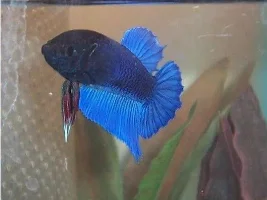
I am leaning away from having the tetra at all. I read they are a little more delicate than the livebearers. Secondly, I like the idea of more cories and danios. :good: Maybe something more like 6 cories, 10 danios, 4 platies (3f, 1m), and 4 mollies(3f, 1m)? And maybe mix a betta in for extreme color?

I did want to lean on the side of conservative stocking, since I was going to have livebearers and plants. I figure that combination might be a formula for fry growing to adulthood. If it happens, I'd like to have some wiggle room in the tank to handle the potential increase.

Hope this all makes sense to you! Let me know if I've talked gibberish and you need clarification on anything :good:

Don't worry, I'll be back many times, I'm sure to ask for additional help.


Like this new question: I've heard of seeding a cycle with bacteria from an existing tank. A friend of mine has a cichlid tank. Would just placing my filter media into his tank for a few weeks pick up enough bacteria to seed my cycle?

Or this one: Should I cycle the tank with the plants in place, or add them during the final water change after the tank has been cycled? I've seen conflicting advice on this. Some say that adding plants will skew readings and the tank may not be as cycled as you would want, because the plants can absorb ammonia. On the other side, some say that adding plants is beneficial because the plants can seed the cycling, as they have bacteria on them AND because they absorb ammonia. :blink: I am leaning on the side of cycling without plants, because it seems to me that I can raise the temps higher and keep the lights off (to keep algae at bay) while cycling, and it would probably go faster.
 
I understand what a "minicycle" is, but what I don't understand is what would trigger it with the addition of fish, if cycled with 4 ppm is more than the fish would produce. (In theory, wouldn't a "minicycle" always happen whenever new fish are added? After all, the addition of new fish would increase the load of ammonia, and eventually the nitrites, and the bacteria colonies would have to grow to cope. Although the difference would be the degree, correct? Also, wouldn't the likelihood of this be decreased by having a planted tank?)
Quite what causes minicycles after adding fish to a fishlessly cycled tank isn't fully understood as far as I know. Most people think it just takes the bacteria a short while to adjust to using fish wastes as food as opposed to pure ammonia. Yes, a minicycle does take place every time you add new fish, that's why we don't add to many at once under normal circumstances. The full stocking of a fishlessly cycled tank is an exception to that rule due to the larger amount of ammonia used.


I am leaning away from having the tetra at all. I read they are a little more delicate than the livebearers. Secondly, I like the idea of more cories and danios. :good: Maybe something more like 6 cories, 10 danios, 4 platies (3f, 1m), and 4 mollies(3f, 1m)? And maybe mix a betta in for extreme color?

I did want to lean on the side of conservative stocking, since I was going to have livebearers and plants. I figure that combination might be a formula for fry growing to adulthood. If it happens, I'd like to have some wiggle room in the tank to handle the potential increase.
Sounds very wise. Adding bettas is always a bit of a risk, but they're usually fine. I've kept them with the other fish you're proposing without problems.


I've heard of seeding a cycle with bacteria from an existing tank. A friend of mine has a cichlid tank. Would just placing my filter media into his tank for a few weeks pick up enough bacteria to seed my cycle?
It would need to be actually in his filter. There are very, very few bacteria loose in the water, or in the gravel. The best way is if he could give you about a third of his media (buy him some replacement!) then you put that in your filter and you're basically instantly cycled. This is what a lot of us more experienced fishkeepers with multiple tanks do if we want to set up a new one. You should add only what the media can handle; as an example, if your friend had 100 tetras and gave you a third of his media, you could add 30 tetras.

Or this one: Should I cycle the tank with the plants in place, or add them during the final water change after the tank has been cycled? I've seen conflicting advice on this. Some say that adding plants will skew readings and the tank may not be as cycled as you would want, because the plants can absorb ammonia. On the other side, some say that adding plants is beneficial because the plants can seed the cycling, as they have bacteria on them AND because they absorb ammonia. :blink: I am leaning on the side of cycling without plants, because it seems to me that I can raise the temps higher and keep the lights off (to keep algae at bay) while cycling, and it would probably go faster.
Yeah, this is a tricky one; fishkeeping is an art as well as a science and different people do things different ways, but I think you'd be better off cycling without plants. It just makes the cycle that little bit more straight forward :)
 
It would need to be actually in his filter. There are very, very few bacteria loose in the water, or in the gravel. The best way is if he could give you about a third of his media (buy him some replacement!) then you put that in your filter and you're basically instantly cycled. This is what a lot of us more experienced fishkeepers with multiple tanks do if we want to set up a new one. You should add only what the media can handle; as an example, if your friend had 100 tetras and gave you a third of his media, you could add 30 tetras.


After reading all the fishless cycling logs on here, I don't know if I have the patience. I also have a 5 year old son who is very excited by the prospect of having a pet finally (my wife is allergic to pet dander). I doubt he'd be all that patient as well.


If I could get some filter media and be up and running (more) quickly with even one fish that would be enough to placate my own impatience, and I would be able to deal with his urgings for more! I will have to discuss this with my friend, so that he has enough time to plan ahead to donate to his bacteria poor colleague! :lol: If I could actually get a school of corydoras or danios to start with and expand from there, so much the better!


Is it September yet, so that I can actually get started?! :crazy: Oh well, patience is important too!


Hypothetically, if I got some filter media, should I still go through the cycling process?

If I raised the ammonia level to 4ppm, wouldn't the A bacteria, theoretically, convert the ammonia to nitrites, and then the N bacteria would convert it to nitrate. Now, while it probably isn't going to be enough to completely drop the levels to 0ppm right away, but the levels should drop drastically as compared to a regular cycle, correct? And there might be a minor nitrite spike, it won't be as drastic as a regular cycle, because the ammonia converted to nitrite is being dealt with in an even balance (or close to it) as the nitrite converted to the nitrate.

Or, would it be better to go to a lower level than 4 ppm, like 2 ppm to test how well the bacteria have taken to their new home and how well they work at lowering levels? The same thing should happen as well, I figure.
 

Most reactions

Back
Top