Cycling and plants

Jennet11 69

Fish Crazy
Supporting Member ⭐
Joined
Jul 20, 2026
Messages
264
Reaction score
362
Points
63
Location
Stourbridge, UK
I'm just starting to cycle an 80 litre tank, however I have already added about 7 plants and feed them one solution weekly and one solution daily. I did not add any solution on the day before I started or the day I started cycling.

I live in a hard water area as my kettle etc. scale up like mad, but when I tested my water parameters my tap water came out at 5 GH and 5 KH. I set up my tank and let it run, without cycling, just added a couple of grains of sinking fish pellets, and they gradually added plants.

I tested the water two days before I started the cycling it was 5GH and 3KH. Added Dr Tims Ammonium Chloride solution on 7th Aug and first tested on day 4 Ammonia 0 Nitrite 0.5

I tested the water on 10th and both Ammonia and Nitrite were at zero. However when I tested again today, both appeared to be between zero and 0.25ppm in respect of their colour. Slightly more towards the zero side, but some change. Is this normal (ish)?

Basically, I was wondering if during the process of cycling, will my plants be harmed? I think maybe not, but just wanted to check it out here. Thanks.
 
Cycling doesn't harm plants BUT if you change the water chemistry for some reason as a by product it can upset the plants. This is more likely to happen with people who decide to tweak their water chemistry (make it harder or softer); then people who just use tap water. I do find that stability is beneficial. I have never kept plants in water harder then 150 tds so for cases where you have hard water the rules might be different.

Cycling itself is jsut the process of growing bacteria that will eat ammonia - one could argue that plants compete against the bacteria since they also like ammonia but i can't tell you how much they compete or anything like that - and i'm not sure it is a trivial thing to answer.
 
I'm leaving my water chemistry alone. Once cycling is near to finishing I will be looking to see what small fish will suit my water. I suppose I may get a glitch at some point as we get our tap water from three different sources across a number of months, but suffice unto the day.
 
I find dosing ammonia to 2ppm with plants works well. Above that can damage, but not usually kill, some plants. That is of course without fish yet.

What plants did you get? Cryptocorynes (my favs) might melt (all the leaves die back) but if the roots are healthy, they'll come back, be patient. Java fern, java moss, bucephalandra & anubias are slow growers so don't use up ammonia vert fast. Stem plants usually do grow fast, too fast for my lazy ways ;) All plants usually have some beneficial bacteria unless they were grown hydroponically. Of course, if you cleaned them too well you might lose that advantage.

Live plants are always a good idea!! OK, I belong to an aquatic plant club & can try many, but it's fun! How do you feel about snails? Less creepy than shrimp? That's what you should check for on plants, both tiny 1s & their jelly-like eggs masses. Just scrape them off with a fingernail & throw them in the compost or trash bin. Trumpet snails are livebearers & nocturnal but all snails increase reproduction from excess food. I don't mind a few of any,, part of a healthy tank environment.

Keep an eye on your KH, both plants & beneficial bacteria use it. I try not to let mine drop under 2ppm.
 
I've recently bought Riccia fluitans which came with a free snail (which I hate). I also have Alternanthera cardinalis, Microsorum pteropus, Cyperus helferii and Micranthemum monte carlo. I was given the aquarium, which has got me back into the hobby many years after my earlier days. I can only keep the one at the moment, due to a Grandson who is still being tested for both Autism and ADHD. He will be 5 at the end of this month, and already has to be seperated out of his class fairly frequently due to his behaviour.
 
Yes cycling can harm some plants depending on the ammonia levels one is dosing. Lets start with a couple of quick facts.
1. In water ammonia (NH3) turns mostly into ammonium (NH4). The cycling bacteria prefer ammonia while the plants use ammonium. How much is in each form depends on the pH and temperature of the water. As pH drops below 7.0 more and more of the total ammonia will be ammonium. The bacteria are able to use ammonium when ammonia is not available, However, they do so much less efficiently than they use ammonia. This is why a cycle appears to stall if the pH drops below 7.0. But the time it is at 6.0 virtually all the total ammonia is in the form of ammonium.

What this means is in a tank without plants only the bacteria ,and maybe algae when present, will handle the Tota,l ammonia no matter what form it is in. There will be a fair amount of bacteria as they will be doing the lions share of the work. However, no matter how many live plants one has and no matter what species, there will always be some amount of bacteria at work. In fact some plants actually transport oxygen down to their roots where they release it into the substrate where there is normally no oxygen. This allows the nitrifying bacteria to colonize there.

2. Different plants are able to use ammonia at different rate, Faster growing plants use more than slower growing plants. So not only does the volume of plants matter, but also so does the specific species involved.

3. Some live plants are sehsitive to ammonia (NH3). Level at 3 ppm can harm or kill them.

4. There are two options in terms of cycling and having live plants in a tank.

5. There are three options when one wants to set up a tank which will have live plants.
a. One option it to do a fishless cycle and then to add the plants to the tank. The problems is one gets more bacteria than will be needed once the plants go in and start using ammonium
b. The other is to plant the tank and then to do the fishless cycle. I firmly believe in this case on needs to wait a few weeks to allow the new plants to settle int and for those in the substrate to build a root system.
c. The third option is to plants the tank, do nothing to cycle for bacteria. Istread one the plants settle in one can add fish gradually. The goal is to have ammonia levels be two enough not to harm the fish. One then adds a few more fish every time testing shows ammonia at 0 ppm.

6. How one goes about things depends on the number and types of live plants one plans to have. In a plantless fishless cycle ammonia can be added at the 3 ppm level in the cycling article on this site However, if one is going to plant and then cycle, the ammonia level should be between 1 and 2 ppm depending on the intended level and types of plants as well as the specific fish stocking planned. This should protect the plants from being harmed ny ammonia.

As you can see there are a number of considerations and options here and this is why is is much more difficult to create rule for insuring a planted tank can handle ammonia etc. I was supposed to write one more cycling artivle dealing with the use of live plants but have never gotten around to doing this. the fishless cyling article works great for any tank without plants.

The article makes sure any tank will become safe for fish in terms of cycling. However, this is not the case for planted tanks because of how many and what kinds of plants people might use is highly variable. So I struggled with coming up with a similarly successful methodology as for a cycling a tank with no live plants. I have started it a few times but have never finished it in a satisfactory way.
 
@TwoTankAdmin Thanks for the above. I never was good at science, human biology was a little easier to understand for me, which is why I trained as a nurse. However, posts like yours above are slowly helping me increase my knowledge.

I had the tank filled and some plants in for at least 3 weeks before I added the Ammonium Chloride. I have also left the foam around the roots as I thought it will be easier to move them once cycled if I want to.

The plants did not cost a lot, so if they don't survive, its is of no great importance. I also have one plastic plant in there as I like the red effect. I am testing my pH daily and so far it has remained at 7.5.
 
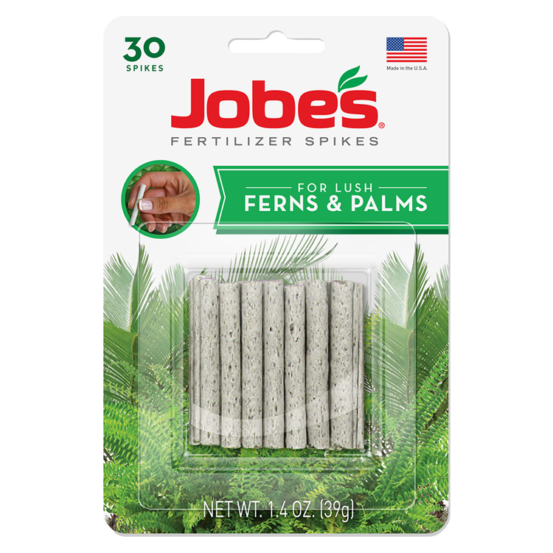
It is best to remove the foam from around the roots before you plant them, It is very easy to opt to put the plants into terracotta pots. This makes them very easy top move around. I do this in a number of my planted tanks. I also use some substrates ferts in the pots. I use Jobes spikes for my substrate ferts any these can be cut into smaller sizes for use in pots or with new small plants. There is a warning that goes with using Jobes spike, of you tend to replant and you uproot the fert, you will earn your MBA (Mastered By Algae).

The pic below used decent size pots but in other tanks I use much smaller pots.

i-7H9FGsf.jpg


If you want to try the Jobes, look first for
Jobes-Fern-Palm-Spikes-553x553.png

If you cannot find thes above, then the next best choice is
1786733972101.webp


These are both way cheaper than ferts branded for use in aquarium substrate.
 
This plants in pots thing is where 2tank & I disagree, lol. I mentioned I prefer not to see pots for a more natural look. I've done it with various pot fillers. Small-ish gravel is about the right size but you need a barrier to keep it from falling out the pot bottom hole. Floss or filter pads cut to fit can work for that. You don't need special "plant soil" or other media. I too am a fan of root tabs especially Job's Palm & Fern but in the substrate ((; at you 2tank).

You can keep your options open for as the tank cycles.

I would strongly suggest you NOT do the 5c option from 2 tank. Gradually adding fish exposes them to parasites & diseases at each addition. If your tank is fully cycled add as many of 1 species as you'll eventually want to keep. Then it'll be time for a quarantine tank after that.
 

Most reactions

Back
Top