OK- I work in gallons so doing the math here is my calculation for what yuou need to be adding/
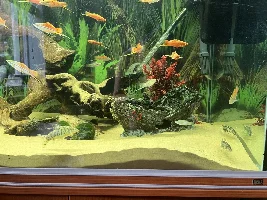
- There are 3.79l per US gallon. 600/3.79=158 gallons I am assuming the tank and sump combined hold 600L total. If this is not correct and the tank is 600 and the sumo is an addition 200 this makes a difference.
- Dosing 4 drops/gallon will produce 2 ppm of ammonia-N or 2.56 ppm using the Total Ion scale used by most hobby test kits. This means you need to be adding 4x158= 399.4 drops. to make it simple lets call it 400.
- 100 drops = 5 ml so you need to be adding 20 ml not 30 ml. 30 should produce 3 ppm as nitrogen or 3.84 using the Total ion scale.
I see two potential problems here. The first is that one of two or both things are an issue. Either the Dr. Tims' has lost strength. Ammonia as NH3 can evaporate however, ammonium as NH4 cannot. Next your test kit may be bad. You did not specify what brand you are using.
I also have to assume that you are measuring and testing correctly. User error explains a lot. Since you say you have dome this before, I am also assuming that you are doing all correctly.
So, I am wondering if you have live plants in the tank. If so these use ammonium NJ4.
Also, ammonia in water turns mostly into ammonium. How much to the total ammonia in a tank is in each form depends on the pH and temperature of the water. But pH effects things more than the temperature. This leads me to another question. Ammonia tests come in two different forms. The most common ones in the hobby measure Total Ammonia which is the sum of both forms. But some will only read the true ammonia (NH3) and not the ammonium (NH4).
So, for me to have any chance to figure out what might be causing your issue, I need more info than you have provided in your post. However, I do have one more thing to tell you just in case your missing information, when you provide it, that you should know. As I mentioned above the bacteria prefer ammonia (NH3). Because your pH is 6.0 this greatly slows cycling. The bacteria can use NH3 but the do so much less effectively and this means two things. The first is the will deal with the ammonium (NH4) much more slowly. As a result, you will need more of them than if the pH was higher.
This means if we can figure out what is actually going one and correct things, the cycle is going to go more slowly.
The is one last thing we need to consider here. It is possible that you have already got most of the ammonia oxidizers established. The presence of nitrate. especially and probably nitrate as long as there is not any in your tap water. Do you have a record of the nitrite reading you have gotten and when in relation to the ammonia being added? This would help to determine if there actually are most of the need ammonia bacteria needed. If this is the case the will be using the ammonia pretty fast and only leaving a bit left over which should be used fairly fast.
In your tank a pH of 6 will mean literally 100% of the ammonia is in the form of ammonium.
Diagnosing cycling issues becomes a lot easier to do when one has kept accurate test readings and ammonia dosing information in chronological order. You can do this by including the exact dates or using days where the first ammonia addition is day 1. The you just track the number of days and not the dates.
I am usually on the site most days and can monitor this tread. I do not usually use the email when a response is posted as I do not want to be getting a ton of emails. I see no way to use on a per thread basis. I do get emailed when I have a site PM.