Angelfish not eating but trying

nazboy

New Member
Joined
Sep 6, 2026
Messages
2
Reaction score
1
Points
3
Location
toronto
Hello I would appreciate any insight on this issue I’m having with my angelfish.

Tank size:50 but filled to 30g
tank age: 2 years
pH: 8
ammonia:0
nitrite:0
nitrate:1-2ppm
kH:n/a
gH:n/a
tank temp:84F


Fish Symptoms (include full description including lesion, color, location, fish behavior):

I have 2 anglefish (breeding pair) in this tank and one is eating very well but the other does not. This started a couple weeks ago. It stopped eating so I did a course of bactocide 2 then it began eating. Then a couple day after the full course , it stopped eating. Then I did a course of bactocide 1 thinking the issue was something else and it once again, began eating then stopped. This is where I’m at now. I’m thinking of trying metronidazole and prazi in case it’s a gill/internal parasite issue (based on ChatGPT apparently).

yesterday it tried to eat the flakes but then couldn’t chew (it seemed). Then today it gets right under the food and pecks but doesn’t catch it. It seems like tomorrow it won’t be interested yet again.

I should add that some times it seems like it’s “coughing” when just swimming around.

Volume and Frequency of water changes:
50-75% every 4 days

Chemical Additives or Media in your tank:
Prime

Tank inhabitants:
1 other angelfish

Recent additions to your tank (living or decoration): none

Exposure to chemicals:
None

Digital photo (include if possible):
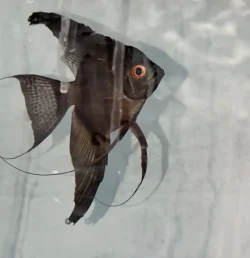
 

Attachments

  • IMG_0200.webp
    IMG_0200.webp
    41.6 KB · Views: 31
Sometimes they go on a little hunger strike for some reason . Why ? Nobody knows . Mine does it frequently . She eventually eats again .
 
There's nothing obvious. The fish looks well to me - not starved, with no obvious injuries. It doesn't look wormy.

They do that coughing type movement occasionally. Some who aren't worried abut the fish call it yawning. I never use meds without knowing what I'm treating, as they can do more harm than good. That's the first time I've looked at Bactocide. The ingredients look harmless, possibly even harmless to the pathogens it's supposed to deal with.

It's frustrating, but I would watch and see.
 
The symptoms you described do not sound like hunger strike or being finicky about food. Do his poops look normal?
 
Very weird now. It eats baby brine. Pecks at flakes that it used to eat. It sometimes eats the flakes and other times it doesn’t. I think I will feed baby brine for a little while.
 
Hello I would appreciate any insight on this issue I’m having with my angelfish.

Tank size:50 but filled to 30g
tank age: 2 years
pH: 8
ammonia:0
nitrite:0
nitrate:1-2ppm
kH:n/a
gH:n/a
tank temp:84F


Fish Symptoms (include full description including lesion, color, location, fish behavior):

I have 2 anglefish (breeding pair) in this tank and one is eating very well but the other does not. This started a couple weeks ago. It stopped eating so I did a course of bactocide 2 then it began eating. Then a couple day after the full course , it stopped eating. Then I did a course of bactocide 1 thinking the issue was something else and it once again, began eating then stopped. This is where I’m at now. I’m thinking of trying metronidazole and prazi in case it’s a gill/internal parasite issue (based on ChatGPT apparently).

yesterday it tried to eat the flakes but then couldn’t chew (it seemed). Then today it gets right under the food and pecks but doesn’t catch it. It seems like tomorrow it won’t be interested yet again.

I should add that some times it seems like it’s “coughing” when just swimming around.

Volume and Frequency of water changes:
50-75% every 4 days

Chemical Additives or Media in your tank:
Prime

Tank inhabitants:
1 other angelfish

Recent additions to your tank (living or decoration): none

Exposure to chemicals:
None

Digital photo (include if possible):

The repeated improvement during antibiotics followed by relapse makes me wonder if the underlying issue isn’t bacterial. The “coughing,” difficulty grabbing food, and loss of appetite could point toward a gill or internal parasite issue, but I wouldn’t medicate blindly. I’d quarantine the affected angelfish if possible, check the gills/respiration closely, and consider a properly dosed praziquantel treatment. Also, 84°F is quite warm for angelfish, so I’d verify the temperature and consider bringing it down gradually.
 
A fish that is genuinely off its food doesn't usually pick and choose, so taking baby brine and spitting flake says more about the flake than about him. Try soaking the flake a minute so it goes down soft, or offer frozen mysis. If he grabs those, his mouth and gills are working and it looks more like fussiness than disease.
 
A fish that is genuinely off its food doesn't usually pick and choose, so taking baby brine and spitting flake says more about the flake than about him. Try soaking the flake a minute so it goes down soft, or offer frozen mysis. If he grabs those, his mouth and gills are working and it looks more like fussiness than disease.

That’s a good point. If he’s still eating baby brine, I’d try softer foods like soaked flakes or frozen mysis and see how he responds. If he consistently accepts those but rejects dry food, it’s more likely a food preference than a health issue. I’d also keep an eye on his breathing, activity, and overall condition.
 
Usally, a not eating issue is not off and on. I would only start to worry of the fish stops eating entirely and then starts to waste away. I f that happens the med I have used in the past is Flubendazole. The advantage of this med is that is does not have to be fed to the fish and can be dosed into the water.

This compounds is NOT an antibiotic. It do not control bacteria or fungal infections and in fact may escalate these problems as they kill off the other infections. This compound is not the cure all.
Flubendazole is useful for controlling intestinal parasites, especially most of the protozoa, some nematodes and gill flukes. Flubendazole is active through adsorption into the fish’s skin and gills. The drug does not have to be eaten to be effective. This makes the drug useful for treating fishes which have quit eating due to irritation from infection of the throat and gut.

This med is easy for me to get in the states. I am not sure you can easily get it in Canada. Here is some more information about it from wjich the above quote came. https://www.inkmkr.com/Fish/FlubendazoleTreatment.pdf
 

Most reactions

Back
Top