Avma Report On Euthanasia

The report did endorse the use of CO2. A cheap easy to find source of very carbonated water is Alka-Seltzer tablets, or their generic equivalents.
That's an excellent idea. Even in humans, death by CO2 causes a little nausea and disorientation at worst.
I wouldn't recommend submerging them in flavoured soda, death by CO2 shouldn't be instant and soda is so unlike water I'm sure it would be like you or me entering a room full of noxious smoke. It's probably unpleasant at best. Club soda would be acceptible in some cases, as some brands are just carbonated water, but some brands contain small amounts of table salt or other substances meant to give them a slightly salty flavour that I would be cautious of. The seltzer tablet idea seems best to me, if you're going to use CO2.


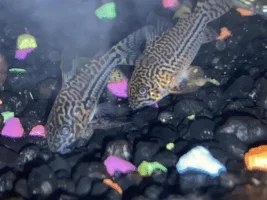
It may not work on all fish though- fish like corys can gulp air from the surface, so can many pleco's (i think bettas can as well), if there isn't enough oxygen in the water.

Me personally, i prefer to put the fish in a bowl full of freezing cold water (i.e. water that has been left in the freezer cold enough to freeze a little bit). I only use this method on small tropical fish though (i.e. fish under 3inches long), but it is good as it only takes a couple of seconds to kill the fish and is not a messy/gory method.
 
Its not just CO2, its a specific concentration of CO2, a concentration thats not found unless you have access to compressed co2.
(and for the record, submerging fish in beverages sounds pretty cruel, but thats my opinion)

What is the specific concentration needed to be reached? Can you please cite your source? I tried to look up the Zwart, deVries, and Cooper reference from the AVMA Report, but I don't have access to it online and it is in Dutch and I don't read Dutch.

http://www.beloit.edu/~SEPM/Geology_and_th...th_warming.html This link describes a simple little experiment where an Alka-Seltzer tablet is dissovled in a jar of water, and it released 0.63 grams of CO2. That is a huge amount. One tablet in 1 liter of water would be a concentration of 630 ppm. Certainly not all of that CO2 would remain in the water, though if you capped the container a lot more CO2 would stay in the water.

If you can tell me what concentration of CO2 is needed, I can do some basic calculations to see if compressed CO2 is really necessary.

It may not work on all fish though- fish like corys can gulp air from the surface, so can many pleco's (i think bettas can as well), if there isn't enough oxygen in the water.

If the container is capped, the air above the water level will also be full of CO2, solving the problem of labyrinth fishes and gulpers like cory catfish.
 
It may not work on all fish though- fish like corys can gulp air from the surface, so can many pleco's (i think bettas can as well), if there isn't enough oxygen in the water.

If the container is capped, the air above the water level will also be full of CO2, solving the problem of labyrinth fishes and gulpers like cory catfish.

I guess that could solve the problem. However on large fish, i am sure it would still take a fair while to kill the fish as generally speaking, the larger the fish the harder it is to kill, and a larger fish would take longer to suffocate than a small one in a large concentration of CO2. Another problem that fishkeepers could face with this method is that it may just temporarily cause the fish to go unconscious and not actually kill it? Hmm...
Most humane methods of euthanasia work very quickly on small fish, however on larger fish they don't always work so well and the best method is to usually resort to decapitation of the head or destroying the brain by smashing the head in with a blunt heavy object etc. But these are obviously gory methods that quite a lot of fishkeepers cannot emotionally handle doing on their fish even if it is for the best. So i think we need to work on more effective methods of euthanasia on larger fish (like fish 6inches long or more).
 
I wouldn't ever use the freezing water route again - the first and only time I've ever had to do it, on a v. poorly silvertip tetra, he didn't die, he survived. In the end had to get hubby to do the head mashing thing :(

So wouldn't recommend that at all. Was very distressing for the fish, and me.
 
big nose. Are you concerned about creating a pressure vessel. I'm not sure exactly what happens with alka seltzer but I know that putting dry ice into a closed container is a good way to lose your hearing. I'd expect a lot of people would use mason jars or something similair if they had to contain the co2...might the gas expansion bust the glass.
 
big nose. Are you concerned about creating a pressure vessel. I'm not sure exactly what happens with alka seltzer but I know that putting dry ice into a closed container is a good way to lose your hearing. I'd expect a lot of people would use mason jars or something similair if they had to contain the co2...might the gas expansion bust the glass.


It depends (doesn't everything?) on what you try to do. 1 seltzer tablet in one mason jar is probably fine. 10 may be a porr idea. A lot of the CO2 does stay in the water, and if the pressure above the water line increases, more CO2 will be drien to dissolve into the water.

This is unlike the dry ice, since the gaseous CO2 has no where to go then... only a tiny, really insignificant amount, would go back to being a solid. In the CO2/water system, some CO2 will always redissolve back into the water, making this situation not nearly so dangerous. For example, soda cans don't explode all the time, but they have a large amount of CO2 dissolved in them.

I am sure with a large fish, it is going to take some time, I've never had to deal with it as I personally like to keep small fish.
 

Most reactions

Back
Top