What's new

Another fish of the week

GaryE

Moderator
Staff member
Global Moderator ⚒️
2x Fish of the Month 🌟
Joined
Oct 14, 2011
Messages
11,123
Reaction score
20,053
Points
113
Location
Eastern Canada
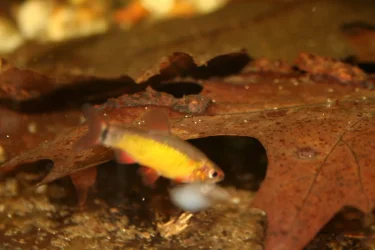
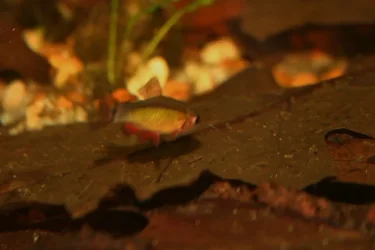
Here's a nice little Distochodid (relatives of tetras) I would love to see again. It was sold as Neolebias ansorgii, and came from the Democratic Republic of the Congo. The usual N ansorgii is a reddish fish with a stripe, They're found from the mouth of the Congo into Benin, and used to be common in Nigerian imports before the fish industry of that country fell apart.

2.6cm, peaceful, temperatures from 22 to 26, soft water and somewhat hardy after acclimation. If you ever see them, get a group.

In a single species, planted tank they will become a longterm adventure, with fry growing up with the older generations.
 

Attachments

  • ansorgii 3.webp
    ansorgii 3.webp
    98.6 KB · Views: 111
  • neolebias ansorgii 1 (640x427).webp
    neolebias ansorgii 1 (640x427).webp
    20.3 KB · Views: 109
I love Neolebias...and Nannaethiops. I think of them as the African Nannostomus.
 
But they aren't a blackwater fish :(
 
But they aren't a blackwater fish :(
They like soft water, with a low mineral content, but not necessarily blackwater. I kept and bred them in clear, pH 6.8, 80 tds water.
 
But they aren't a blackwater fish :(
True but not all Nannostomus are either. And some species are found in both clear and blackwater habitats. Well, that is, now, before the splitters say they are all different species.
 
They like soft water, with a low mineral content, but not necessarily blackwater. I kept and bred them in clear, pH 6.8, 80 tds water.
I am a bit confused because when i look them up i saw gh 5 to 12 as optimal which seemed like medium soft to hard and acidic. Perhaps the source is wrong or they are found in different catch locations. They are nice looking of course but not sure how they would do with some of the blackwater fishes (even africans) i am keeping. It is more of a compatibility issue then expression of dislike.
 
True but not all Nannostomus are either. And some species are found in both clear and blackwater habitats. Well, that is, now, before the splitters say they are all different species.
To be honest my knowledge is alot narrower than your and it is true i have to check each species before i buy them for temp/water condition compatilbity. It would be amusing to know if they do get split if it turns out the new grouping happen to fall into the same window of water condition per group.

Btw which species of nannostomus are not blackwater (i do know that a lot can be found in both blackwter and clear water but unaware of any being incompatible with blackwater - then again the difference between clear and black is so narrow for the home keeper there is virtually no difference after all many home aquariums will drift into clearwater and even white water via just the decay of leaves.
 
With Neolebias ansorgii, the range of the species is 1000 miles wide (1500 km). So there's going to be variation in habitats.
 
Btw which species of nannostomus are not blackwater (i do know that a lot can be found in both blackwter and clear water but unaware of any being incompatible with blackwater - then again the difference between clear and black is so narrow for the home keeper there is virtually no difference after all many home aquariums will drift into clearwater and even white water via just the decay of leaves.
We are told that the more recently introduced, still undescribed and ridiculously expen$ive 'super red' things--N. sp. Cenepa and the like--all inhabit clearwater habits. But I am suspect of everything that has been said about them. As we've discussed before, I sense there are shenanigans going on to keep the price high, i.e. not exporting females or replacing females of the species--if they are species-- with females of N. rubrocaudatus. So, much the way the type locations for neons and cardinals were the subject of myth in the early years, I doubt we're hearing the truth on this occasion.

N. harrisoni and N. bifasciatus are largely known, so far, from clearwater. N. harrisoni has been around forever, though not common recently, while N. bifasciatus has rarely been imported. It is one of my holy grail species. The 'original five' that that found wide favor in the hobby since the 1930s, N. eques, N. unifasciatus, N. marginatus, N. trifasciatus and N. beckfordi are all known from both habitats.
 
We are told that the more recently introduced, still undescribed and ridiculously expen$ive 'super red' things--N. sp. Cenepa and the like--all inhabit clearwater habits. But I am suspect of everything that has been said about them. As we've discussed before, I sense there are shenanigans going on to keep the price high, i.e. not exporting females or replacing females of the species--if they are species-- with females of N. rubrocaudatus. So, much the way the type locations for neons and cardinals were the subject of myth in the early years, I doubt we're hearing the truth on this occasion.

N. harrisoni and N. bifasciatus are largely known, so far, from clearwater. N. harrisoni has been around forever, though not common recently, while N. bifasciatus has rarely been imported. It is one of my holy grail species. The 'original five' that that found wide favor in the hobby since the 1930s, N. eques, N. unifasciatus, N. marginatus, N. trifasciatus and N. beckfordi are all known from both habitats.
But that isn't really answering my question - given the closeness of clearwater to blackwatwer as a condition of the water are any of these actually incompatible with blackwater or do they thrive readily in either condition? Another way of asking that is sensitivity to ph and mineral content which is still quite low for clear or even white water.

We know that some sa fishes require exterme lack of minerals for successful breeding but i am unaware of any requiring traces of mineral for spawning.

On a side note the picture of n. harrisoni look similar to pink lip.

As for location - I've been told by several sources the actual catcher explicitly do not want to give location of specific catches as that is how they make a living. Sadly sometime they stop catching fishes and never pass on the location.

As for the reds - oddly after keeping a few i'm not a fan of them but that is somewhat irrelevant to your comment. I still very much like the behavior of my maryln even if margitus have some interesting colour forms. I guess i find the margitus too noisy.
 
All I have is an anecdote. Years ago I had Apistogramma gibbiceps.They had come from a blackwater source according to the fisherman. I had medium hard water, and worked kind of hard on trying to breed them by using rain and snow melt to cut the mineral content. It failed, as spawn after spawn made it to the hatching stage and then just didn't hatch. That's softwater Cichlids with too many minerals in the water for you. The evolution of eggs is really interesting.

A few years later, I got the species again. Identical fish, They bred like bad ideas in my tapwater. Every brood hatched. I wasn't able to get info from the fisher this time, but they were in a shipment with a lot of whitewater river fish. Was this speciation underway? Were the two forms of the same species really cryptic species, or was a degree of divergence underway?

Some of the Pelvicachromis kribensis group give a similar set of questions. The Moliwe form comes from a volcanic region with minerals in the water and a pH of 7.4. They will breed in very soft water, and that actually increased brood size for me. But they'd still give me 30 healthy fry in 140ppm pH 7.4 water in Montreal. Some of the other local forms come from very soft and acidic water, and my experience breeding them says I had to go with very soft, acidic water to get anything from them. In "Moliwe" water, the eggs didn't hatch.

If we go with Evolutionarily Signifiant Units and look at a Nannostomus, there is no reason why 2 identical to the human eye fish would not have had genetic divergence and adaptation, if they came from habitats long isolated from each other. They may have been isolated from each other for longer than we've been fouling our nests on this planet. Or, they may be just fine in either habitat, and move between them. Since evolution is directionless and random as a process, different things can happen to fish or eggs in different habitats.

I think you could get a pencil fish species and learn all about them, and I could get the same species and do the same, and we might have different conclusions if they came from opposite ends of their ranges. I'm not saying we would, but that result wouldn't be weird from what I've experienced with almost 40 years of breeding killies and dwarf Cichlids. Questions breed questions.

 
All I have is an anecdote. Years ago I had Apistogramma gibbiceps.They had come from a blackwater source according to the fisherman. I had medium hard water, and worked kind of hard on trying to breed them by using rain and snow melt to cut the mineral content. It failed, as spawn after spawn made it to the hatching stage and then just didn't hatch. That's softwater Cichlids with too many minerals in the water for you. The evolution of eggs is really interesting.

A few years later, I got the species again. Identical fish, They bred like bad ideas in my tapwater. Every brood hatched. I wasn't able to get info from the fisher this time, but they were in a shipment with a lot of whitewater river fish. Was this speciation underway? Were the two forms of the same species really cryptic species, or was a degree of divergence underway?

Some of the Pelvicachromis kribensis group give a similar set of questions. The Moliwe form comes from a volcanic region with minerals in the water and a pH of 7.4. They will breed in very soft water, and that actually increased brood size for me. But they'd still give me 30 healthy fry in 140ppm pH 7.4 water in Montreal. Some of the other local forms come from very soft and acidic water, and my experience breeding them says I had to go with very soft, acidic water to get anything from them. In "Moliwe" water, the eggs didn't hatch.

If we go with Evolutionarily Signifiant Units and look at a Nannostomus, there is no reason why 2 identical to the human eye fish would not have had genetic divergence and adaptation, if they came from habitats long isolated from each other. They may have been isolated from each other for longer than we've been fouling our nests on this planet. Or, they may be just fine in either habitat, and move between them. Since evolution is directionless and random as a process, different things can happen to fish or eggs in different habitats.

I think you could get a pencil fish species and learn all about them, and I could get the same species and do the same, and we might have different conclusions if they came from opposite ends of their ranges. I'm not saying we would, but that result wouldn't be weird from what I've experienced with almost 40 years of breeding killies and dwarf Cichlids. Questions breed questions.

You might find this read interesting:

As there are several similar species. I have this fish now and one thing i will say is that despite the pictures not showing much colour they are actually extremely high on the eye candy list. The group i have 8 in a 100 are pretty nice though in truth they are a bit shy (and very young ranging from 1/2 inch to 1 1/2 inch) but they show up in 1s and 2s.

Anyway as to breeding description in the text above it appears there are both similar fishes and different populations found in different areas which could explain your results.

Bit surprise this species is not more popular but if they are picky about water for breeding purposes that might explain the situation.
 
Apistogramma gibbiceps is a pretty one, if you can handle low key beauty. But my experience backs the article up - it's a complex of closely related, similar fish. It's the breeding that tells us.

We tend to compartmentalize ourselves. As far as the hobby goes, I'm lucky that I'm not a scientist, that I like all sorts of fish, and that I have developed a small understanding of how evolution works. It's a form of entertainment for me. Technically, that makes me a dilettante and a lightweight. I don't care - I'm a hobbyist.

I love my killies, and my dwarf Cichlids, and recently finding one of my favourite killies in the same stream as one of my favourite dwarf Cichlids, in different microhabitats metres apart, was a delight. It was educational too.

We learn a lot if we look at the habitat and learn about as many of the fish in it as we can. What happened or is happening with a small Cichlid is the result of the same pressures on the local pencil fish, tetras, catfish, etc. Too many collecting reports from hobbyists say "we found a species from the group we wanted and threw back some other fish we didn't bother to identify". Even if all you care about is the one fish you wanted, there's info in the fish you should have identified. Something as simple as temperature may not be in an article about the tetra you have, but could be in an article about the Cichlid that shares the same biotope.
 
- given the closeness of clearwater to blackwatwer as a condition of the water are any of these actually incompatible with blackwater or do they thrive readily in either condition? Another way of asking that is sensitivity to ph and mineral content which is still quite low for clear or even white water.
I know of no reports, published or anecdotal, that have any Nannostomus species being intolerant of either habitat. Anecdotally, mine have thrived in both, though I have not kept the new 'super-red' things, N. bifasciatus or N. britskii.

On a side note the picture of n. harrisoni look similar to pink lip.
In life it's not even close. N harrisoni is much larger and more slender and elongated. It is single-striped vs triple-striped for the N. trifasciatus group of which your red-lips are no doubt a member. Since its commercial introduction in the 1950's. N. harrisoni has most consistently been confused with N. unifasciatus--another single-striped, slender, elongated species. But as you know, that species assumes a snout-up posture and N. harrisoni does not.
 
In life it's not even close. N harrisoni is much larger and more slender and elongated. It is single-striped vs triple-striped for the N. trifasciatus group of which your red-lips are no doubt a member. Since its commercial introduction in the 1950's. N. harrisoni has most consistently been confused with N. unifasciatus--another single-striped, slender, elongated species. But as you know, that species assumes a snout-up posture and N. harrisoni does not.
Fyi: I consider n. unifasciatus huge - nearly 3x the size of n. marilyn
 

Most reactions

Back
Top