Aggressive Hydra !

Back in the fold22 7

That One Guy
Staff member
Global Moderator ⚒️
Supporting Member ⭐
Joined
May 25, 2019
Messages
6,576
Reaction score
9,976
Points
113
Location
On the banks of the Yellowstone
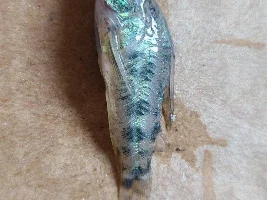
Wow ! I have never seen this before . I do not actually know if these poor unfortunates were ensnared by the hydra or if they were weak fish or what but these are half inch fish . Time to get a few Blue Gouramis .
IMG_2614.webp
IMG_2613.webp
 
Oh wow, those are some of the biggest hydras I've ever seen!
I had an infestation of these Hydra over a year ago and I was just sure I had eradicated them . I had not seen them in almost a year and lately , since I’ve been hatching and feeding baby brine shrimp ( BBS ) to other fry and dumping the excess in my Endler’s aquarium they reappeared . They laid dormant somehow . Nothing new has been added to the aquarium so they have to be sleepers that reawakened . Evidently they have grown beyond BBS and now relish larger fare . Sixty years of fish keeping and this is a first for me . This is weirding me out .
 
No gouramis!

I feed a lot of brine shrimp, and if there's one hydra encysted in the tank, it'll awaken and spread like dumb ideas with that food supply. There are lots of different species running as Hydra, and I know that one well. They eat fry and sting adults, but they can be defeated.

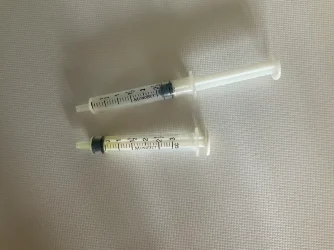
I take a syringe and attach about three inches of airline to the end. You can ask at a pharmacy for syringes without needles. I have ones from a friend who works in a lab. Mine hold more liquid than the thin ones for vaccines and such. Pull up regular Hydrogen Peroxide and gently shoot the hydra, one by one by one from very close. Just a tiny shot will do it. If you're in the Yellowstone area, pretend they're Custer's cavalry and save the women and children.

In a ten gallon tank, I'd do maybe 3 syringes before I took a break. The fish aren't harmed but it takes time for the H2O2 to just become water. It can take a few treatments, but it works. I've actually eradicated hydra in a few tanks. When I haven't, a bottle of peroxide and a syringe are always at the ready for when I see even one.

Unfortunately, it doesn't kill snails too. Blasted Hydra can look okay for a few minutes but then float off the glass. A water change doesn't hurt.

Locally, I get a smaller photosynthesizing Hydra that comes in, a green one that doesn't do much to fish. There are also ones bigger than yours I haven't seen here but that were common inland, and yours, the most common one. I accept that I'll always see them as long as I collect live food from outdoors. Since I discovered the peroxide trick, they no longer worry me.
 
This may be a big help if you have a Hydra Problem. I use Flubendazole and I get it from Dr. Harrison here:
https://www.inkmkr.com/Fish/ItemsForSale.html

What is below is from here: JAKA Article on Flubendazole and resources

Eradicating Hydra and Other Pests with Flubendazole
From: Journal of the American Killifish Association September/October 2003 Vol.36, No. 5
By Charles Harrison, Ph.D.

This article is first about hydra and its eradication. Secondly, it is about a lot of relief from some of the most hideous afflictions of tropical aquarium fish, including wasting disease, which is often associated with the presence of Hexamita, a protozoan parasite, and velvet disease, a common scourge of captive killifish which is associated with the presence of Oodinium or Oodinium-like organisms.

My aquariums occasionally have been plagued with hydra during the past 40-plus years of fish keeping. These tiny anemone-like Cnidarians have invaded my tanks when least expected presumably being introduced along with live collections of native fishes, plants, and live food organisms. They eat live foods, such as newly hatched brine shrimp nauplii, and they also eat newly hatched fry. Furthermore, they just make an aquarium look bad.

In attempting to control or eradicate hydra, I have experimented with copper salts, copper complexes, formalin, and several over-the-counter remedies, including Clout®, Copper Safe®, Fluke Tabs, Boseman’s Solution, and several others. I’ve tried electrocuting them with copper wires and a battery and watched helplessly as the fish died and the plants dropped their leaves.

In the summer of 1999 I published an article entitled “The Hydra Kill” in several hobbyist newsletters. In these I summarized my experimental use of most of these remedies in attempts to eradicate hydra. Not withstanding the damage it caused the fish, plants, and snails, it turned out that formalin was the best hydra killer…the best of the worst, so to speak.

Several people from the AKA’s “KillieTalk” e-mail list recommended Flubendazole for treatment1. Flubendazole is an intestinal worm killer, an anthelmintic or vermicidal drug that destroys or dispels parasitic roundworms and tapeworms and seems to be an effective treatment against at least this one Cniderian. The recommended dosage was 1/2-teaspoon of 5% powder in 30 gallons of water. This dosage totally wiped out the hydra in about three days…goodbye hydra!

The hydra-killing Flubendazole that I used in my office aquarium to eradicate hydra led me to a larger realization. The “wasting” fish in that tank seemed to become cured when I added Flubendazole to the water. Whoa! This was quite a remarkable revelation. My intent was to remove the hydra and any possible nematodes and, to my surprise, the disease I have found to be associated with a particular protozoan species was cured.

 
Flubendazole is effective, if you can get it. In Canada, it tends to be black market, under the table stuff, as it's only legal with a veterinary prescription. I suspect that's the story in many countries.

It's easier than the peroxide shooting, but much less sporting and a lot more expensive. With your bare tanks, peroxide would be very easy, as would flubendazole. I keep some of the medication on hand as farm raised fish often come in with Camallanus nematodes. I haven't had them here for years, but the possibility always exists.

@TwoTankAmin - how water soluble is flubendazole? I've always administered it in food.
 
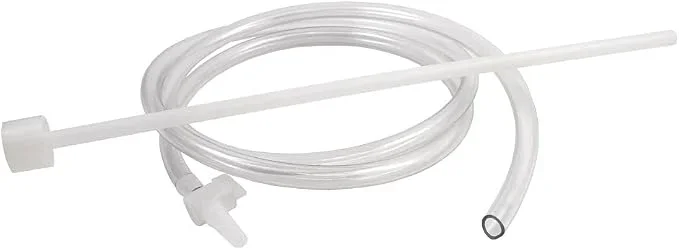
We can get flubendazole in the UK, it's in some worm & fluke treatments. But those of us who have ornamental snails and shrimps can't use it as it kills them. I have the odd few hydra in my shrimp tank and so far find that carefully sucking them out during a water change keeps their numbers right down. For a tank this small I use a wine making siphon tube with a rigid section at one end which I use to remove the hydra. Like this with the cup on the end removed
siphon tube.webp


I do remember school biology lessons - a whole new hydra can grow from one tiny piece which is why I am careful to remove the entire thing.
 
Wow ! I have never seen this before . I do not actually know if these poor unfortunates were ensnared by the hydra or if they were weak fish or what but these are half inch fish . Time to get a few Blue Gouramis .View attachment 382558View attachment 382559
When I had shrimp I got some hydra and seed shrimp with an order. The seed shrimp were a PITA to get rid of, but Fenben (Fenbendazole; de wormer for dogs/livestock) worked on the hydra like a charm.
 
Thank you @GaryE and @TwoTankAmin . Your response is greatly appreciated and very useful . I have some syringes and want to try Gary’s method just out of meanness and to attack these things with extreme prejudice 🤣 . On the other hand these things could get into my other aquariums if I am not very careful , which I have been , and I think that I will employ the genocidal method that TwoTank recommends in his post . After seeing what these things can do I don’t want them in my system at all . Period .IMG_2624.webp
 
Here is what Dr. Harrison suggests for how to make it more soluble.

*Dissolving the Flubendazole compound may be difficult. Two methods work for me,
1. Take out a large cup or microwave safe bowl of tank water. Heat it in the microwave until
it is too hot to touch - not boiling, just hot. Add the required 10% Flubendazole powder to hot
water and stir to dissolve. Allow it to cool some and gradually pour the solution into the tank to
be treated.
2. In a small measuring cup or large spoon, add the required 10% Flubendazole powder. Add
several drops of unflavored Vodka to the powder to begin a slurry and then almost a solution.
Don’t add more than half again as much powder you are working with. Stir in all well and then
thoroughly mix the slurry into the tank to be treated.

Charles H. Harrison
charles@inkmkr.com

I use the vodka method. It gives me an excuse to always have a bottle of Stoly in my freezer. However, I will take out some water from the tank to be dosed and further dilute the slurry. I usually use a 1 quart, glass Pyrex measuring cup and fill it close to full with water. Some of the solution sticjs to the sudes of it and I reinse that out into the tank using tanks water. I have 2 single cup measurers as well as the 1 quart. They are all dedicated for tank use only.
 
I've seen flubendazole in alcohol in US Tractor Supply Stores, as goat dewormer. I've been very leery of the alcohol.
 
I believe that a medication called Absolute Wormer Plus is available in Canada. It is not cheap. The one below is $128.12. The 10 gram size is $80.55. but that is for 2x5 gram bags

61SNKQH6Z0L._AC_.jpg


Absolute Wormer Plus - Anti-Parasitic Fish Medication - Flubendazole for Fish with parasites and Flukes
The above are sold via Amazon in Canada here:
https://www.amazon.ca/Wormer-Plus-A...-Flubendazole/dp/B0DFJW6NY1?tag=fishforums-20


Wormer Plus (typically manufactured by Cloverleaf/Absolute) is a popular Flubendazole-based anti-parasitic medication used for aquarium fish and birds. In Canada, you can buy it online through platforms like Amazon Canada or from localized aquatic suppliers such as Pet Central Limited.
 

Attachments

  • 1782675192074.webp
    1782675192074.webp
    80 bytes · Views: 30
  • 1782675192085.webp
    1782675192085.webp
    80 bytes · Views: 32
  • 1782675192069.webp
    1782675192069.webp
    112 bytes · Views: 23
  • 1782675192063.webp
    1782675192063.webp
    80 bytes · Views: 32
  • 1782675192058.webp
    1782675192058.webp
    112 bytes · Views: 23
  • 1782675192047.webp
    1782675192047.webp
    112 bytes · Views: 29
  • 1782675192052.webp
    1782675192052.webp
    80 bytes · Views: 31
  • 1782675192042.webp
    1782675192042.webp
    80 bytes · Views: 27
  • 1782675192037.webp
    1782675192037.webp
    112 bytes · Views: 23
  • 1782675192026.webp
    1782675192026.webp
    112 bytes · Views: 26
  • 1782675192031.webp
    1782675192031.webp
    80 bytes · Views: 23
  • 1782675192080.webp
    1782675192080.webp
    112 bytes · Views: 25
Last edited:
I never did get any of that goat wormer to rid myself of the Hydra that had been plaguing me . They came back after a long dormancy when I resumed feeding BBS to my Endler’s . Now , my Hornwort has died off completely and I have resumed feeding BBS again and no reappearance of the Hydra . I will assume that the Hydra were sleeping on the Hornwort . This is a bare bottom aquarium with nothing in it but a sponge filter . Figure that one out .
 
I used the Fenbendazole [ dog wormer] to eliminate hydra.
dosed daily it worked in 1-3 days.
I mixed 1 gram [ packets are pre weighed in dog meds] of 22% fen with 200 ml water.
That made the solution I dosed at 20ml per 10 g of water.
I would get the fen at petsmart or tractor supply.

I have also used flubendazole and alcohol in aquariums before.
Part of reef keeping is known as carbon dosing to remove nitrates is done with daily vodka doses.
After installing it into a delicate reef tank I never worried about using it to make the flubendazole dissolve.

Funny but with all the tanks I kept I have only ever had hydra in livebearers tanks.
Maybe just luck?
 

Most reactions

Back
Top