Separating substrate

MattW90 206

Supporting Member
Staff member
5x Tank of the Month 🏆
Global Moderator ⚒️
Fish of the Month 🌟
Supporting Member ⭐
Joined
Jul 18, 2021
Messages
2,040
Reaction score
2,796
Points
113
Location
Greater Manchester
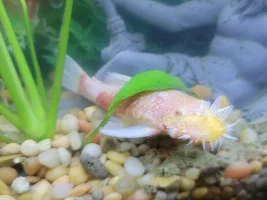
My tank holds 3 types of substrate at the moment, 2 different gravels and sand. Originally, the tank was a mixture of the lighter gravel and sand, which looked good but made the fish's colour weak. I then added in JBL dark Manado, a substrate I have used many times before. I did remove a majority of the original substrate before, but couldn't remove what held up the hardscape. To cut a long story short, that substrate has now leaked into the other areas and has made the tank look a tad silly, with a now majority dark substrate containing lighter patches across the tank. Is there any product or method to help filter out the smaller gravel/sand? I have noticed that when gravel vacuuming, the Manado has less weight than the other two substrates.
IMG_0625.webp
 
You can go the foodie route, they have hand held sieves and sifters in varying sifting sizes.
 
You can sort materials by size easily. The easiest, though more expensive route it to get aggregate sieves, the gold panning community uses these often and you can get them so that they will fit on top of the white 5 gallon pails that are common in Canada and the US, I often collect my own gravel and use something similar. These kits are sometimes known as Classifier sets. These will sort gravel from sand without much effort but if the size difference between the gravels are close then your only other hope would be if the gravels had different densities, to utilize the property of the gravel to separate them would be akin to panning for the denser gravel. Looking at your gravel the darker gravel appears to be larger than the lighter gravel so you might be able to find a screen size that would work for both.

An alternative to the classifier route would be to make a small wooden frame and mount 2 layers of 1/4" hardware cloth to it to make your own sieve. If you align the two layers exactly then you have a 1/4" sieve but if you offset one from the other you can affect a sieve size between 1/4" and 1/8" with 1/4" for one or perfectly aligned layers, and 1/8" (actually slightly less), based on putting the second layer on with 1/8" offset on both axis from the first set. This will not be exact but it is quicker than what I did by taking expanded metal and drilling out the holes to the size I want, and it would be relatively inexpensive.
 
To be honest, given that there is is sand mixed in with it all, it may be that your only option is to do as quick a breakdown as you can, saving your water into large buckets similar to what I recently purchase (food grade) off amazon for syphoning my water out as my 80 litre tank is high up and I have to stand on a very high stool my husband bought for himself (medical type) which he no longer uses.

If you do decide to go with this, here's the link for buckets. https://www.amazon.co.uk/dp/B00ECVX1NQ?tag=fishforums-20

Put some water filter and heater and some plants in one and rest of water in others and do as quickly as possible before getting previously prepared new substrate ready to go as soon as all out and ready to rebuild. Keeping some of the gravel to go under rocks or where not seen so much maybe?

Maybe cheap plastic washing up bowls to hold rocks and wood short term.

Full days work, and may loose some older or easier stressed fish possible, but cannot think of much other way unless one of the other suggestions work?
 

Most reactions

Back
Top