What's new

Which water testing strips for ease of use for beginner please?

Jennet

Fish Crazy
Supporting Member ⭐
Joined
Jul 20, 2026
Messages
207
Reaction score
274
Points
63
Location
Stourbridge, UK
I kept tropical fish for many years and have never tested the water, just used dechlorinator at set up. So after slapping my wrist, could you please help me find the best (if possible simple) test strips to use in a new tank I just set up a few days ago and is going through cycling. I want to have natural plants as well as a couple plastic. I have a 4 year old Grandson who is going through the lengthy process of being tested for Autism/Attention Defecit Hyperactivity Disorder, and is EXTREMELY curious. I currently have to spend a great deal of time preventing him from climbing up and stopping him putting his hand in the tank. We will get there slowly. Many thanks.
 
Hi, I use Hoviran 7-in-1 test strips as a quick guide. I also use the Aqua One 5-in-1 liquid master test kit, available on Amazon. I normally test the water with the strips a couple of times a week. If I notice any issue with the result, I test again with the master kit, then fix whatever issue is found, if any. Fingers crossed and touching wood, I don't normally have any issues. Regular testing is important to maintain good-quality water that will, in return, keep healthy fish. A lot of people wait for a noticeable problem such as unhealthy or dead fish and plants before they act. Prevention is always better: good housekeeping in the tank, regular water changes and regular testing. :fish: :fish:
 
Hi, I use Hoviran 7-in-1 test strips as a quick guide. I also use the Aqua One 5-in-1 liquid master test kit, available on Amazon. I normally test the water with the strips a couple of times a week. If I notice any issue with the result, I test again with the master kit, then fix whatever issue is found, if any. Fingers crossed and touching wood, I don't normally have any issues. Regular testing is important to maintain good-quality water that will, in return, keep healthy fish. A lot of people wait for a noticeable problem such as unhealthy or dead fish and plants before they act. Prevention is always better: good housekeeping in the tank, regular water changes and regular testing. :fish: :fish:
Thanks, I'll go and have a look as I have an Amazon account, so easiest for me to use. Also, I am thinking of putting a couple of live plants in terracotta pots (already have a few very small one of these). Will children's play sand work for them with some plant food? Think I have seen you can get something to put in pot? The half a brain cell I have left is getting overworked and discombobulated now from all I am reading and trying to take in.
 
Most of the multi-test strips don't include ammonia which is important to test for in a new tank. You would need to buy either ammonia test strips or a liquid ammonia tester as well.


You need to be able to test for ammonia and nitrite as these are the fast fish killers. Nitrate is useful as that's a slow killer if allowed to get high for a long period (probably high nitrate stresses the fish and stress leads to lower immunity)
pH is also useful but less important than hardness.
GH or general hardness is important as we should aim to keep fish which come from the same hardness as our tap water. But we don't need to buy testers as our water providers' websites should contain that information. There are several units they could use; fishkeeping used just two - ppm (also called mg/l calcium carbonate) and dH (or German degrees). Hardness data is usually found in the water quality section.
KH, carbonate hardness, is also useful. This affects fish indirectly, it stabilises pH. High KH means it is almost impossible to change pH while very low KH allows pH to drop if it is all used up. This is on some water company websites as "alkalinity".
 
Personally I think the liquid test kits are better than any strips. More accurate. Which still, can vary from brand to brand. I would suggest the classic API master liquid test kit. (It includes ammonia test)
I have Aqueon 7 in 1 srips. As has been said, ammonia is not included so I also have Aqueon ammonia strips.

Normally I have always used an API liquid master kit but the nitrate test is just cumbersome and a pain. Many species can take a much higher nitrate level but I like Panda Garra which are extremely susceptible to nitrates so I have to keep a close watch and keep the nitrates at 10 PPM or lower. 20 PPM is pretty quickly fatal for this species. So I got strips just to make it easier to test for nitrates. Liquid tests are probably more accurate but strips are more convenient and accurate enough for my purpose. Hold the strip in the tank for like 30 seconds and done.

@Jennet : You say the grand kid is being tested for Autism/Attention Defecit Hyperactivity Disorder. Be careful. I don't know a lot about this but it seems that such a child can be strongly affected by a loss of something well liked. No matter what you do fish DO die.
 
I've used test strips & liquid reagent tests & IME they are very similar. Strips only have a "range" rather than a ppm/l but that's usually enough. In the US we have 5 in 1 strips but also 6 in 1 (both ATI brand?) that include ammonia. You may find similar in UK. Strips are much faster.

Just to expand on Essjay's post, KH is needed for nitrifying bacteria (the beneficial cycling kind), for plants & stable pH. It gets "used up" & you need to replace it with regular water changes. I think much of the UK has higher GH & that usually, but not always, means higher KH. Your water supplier site or a local fish shop can help.

If you have chlorine or chloramines in your tap water, you absolutely need to dechlorinate any time you add water. Top offs or water changes (preferred) will need treatment unless you have a private well. I have chloramines where I live & use Prime. If you only have chlorine, you can use the less expensive bisulfate, but why risk it? OK, I'll save the Prime promotion for another time.

What size tank will this be? The bigger, the easier it is to keep stable & the more fish options. We can help you choose if you'd like, but we'll have more questions ;) In my limited child experience, they tend to like colorful active schooling fish...but grandma's choice.
 
If you have chlorine or chloramines in your tap water, you absolutely need to dechlorinate any time you add water. Top offs or water changes (preferred) will need treatment unless you have a private well. I have chloramines where I live & use Prime. If you only have chlorine, you can use the less expensive bisulfate, but why risk it? OK, I'll save the Prime promotion for another time.
I also use Prime for chlorine. Stay away from any product that has aloe such as Stress Coat. Over time the aloe will build up in the gills and cause respiratory issues.
 
For nitrate testing, I use Salifert test kit. You use 4 drops of a liquid test solution and a small measure of powder. It is so much easier to use...no cumbersome shaking of the containers is needed. And accuracy is much better , down to as low as 1/10th ppm and up to 100 ppm. It's a bit more expensive than other testing kits/strips but is more convenient and accurate.
 
Last edited:
I've used test strips & liquid reagent tests & IME they are very similar. Strips only have a "range" rather than a ppm/l but that's usually enough. In the US we have 5 in 1 strips but also 6 in 1 (both ATI brand?) that include ammonia. You may find similar in UK. Strips are much faster.

Just to expand on Essjay's post, KH is needed for nitrifying bacteria (the beneficial cycling kind), for plants & stable pH. It gets "used up" & you need to replace it with regular water changes. I think much of the UK has higher GH & that usually, but not always, means higher KH. Your water supplier site or a local fish shop can help.

If you have chlorine or chloramines in your tap water, you absolutely need to dechlorinate any time you add water. Top offs or water changes (preferred) will need treatment unless you have a private well. I have chloramines where I live & use Prime. If you only have chlorine, you can use the less expensive bisulfate, but why risk it? OK, I'll save the Prime promotion for another time.

What size tank will this be? The bigger, the easier it is to keep stable & the more fish options. We can help you choose if you'd like, but we'll have more questions ;) In my limited child experience, they tend to like colorful active schooling fish...but grandma's choice.
Only a small 80 litre for now which I am just cycling. Think I am going to get small things like guppies and such like for this one. I have a 'fish tank shaped hole' of around 100 W, 80 H and 50 deep once I sell two of my vivs so will look for something just a tad larger for that once I get something to fill it with. :p
 
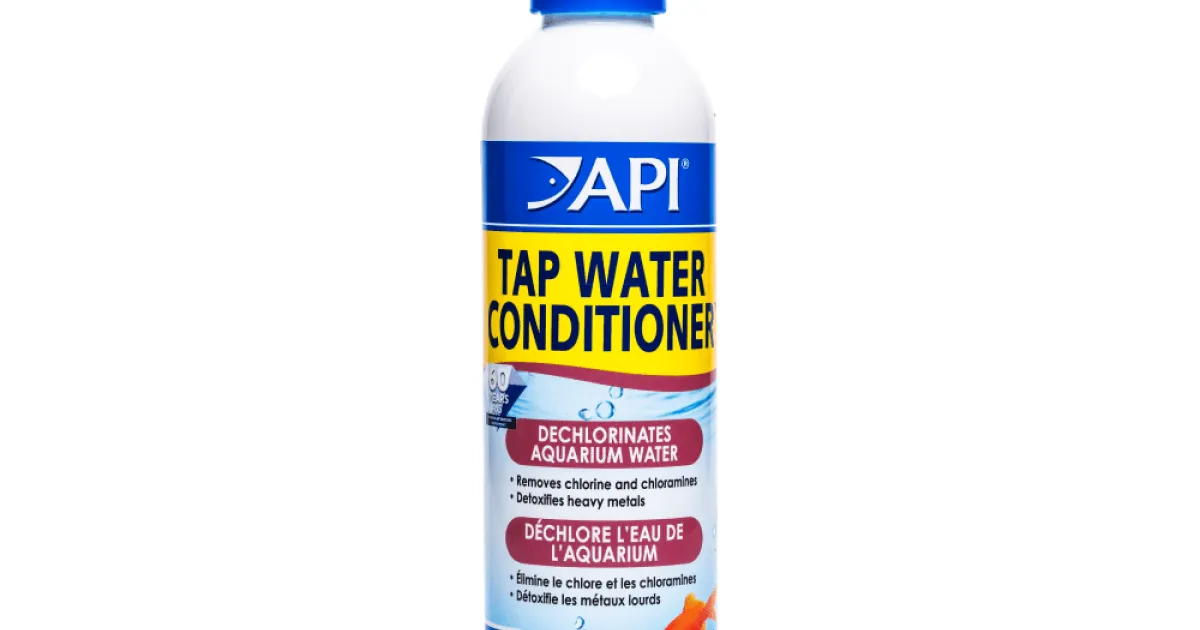
If your water company uses chlorine and not chloramine, look for API Tap Water Conditioner. It contains just two chemicals - one to remove chlorine and one to bind metals. Other brands and also other API water conditioners contain more chemicals. The fewer chemicals we add to a tank the better.
 

Most reactions

Back
Top