What's new

Rio Amaya Pencilfish Females Strange Markings

RickyV

New Member
Joined
Dec 2, 2024
Messages
3
Reaction score
3
Points
3
Location
Texas
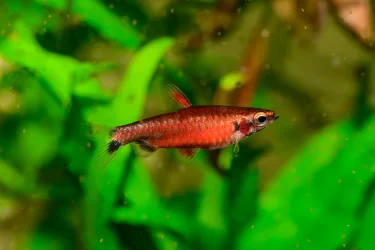
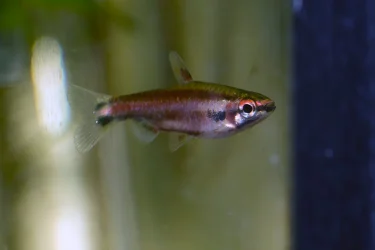
Hello, 3 weeks ago I received a shipment of rio amaya pencilfish. I have noticed a few of the females have these markings. I cannot tell if they are natural markings, scratches or disease. Unfortunately I don't remember if they were present from day 1. Some of the males also have some small pale marks. Otherwise all the fish look well and are acting normal. Anyone see something similar woth other pencilfish species?
20250802_112849.webp
20250802_113923.webp
20250802_113924.webp
20250802_113941.webp
20250802_113715.webp
 
First of all, I am not convinced they are females of N. sp. 'Rio Amaya.' I've yet to see a definitive report about what the females of all the 'new' super-red Nannostomus species/variants look like. Conspiracy theories abound that exporters are shipping females of N. rubrocaudatus or N. marginatus instead to corner the market, or whether the species/variant is color dimorphic at all and exporters can't distinguish the sexes. Their closest relative, N. rubrocaudatus, is dramatically dimorphic in that regard while their other closest relative, N. mortenthaleri, is only slightly so and most folks don't realize it or recognize it.

All that said, in my decades-long experience with Nannostomus-keeping, I've not seen this abnormal patterning to this degree before on any Nannostomus species. I've seen a much milder version that reflected injury but to this degree...I'm at a loss. It's difficult to assess in the photo but the red coloring on the male appears pale---but again, that could be the photo.
 
Last edited:
First of all, I am not convinced they are females of N. sp. 'Rio Amaya.' I've yet to see a definitive report about what the females of all the 'new' super-red Nannostomus species/variants look like. Conspiracy theories abound that exporters are shipping females of N. rubrocaudatus or N. marginatus instead to corner the market, or whether the species/variant is color dimorphic at all and exporters can't distinguish the sexes. Their closest relative, N. rubrocaudatus, is dramatically dimorphic in that regard while their other closest relative, N. mortenthaleri, is only slightly so and most folks don't realize it or recognize it.

All that said, in my decades-long experience with Nannostomus-keeping, I've not seen this abnormal patterning to this degree before on any Nannostomus species. I've seen a much milder version that reflected injury but to this degree...I'm at a loss. It's difficult to assess in the photo but the red coloring on the male appears pale---but again, that could be the photo.
Oliver Lucanos and Chris Lukhaup both have said that they are not sexually dimorphic, but Hans Harreveld on YouTube has told me they are and has bred them. The juveniles all start out looking like the females and slowly color up to the full red
Juveniles:
But I dont know if its possible they're just being cross bred, the adults look like true amayas, but my knowledge on genetics/cross-breeding is limited.

Yeah for the most part the fish are all doing very well I've had a few losses, only from females... I'm hoping the losses were just weak fish dying off because I haven't seen any other issues in the current fish. Just this one female that looks sick that I've isolated for treatment

Here is a video of the female with the marking and the other fish in the tank. Some of the males are paler, and some have very vibrant red. I have been feeding the fish mostly baby brine shrimp, but also grindal worms, moina, and occasional springtails/fruit flies.
 
Oliver Lucanos and Chris Lukhaup both have said that they are not sexually dimorphic, but Hans Harreveld on YouTube has told me they are and has bred them. The juveniles all start out looking like the females and slowly color up to the full red
But I dont know if its possible they're just being cross bred, the adults look like true amayas, but my knowledge on genetics/cross-breeding is limited.
Yes, the fact that they spawn is not determinative, especially if it turns out they are a color variant of N. rubrocaudatus.

Here's Glaser on the state of affairs and the possible shenanigans going on:


" ...all (80) fish were extremely red, only in some of them the head and the front fifth of the body was yellowish-whitish. We do not yet know if this is a sex difference or a variance in the coloration of the males. Elsewhere, females were included in shipments that were not outwardly different from Nannostomus rubrocaudatus females. We cannot decide if these are true females of Nannostomus sp. “Super Red” or if the exporters simply met the request for females from their customers in Europe, Asia and America by supplying females of N. rubrocaudatus....As said, we do not know.”
 
A year has passed and nothing new. In April I brought 15 of them, very small. They were all the same, about 200 of them from Peru. Now as they grow, the color changes a little. Some are paler and sometimes have a little stripe. But within a few minutes the stripes disappear. They are chameleons.
 

Attachments

  • DSC_0745 a small.webp
    DSC_0745 a small.webp
    66 KB · Views: 17
  • DSC_0786 b small.webp
    DSC_0786 b small.webp
    30.6 KB · Views: 16
That's pretty standard for many Nannostomus species--the disappearance/reappearance of color and/or markings based on mood, ranking within in the shoal, stress etc. Plus, most species have diurnal color patterns and while they are usually expressed based on whether it is daytime or nighttime, it can be triggered by other stimuli.
 
To je pro mnoho druhů rodu Nannostomus celkem standardní – zmizení/znovuobjevení barev a/nebo znaků na základě nálady, zařazení v hejnu, stresu atd. Navíc má většina druhů denní barevné vzorce ai když se obvykle projevují v závislosti na tom, zda je den nebo noc, mohou být vyvolány i jinými podněty.
Ano, vím. Myslím, že by to mohl být pár. Není to noční zbarvení. V minulosti jsem choval N. beckfordi, marginatus, eques, espei, mortenthaleri a rubrocaudatus. Teď, když jsem v důchodu, jsem si koupil tyto „Amaya“. Jsou ještě velmi mladí a chyceni ve volné přírodě. Myslím (vzhledem k vysoké ceně), že časem bude trh s rybami zamořen hybridy. A ještě něco - dostal jsem je malé a byly všechny červené. Jak rostou, začínají se odlišovat, některé blednou - že by samice?
 
I did a google translation from the Czech:

"Yes, I know. I think they might be a pair. It’s not just their night-time coloration. In the past, I kept *N. beckfordi*, *marginatus*, *eques*, *espei*, *mortenthaleri*, and *rubrocaudatus*. Now that I’m retired, I bought these "Amaya." They are still very young and wild-caught. I suspect (given the high price) that the market will eventually be flooded with hybrids. And one more thing—I got them when they were small, and they were all red. As they grow, they’re starting to look different; some are fading—could those be the females?"

If you read earlier posts in the thread, you'll see there is a great mystery about females in this population (or species if that's what it turns out to be) and there might be some deception going on. So yes, they could be females, or subdominant males, or from an entirely different population.

One thing that your remarks triggered in my memory: in the literature from the early days of the hobby, from the 1930s to as recently as the 1970s, there were complaints about Nannostomus colors fading over time. As our ability to provide the environment they require--especially water conditions and diet--improved, this complaint receded. Since there's so much deception going on about these 'new' very red populations including exactly what waters they are from, there might be something lacking in their current environment that they had in their native waters. Also, are you feeding baby brine shrimp--frozen or live? That's the best natural way I know of to improve red coloration.

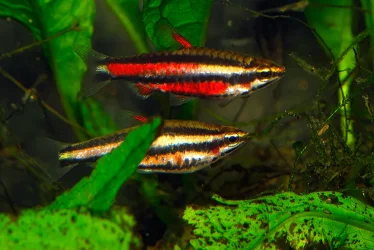
There are no inter-specific hybrids in Nannostomus, per se, though at this time there is substantial debate about whether certain populations are actually individuated species. By way of example, if the new 'red things' turn out to be color variants of N. rubrocaudatus, then an Amaya male mating with a N. rubrocaudatus female would not be a hybrid since they are of the same species.

 
Last edited:
Tohle bylo moji N.rubrocaudatus před lety. Masivní ryby. Moc podoby s N.amaya tam zatím nevidím. Mimochodem-ono se to na webu nepřekládá automaticky? Mám psát raději anglicky?
 

Attachments

  • 006 (2) small.webp
    006 (2) small.webp
    130.8 KB · Views: 10
"These were my *N. rubrocaudatus* years ago. Massive fish. I don't see much resemblance to *N. amaya* yet. By the way—doesn't the site translate this automatically? Should I write in English instead?:

I online translated this. The words of someone who likes pencilfish should be read by all!

The site doesn't translate, so someone has to paste it into an app to see what you're saying. I think we have only one other regular who speaks Czech. It would be better to write in English instead, as it's the link language for the many nationalities here.
 
O.K. No problem. The interesting thing is that I'm actually writing the answer in English. The problem was that I had automatic translation of Czech set on the website. When I posted an English post and sent it, it was automatically translated into Czech. Nothing is perfect
:)
 

Most reactions

Back
Top