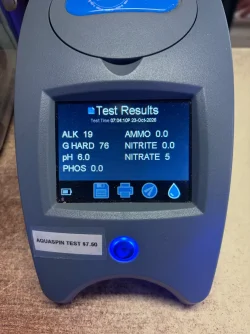
the conversion factor for dg to ppm is about 17.8. That is a pretty wide pH range you for which you are looking. You also did not offer any information regarding your tap parameters. a GH of 4 dg would work out to about 3.93 ppm.
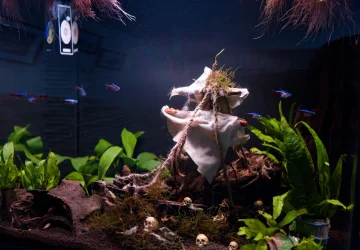
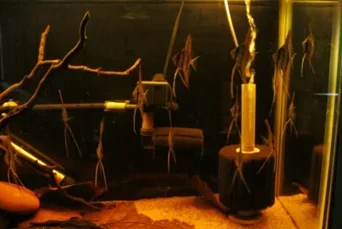
I ran a blackwater tank for Altum angels for almost a decade before I sold the angels and took down the tank. My target ranger was 6.0 for pH and TDS was to top out at at about 60 ppm. However, I ran an RO.DI unit which goves even purer water than RO alone. I did not remineralize at all I mixed the RO/DI with my tap water. My tap was abiut 7.0 pH and the pH was somewhat dependent on rain fall levels. That is because we have out own well. Under normal rainfall conditions the water was pH 7.0 and the TDS were about 83 ppm.
However, I have seen it as low aw 53 ppm during extended periods of heavier than normal rainfall and a high pushing towards 120 ppm during periods of drought. Thus mattered as to how I needed to mix the changing water. To stain the water and effect the parameters I used a combination of Rooibos tea (brewed) and Catappa leaves in the tank, alder cones and occasionally peat in a bag in the filter and when I need to lower pH I had muriatic acid.
To manage the tank I had a 3 way continuous monitor which measured pH, conductivity or TDS and temperature in C of F. This was a 55 gal. tank and I would mix up my new water in a 20 gal. Rubbermaid garbage can next to the tank, By knowing the numbers for the tank I was able to batch the changing water to meet the need to get the tank back close to the target range. This was because the pH and TDS tended to drift up between water changes. I would moved the probes from the tank to the can to get the changing water at the parameters needed.
Finally, because I am not perfect and would occasionally get the pH too low. I had baking soda handy. A small amount is all it took to raise the pH. However, when I would add either acid or baking soda, it was un very small amounts as things change pretty easily in this sort of situation. Anything at all which I added to the changing water would effect the TDS as well as the pH.
I had wanted Altums for a number of years before I was willing to start messing around with parameters. I needed to use the digital monitor to measure things since one cannot use colormetric tests on stained water. Sp between the RO/DI unit and the digital monitor I spent almost $350. There is no way I could have done what I did without both items. You have an RO unit but trying to rely on store testing is not how I would do things.
What governs oH levels in tanks is pretty much the KH level. it is important to understand that Gh is referred to as beneral hardness whick JH is referred to as temporary hardness. The reason is that KH can easily be used up.
from
https://faq.thekrib.com/begin-chem.html#reference
And RO unit removes the things that contribute to KH which is why we use it to help lower pH as well as TDS (conductiivity). I not only used my RO/DI water for the Altums but I also worked with a few of the plecos from Brazil. There they have dry and rainy seasons which change the water parameters. The change over of the wdry and wet seasons often acrts as a trigger to get the fish spawning. The pH doesn't change as much as the TDS and temperature.
Ut is somewhere between very difficult and impossible to changes one's parameters witout the proper measurment tools. With the continuopus monitor I used I could see the what was going on in in the tank every time I got near it. I got my unit a long time ago, Today the same unit is capable of being lnked to a phone app. I actua;lt used a moinitor nade by a company in New Zealand but they sell in the states.
Here us the unit they make today on Amazon., the Company is Blue lab. You have two options, one uses probes you can move abound and the pricier option is for inline monitoring. I used the an earlier model which di not do the Wi Fi and i used the pmne woth the probles. i also spent a lot less than they sell for today. Both thime and the app have icreased the price substantially.
I tried using hand held pH testers but the probe need to be kept moist and that means using a special solution for this and making sure the probe is stored properly. I did not like this system and found it unreliable, Si I bit the bullet and got the Guardian. I still have it on a shelf as once O let the Altums go to a new home a few years ago I did not need to use it. I also sold my second RO/DI unit. My first one was a 3-satge which hadCarbon->Ro->DI. I replaced the carbon and Ro modules once and then got a new unit which was 5 stage and added a sediment filter before the carbon. My unit was a portable model which came with the intake having a conection cpmpatible with a garden hose type connection. I also have a utility sink with a faucet equiped with the ability to accept garden hose connections.
I used to sell in the vendor room at a few weekend events. I learned to bring the EO/Di unit with me and had all of the faucet adapters Pytin sells. This let me make RO/DI water in my hotel bromm';s bathroom. I would mix the hotel's water with my RO/DI unit. I firest used the Mikro Omega and then the Delta Units here
https://store.afwfilters.com/portable-ro-systems/
If you can proviffe me with your tap parameters I should be able to offer you some more specific advice about working with your water. But, to do so effectively really does mean you need to be able to measure your key parameters yourself rather than taking water to the store.
Btw I never had to meaure more than I have mentioned above. Even when I did my hogh tech planted tank with pressurized CO2, I only used the basic API tests for pH, KH, GH and Nitrate. I had to add potassium nitrate to the tank for the plants beyond the noremal ferts I needed for them.