GH results and other readings - thoughts?

Chickadee32 52

Fish Fanatic
Supporting Member ⭐
Joined
Aug 30, 2026
Messages
109
Reaction score
114
Points
43
Location
Michigan US
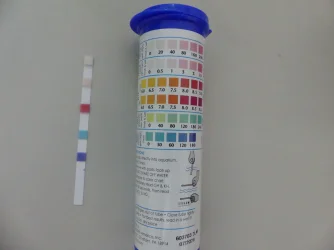
I just received the API test strips, and here are the 5 readings from the tap as I don't have a tank set up yet.
Nitrate 20
Nitrite 1.0
pH 8.5
KH 180
GH 180

Questions:
Is it common to get these nitrate and nitrite readings from tap water?
Will these readings differ that much from a cycled and planted tank?
What plants and fish thrive in high pH and GH?
Assuming my GH is too high for snails and shrimp, I will have to add distilled water to the tank. Since this will be higher maintenance, I'm thinking of keeping them in my 10 gallon instead. That leaves me with the 20 gal long. What should I keep in this tank that will thrive in high pH and high GH?
I still have some reading up to do on the KH and its relationship to GH. Any input is appreciated!
 
I am surprised that you have nitrite in tap water and consider that your biggest concern. Can you get a water quality report from your water provider’s company? If it is not published, can you phone them?

High GH and KH is ok for snails and Neocardinia shrimp but if you plan to keep cardinia shrimp it’s no good as they need soft water. If your test strips highest reading is 180, you will need to find another way you test GH and KH as the readings could actually be considerably higher.
 
Before you chase the nitrite: on a strip, the nitrate pad works by reducing nitrate down to nitrite and then reading that. The two pads sit next to each other, so a strip that hasn't been shaken off, or one held upright while it develops, bleeds the reducing pad into the nitrite pad and gives you exactly this pattern, nitrate plus a bit of nitrite. Shake it and hold it flat, and if it still shows nitrite, check that one with a liquid test before you take it as real.
 
If you possibly can, it's worth buying a master test kit that is solution based rather than strips. These tend to be more accurate. I use the API one, and I am sure others can tell you what makes they find best.
 
I tested again holding it properly, and the nitrite and nitrate don't look as pinkish this time. It's really hard to tell on these strips if there's color or not. No question on the pH and GH though. I have a new liquid test kit on order, but it doesn't have the GH, and this is what I was primarily testing for.
 

Attachments

  • P1010387.webp
    P1010387.webp
    86 KB · Views: 22
Those strips only measure as high as 180 ppm for GH. The colour on your strip is the highest colour and as Naughts said, GH could be higher because the strip stops at 180 ppm.
Are you on a well or mains water? If it's mains water, does your water provider's website give your hardness somewhere? If it does, look for a number and the unit of measurement (there are several units they could use). That's cheaper than buying a GH tester.
 
The API GH/KG test kit can be had for $12 or less. Shipping would be more but, if you spend $49 here (NJ) you can get free shipping: https://webbsonline.com/Item/api-pond-general-carbonate-hardness-kit

They have a Labor Day sale giving 15% off. So if you need a few more things you can save a fair bit. Amazon appears to be out of stock on this kit as does kensfish.com.

Also, most test strips are not the best option for testing. The ones that are decent will cost a lot more than you would want to pay.

AI Overview

API test strips offer a reasonable general estimate for routine aquarium monitoring, but they are less precise and reliable than liquid master test kits. [1, 2]

Accuracy and Performance
    • General Trends: Most users on the Aquarium Co-Op Forum agree that API liquid test kits are consistently more accurate and reliable than test strips. [1]
    • Parameter Reliability: pH and nitrite readings on API 5-in-1 strips tend to match liquid kits closely, while nitrate and hardness (GH/KH) can be harder to read precisely or may slightly overestimate values. [1, 2]
    • Missing Tests: Standard API 5-in-1 strips do not measure ammonia, requiring you to purchase separate API ammonia strips which community members find less dependable than liquid drops. [1, 2]
    • User and Storage Error: Strips are prone to environmental degradation if moisture gets into the container, whereas liquid kits suffer from color interpretation errors or improper reagent shaking. [1, 2, 3]
 

Most reactions

Back
Top