What's new

No Water Changes?

pkppv

Fish Crazy
Joined
Oct 16, 2011
Messages
383
Reaction score
0
Points
0
Location
Voluntown, Connecticut (U.S.)
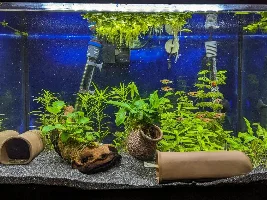
I am well aware of the importance of water changes, and i am well aware that most fish health issues arrise due to a lack of water changes and a buildup in nitrogen based toxins BUT i have a 40 gallon tank, somewhat understocked, that i have not changed the water in for 3-4 weeks. I almost always change weekly so i feel pretty bad about this sort of neglect. however, i do keep up with the testing of the water and have found that, even after over 3 weeks without a water change, my nitrites and ammonia are 0 and nitrate is a measely 10ppm. I do have 3 different filters on the tank, with a total of 760gph all tolled. They are also well stocked with bio media. Is this bad of me to not change the water is there are no measurable problems? Im just being lazy because iv never had a tank that big and all i have is a 1 gallon bucket...but maybe my lazy approach isnt all that bad? you tell me. Thanks!
 
There is nothing wrong with it. For me personally because I am overstocked, I choose to do weekly, 50% water changes. If you are understocked and are planted, there is no reason why you have to do weekly water changes. I just always suggest it here on the forum when I'm replying to someone's post because it's always safer to do more water changes than it is to do less water changes. If you are comfortable with your maintenance program and your fish are healthy, that is the only thing that matters. :good:
 
It is okay to do less then weekly water changes if nitrate does not build up. However nitrate is not the only reason to change water. Another important one is to replenish buffering capacity especially if you have soft water as nitrogen cycling will slowly consume this.

One thing I do disagree with is not changing the water if there are no measurable problems. This leaves you only with the alternative of changing the water once a problem arises. Once there is a problem its a clear indicator that you waited TOO long to do a water change. Take the buffering capacity example. Buffering capacity holds your pH steady. Once buffering capacity is consumed tanks can suffer very fast pH changes, its almost always a pH crash. More frequent water changes also keep the tank parameters closer to your tap and the fish experience much less of a change when you change water. We may only test pH, ammonia, nitrite, and nitrate because these are the most important parameters in a tank, but that is not to say that all the others are irrelevant. They often become more relevant the longer you go between water changes.
 

Most reactions

Back
Top