New Tank, Danios Dying One By One Different Diseases

Angie_B

Fish Fanatic
Joined
Sep 23, 2008
Messages
69
Reaction score
0
Points
0
Location
Lincolnshire
Hello,

I have recently started keeping a tropical tank again after a break of some years when my last tanks water heater malfunctioned and basically cooked my fish. I took a sample to the pet store and they said my water was fine, so I came home with 6 Leopard Danios and 2 Platty's.

My tank is 100 litres.

Straight away, one of the Danios didn't look too happy and died without any sign of obvious illness a few days later. Since then each of my Danios have been dying. I have done a lot of research on the net and I think the second may have died of Fish TB as he was very tiny, skinny and started lurking on his own away from the others. The next one died horribly, eventually of Dropsy and to my utter shame, I should have put him to sleep, but after reading the only way is to cut of their heads I selfishly couldn't do it, he lasted two days.

He died today whilst I was at work. Prior to this the three remaining Danios seemed fine, but when I got in tonight, they seemed to have turned a lovely golden brown colour. I had changed their food and wondered if it was that. But after some searching on the internet, I think they may have Velvet. They are darting about looking really lively, but one or two are occaisionally flicking on the sand. One has notable yellow patch on his tail fin. My two Platty's seem happy enough, even to the extent, my female is now pregnant. I am worried about them now though.

To treat the fish that had dropsy I put a treatment in the water of Interpet Internal Bacteria. The second treatment was tonight. I also did a two bucket water change and added some salt to the water and turned off the lights, as I have read this might help.

I have been doing regular water changes as there seems to be a fair amout of debris on the sand floor since the tank started and as a boost, bought some bacteria to help the filter after the first fish died. I only feed them once a day, a small pinch at around 7pm. The Danios seem to eat quite excitedly, like they are very hungry. (I have 8 plants in my tank, which all seem to be doing well, except one, which has some slight browning on the leaves).

I am going back to the pet store for them to do another water test for me and to hopefully buy a treatment for the Velvet disease.

My question is, why are they all dying of different diseases. Is it something I have done wrong. Is my tank overstocked for it's size? I will post my water test results tomorrow and invest in my own kit, to keep on top of things.

My tank has now been going for a month and to be honest, it's been really upsetting losing them to these horrible diseases. Is there something I can buy that might be able to put them to sleep gently when they get to the stage, where you know they won't pull round?

My other question is I put some frozen shrimp (I thawed them first) as a treat. Immediately the Danio that died of Dropsy seemed to get quite a large tummy. I assumed she had pigged out on the treat. Could the shrimp actually have contained something nasty?? Should I bin the rest of them that are in my freezer.


I would sincerely appreciate any help you can give and realise I have probably made some mistakes, much to my fishes cost. I am sorry this is all very rambling.

Regards
Angie
 
Most likely your tank is still cycling...as in the biological filter (colony of bacteria that consumes ammonia and nitrite) hasn't fully developed. The build up of ammonia and nitrite puts stress on the fishes immune systems, weaking them enough that different diseases start to affect them. If you don't have a liquid test kit, I'd recommend purchasing one...and test for Ammonia and Nitrite. If either is above .25 ppm, change enough water to get both below that value. Test daily, and continue waterchanges until the cycle completes...which may take another few weeks.
 
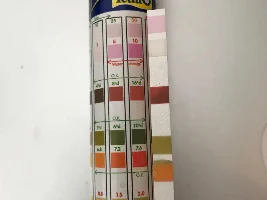
I have just had my water tested and apparently there is a slight trace of amonia but otherwise everything is fine.

He said that there should be no fish waiste settling on the bottom at all, when the poo, sorry to be graphic, it has been settling on the bottom and I have been syphoning it out. he commented the filter should be dragging this in and disolving it. My filter doesn't appear to do this. I was going to buy some Filter Aid, but he said this wouldn't help.

I bought a treatment for Velvet (Interpet) but understand I can't use it for a few days, he said wait 2 days, is this enough?


Is there anything else I can do as I really don't want to lose the other three Danios???

Many thanks for your help.
 
Fish can lose wieght with velvet.
Sounds like velvet by what you have described and with the flicking and rubbing.
How old are the danio.

Don't wait to treat for velvet its a fast killer once it affects the gills, if you thinks its defianately velvet get treating straight away.
<a href="http://www.skepticalaquarist.com/docs/heal...thprotist.shtml" tar

[url="http://www.fishyportal.com/cgi-bin/pub/diag?c=v&id=49&did=232361"]<a href="http://www.fishyportal.com/cgi-bin/pub/dia...&did=232361" target="_blank">http://www.fishyportal.com/cgi-bin/pub/dia...&did=232361
</a>
 
Hi, Angie,
I couldn't cut off a fish's head either, and I would personally think the trauma of such a procedure entirely avoidable.
I consider that the most humane way to put down a fish is with clove oil and would use nothing else myself.
It's been used as a fish anesthetic, not by vets but in a pinch by people, and if the affected fish is gently put into a pail (I have a 4 litre ice-cream pail set aside and used only for that last-ditch act of mercy) of tank water with just a few drops, depending on the amount of water, mixed in, the fish should gradually start swimming more slowly and eventually lose consciousness, at which point a much larger dose can be added so the fish can pass away in its sleep.
If too much is added initially, the fish will become distressed - and I make sure to keep the body until the fish is very obviously dead, as it would be horrible if it woke in the garbage or sewage system.
Hopefully, you'll never need to face this situation again, but anyone keeping fish might want to have a bottle of good quality clove oil on hand, just in case.

And, speaking as one who knows nothing, what type of filter and whirlwind current can snatch poop before it hits the ground without sucking the fish into its eager maw, or am I just misunderstanding something?
I ask because it sounds both tiring and hazardous for fish, and I'd like to make sure mine never get near one.
Is this person offering to sell you one that instantly dissolves poop?
Because, if so, plenty of disinterested, experienced and informed people here can advise you on this subject - just not me.

Good luck with the fish, and no doubt things will begin to work out better now with such excellent advisors as above.
 
Thank you all so much for all your replies.

I bought some Interpet treatment today for Velvet, but the shop owner said not to use it as Ihad put some Interpet Anti Internal Bacteria treatment in the water yesterday (although I only put about 5 mls in after doing a 25% water change).

Am I safe to do a big water change tonight and put the Velvet treatment in (50%???) I really don't want to lose them, but they have already turned a darkish brown colour with yellow on their tails. I am hoping when I get in from work I am not too late.

I did put some salt in the water last night, so hopefully that might help.

I thought his comment about the filter sucking in the poo was a bit odd and kept questioning him about it. My filter is a Fluval 3 and although quite powerful jet of water, it certainly isn't capable of predicting where a fish might poo and make sure it's *processed*. He seemed quite difficult with me and not especially helpful. I wanted to buy some Melafix and he wouldn't let me. I guess maybe intolerant because I am new at all this and have messed up.

Thank you for the information about the Clove Oil, I will try and get hold of some. It was awful seeing her in so much distress, knowing she was going to pass but not being able to do the right thing by her.
 
To answer the question on the Danio I am not sure as the seller didn't say. One that died of Dropsy seemed much larger than the others. I would say they are about 1 1/2 inches long if that helps.
 
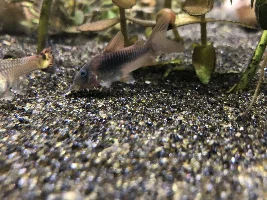
I tried to get a picture. They seem okish tonight, no flicking as I can see so far .. although still look golden to me, which is not really showing in the pic.

Another concern, is my female platty has a whitish tinge on the end of her fins, is this normal???


http://i458.photobucket.com/albums/qq303/A...ld/IMGP0665.jpg


Here is another picture of my Danio, again you can't really see the goldish tinge, I don't know if it's normal or not they seem to be swimming about less eratically tonight, although ne is nearish the top. I still don't know whether I am safe to put another treatment in so soon after the Interpet Anti Internal Bacterial one.

Can anyone advise me please????? I have kept the light off today just in case it is definitely Velvet.


http://i458.photobucket.com/albums/qq303/A...ld/IMGP0678.jpg

I really appreciate any help.
 
I had to make a decision, so did a 50% water change and added the velvet treatment, they all look fairly lively at the moment. All I can do is hope they are ok.
 
Your filter will catch any fish wastes that remain suspended in the water, but most often solid wastes sink before reaching the filter. The solid matter will breakdown over time, but the chemicals the waste is made of will remain in one form or another. It's best to clean filters (about once per month for cannisters?), by gently rinsing the media in old tank water to remove built up wastes as they will eventually decrease water flow, and continue to put nitrates back into the tank water as they decay.

The mechanical aspect of the filter only traps particle matter such as bits of leaves, uneaten food, etc...the biological aspect, i.e. the bacterial colony, takes time to grow and consumes certain chemical wastes such as Ammonia and Nitrites converting them into the less toxic chemical Nitrate which we remove by doing partial water changes every month.

Testing tank water before fish are in the tank (unless you've done a fishless cycle), proves nothing because in theory your tap water should not contain much if any ammonia. Until the tank reads no ammonia, and no nitrites it is in the process of cycling. Normally we suggest doing large water changes to keep the water clean, but that is hard to do while medicating the tank. Do you have any friends or know anyone with a healthy tank? If so you can "clone" their biological filter to assist in cycling your own.
 
With velvet you need to raise the temp and increase aeration in the tank.
Don't forget to remove black carbon if you use it in your filters.
Good luck.
 
Hello, thank you both for your replies.

I'm afraid I don't have anyone with a fish tank around me as I live in a small village. The brown bacteria that lives in filters isn't present in mine yet, except on the ends of the filter. I swapped the filter head to toe, so the brown bacteria is still in there, but not blocking up the flow. The filter is currently on maximum and there are loads of bubbles in the water.

All of the fish are alive this morning. I left the light off yesterday and will do so again today, although I think my plants will suffer.

I did the 50% water change and added the medication. Am I safe if the Amonia and Nitrate levels get too high to do another water change and add a small dosage of the medication back in?? or is this a no no.

Also you mention raising the temp, currently it is about 26c, how high should I change it to?

Thanks very much for your suggestions, really appreciate your help.
 
If you have to preform a water change during a med course you just add the correct amount of med back to the water removed.
I would suggest covering your tank so it dark.

This is taken from the skeptical aquarist link.

Like Ich, the Piscinoodinium trophont matures, then detaches and falls to the substrate, where it rounds up and encysts, in the phase called the tomont. (Ich passes through a comparable phase.) The encysted Oodinium tomont can spend three to five days at normal aquarium temperatures, dividing and dividing again as it forms tomites--— as Ich does--— but then, in an additional transformation, each tomite splits into many dinospores. There may be as many as 256 of these swarmers. Spores or tomites can also mature within the trophont while it's still attached to the fish, I understand. They are tougher than Ich, more tolerant of salt and high temperatures, and they have a longer free-swimming period before they must settle out on a host. The University of Florida Cooperative Extension Service estimates the life
cycle of Oodinium at aquarium temperatures as 10 to 14 days. The ZFIN website estimates the life cycle takes about two weeks at optimum temperatures (23-26°C). During their free-swimming tomite stage, they sustain themselves with photosynthesis. This is why you're advised to darken the tank in which you're battling Oodinium.
 
If you have to preform a water change during a med course you just add the correct amount of med back to the water removed.
I would suggest covering your tank so it dark.

This is taken from the skeptical aquarist link.

Like Ich, the Piscinoodinium trophont matures, then detaches and falls to the substrate, where it rounds up and encysts, in the phase called the tomont. (Ich passes through a comparable phase.) The encysted Oodinium tomont can spend three to five days at normal aquarium temperatures, dividing and dividing again as it forms tomites--— as Ich does--— but then, in an additional transformation, each tomite splits into many dinospores. There may be as many as 256 of these swarmers. Spores or tomites can also mature within the trophont while it's still attached to the fish, I understand. They are tougher than Ich, more tolerant of salt and high temperatures, and they have a longer free-swimming period before they must settle out on a host. The University of Florida Cooperative Extension Service estimates the life
cycle of Oodinium at aquarium temperatures as 10 to 14 days. The ZFIN website estimates the life cycle takes about two weeks at optimum temperatures (23-26°C). During their free-swimming tomite stage, they sustain themselves with photosynthesis. This is why you're advised to darken the tank in which you're battling Oodinium.


I've kept the curtains closed and switched off the light, this will be the second day. Should I remove the plants? I think they won't last without light.

Also how long should I keep the lights off for, is this ok for the fish being in darkness? I don't know how long it takes before the meds work. Is there any way of knowing when the water is safe again?


Thank you for your posts, they are really helping. I keep doing searches on the internet, but it never brings much back apart from the basic information.
 
Checked by turning the light on today. The Danio's seem to be more covered in the yellow powder and look pale. The Platty's seem lively and healthy. The Danios ate the food energetically and are swimming around normally.

Should I keep doing water changes? will this help eliminate the parasites???

Don't want to lose them if there is anything I can do to save them.

If anyone has come across this disease, please help.
 

Most reactions

Back
Top