More corydora problems 🤦‍♂️ (internal bacteria/parasite again?)

Rocky998

Kinda crazy, but somehow they let me stay
Tank of the Month 🏆
Joined
Jun 25, 2021
Messages
13,931
Reaction score
12,299
Location
NC, U.S.A
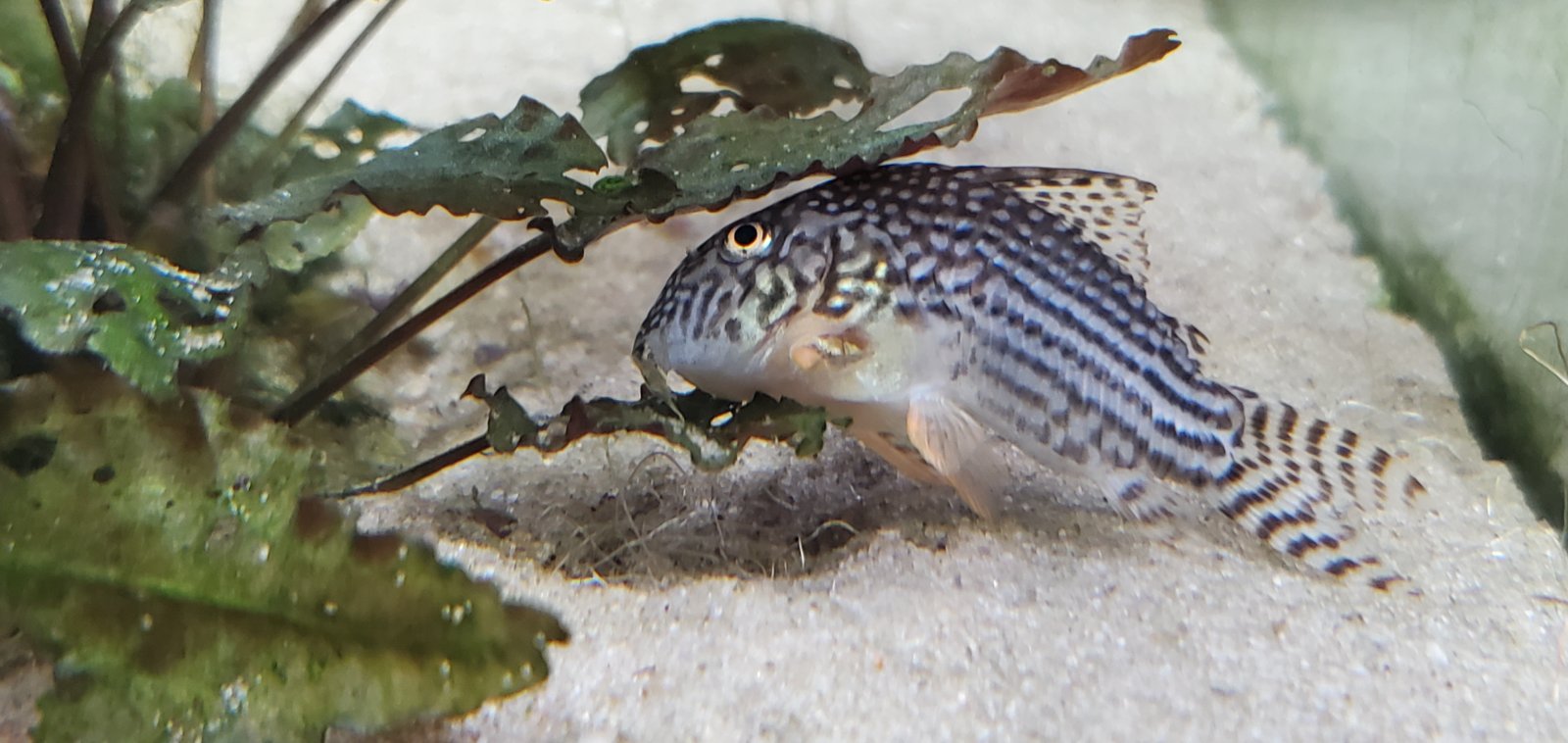
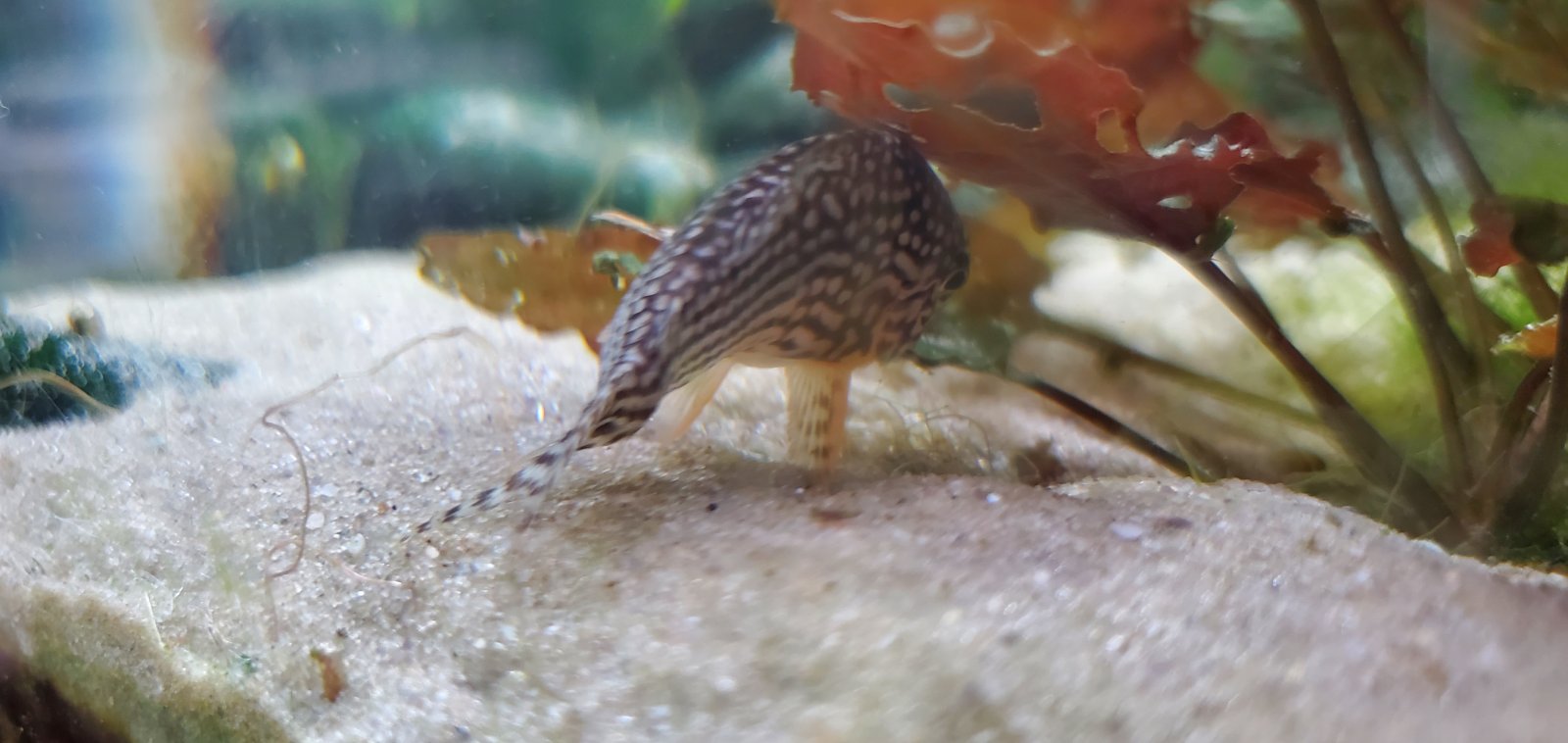
So all my corydoras have fully recovered since the last incident! (Yay!) They have all been very healthy for the past few months now. But now I have one singular corydora that is starting to show some weird symptoms like laying on its side and it almost looks like there is some minor curvature of the spine going down. Making me believe it could be internal parasites or bacteria. Yesterday they were all fine. So it literally happened overnight
My parameters:
Ammonia: 0ppm
Nitrite: 0ppm
Nitrate: N/A

I just put in a dose of paraguard as well as an air stone to increase oxygen levels. Also unplugged the heater just in case.
I have not added anything new, however, 1-2 weeks ago I turned the heater back as we enter into the cooler season and also yesterday during my waterchange I did a deep clean of the glass, scraping off all the algae and what-not. It looks really good now, but now I'm wondering if I kicked up some bad stuff along with it.
20251030_141406.jpg

20251030_141431.jpg
 
Pic of the whole tank if it helps
20251030_131409.jpg
 
It's very hard to know. I always suspect Mycobacteriosis when the fish twists like that, even with a Corydoras, but it's suspicion, not proof. If so, it's been percolating for a long time, probably since before you got the fish.

Beautiful tank.
 
Once they bend like that they are usually dead within 24 hours. It's normally from an internal problem. You can monitor it but chances are you will be removing the body tomorrow.
 
It's very hard to know. I always suspect Mycobacteriosis when the fish twists like that, even with a Corydoras, but it's suspicion, not proof. If so, it's been percolating for a long time, probably since before you got the fish.
Yikes... that would really suck if it's Fish TB. One of the few diseases that can spread to people lol. Hopefully it's just internal parasites, and maybe with a little luck and some work I can help this little guy recover even if there's a low chance.
Beautiful tank.
Thank you! 😃
Once they bend like that they are usually dead within 24 hours. It's normally from an internal problem. You can monitor it but chances are you will be removing the body tomorrow.
Yeah, that is what I'm thinking as well, sadly. Although I'm still going to try and see if I can help him get better despite the chances not being in my favor.

I'll keep the thread updated on what happens.
I would like to figure out a way to know for sure if it's fish TB though, because if it is, I won't be able to add any other fish to the tank later. That would mean this tank is permanently contaminated.
Also, if the fish is dead, should I still continue the medication for the next 4-5 days as a precaution?
 
The only way to find out if the fish is carrying Mycobacteria (Fish TB) is to have it necropsied (animal autopsy) by a fish vet or a vet who is willing to look for Mycobacteria or send samples off to a lab for culturing.

If the fish dies, it depends on what medication you are using as to whether you finish the course. If you are using something like an antibiotic in a community tank then you should finish the course of treatment. However, if you are treating the fish in a separate quarantine tank, you can stop the treatment when the fish dies and flush the tank out and let it dry to kill off most things that are/ were in it.

If you are using a liquid medication that doesn't contain antibiotics (say you use something that has methylene blue, malachite green & formaldehyde in) then you can stop treating when the fish dies and do water changes to remove the chemicals.
 
Fish tb is everywhere. I assume it's in every tank and carry on.
 
@GaryE ... I assume the statement above is likely true... so how do we combat that??? fish immune systems... but one would think heavy, regular, water changes would reduce bacteria counts in the aquarium ( assuming there are not high levels of bacteria in the water change water ), so this seems to indicate that the more we can change water out with clean safe water, the better it is for our fish.
 
If tb is everywhere in the supply chain, we can't combat it. The better we care for the fish, the longer they can encyst and hold off the pathogen. They can live a couple of years with it.
Treat them badly and they can live a couple of weeks with it.

Before we had treatments for human tb, it was the poor living in unsanitary, poorly fed and overworked conditions who died the quickest. We can see that with our fish.

It is a hard disease to prove though. I'm a tank half empty guy with it.
 
The only way to find out if the fish is carrying Mycobacteria (Fish TB) is to have it necropsied (animal autopsy) by a fish vet or a vet who is willing to look for Mycobacteria or send samples off to a lab for culturing.
Dang... I don't know of anyone who would do that here, so I'm kinda at a loss for that...
If the fish dies, it depends on what medication you are using as to whether you finish the course. If you are using something like an antibiotic in a community tank then you should finish the course of treatment. However, if you are treating the fish in a separate quarantine tank, you can stop the treatment when the fish dies and flush the tank out and let it dry to kill off most things that are/ were in it.
I'm using seachem paraguard which on the bottle says it uses a "blend of aldehydes, malachite green, and fish protective polymers"
If you are using a liquid medication that doesn't contain antibiotics (say you use something that has methylene blue, malachite green & formaldehyde in) then you can stop treating when the fish dies and do water changes to remove the chemicals.
Sounds like I can stop it whenever then, although I'm going to keep it going because the fish is still alive (and ALMOST looks like it might be doing a bit better?)
If tb is everywhere in the supply chain, we can't combat it. The better we care for the fish, the longer they can encyst and hold off the pathogen. They can live a couple of years with it.
Treat them badly and they can live a couple of weeks with it.
Alright, so basically just kinda take it as it comes type of thing since it's hard to know where it is and how to properly combat it.
Before we had treatments for human tb, it was the poor living in unsanitary, poorly fed and overworked conditions who died the quickest. We can see that with our fish.
So I just gotta treat them the best I can so they don't die a painful death early
It is a hard disease to prove though. I'm a tank half empty guy with it.
Yeah, seems to be that way. I'm hoping it's not, and maybe it isn't, because, update, the fish is still alive today and actually (in my opinion) seems to be doing a little better as well. I'll see if this hopefully continues to be the case. I'll do a 75% water change today and add more of the medication
 
Sadly it died. I'm going to continue the meds for 2 days more and then stop fully.
20251103_174714.jpg
 
@Colin_T @GaryE
I don't know what's going on... this guy just died today.
20251111_152138.jpg

He had a rapid loss of color when he briefly got caught inside the siphon but then I stopped it asap. But as time passed he stopped swimming well and then just died. Same symptoms as the last. Rapid paling, shallow breathing, and lethargic, until it just died.
I'm starting to think it's fish TB now.
So I guess I let these guys live out their lives and then take down the tank entirely?? I mean what do I do when a tank has fish TB?
 
I'm frustrated by this one and feel we haven't gotten to the bottom of it.
 
How long ago did you clean the filter, substrate and wipe the glass down?

I would do a big (75%) water change and gravel clean the open areas of sand every day for a week. You don't have to move the plants, just gravel clean a few inches from their base so you don't disturb their roots.
I would clean the filter and wipe the inside of the glass down.

---------------------

Where did the damage around the head come from, the gravel syphon or was it there before the fish got sucked up?

Is it missing the top part of the tail?

---------------------

If it wasn't caused by being sucked up then the cream damaged area around the head and face is an infection (probably protozoan). Treatment would be salt (2 heaped tablespoons per 20litres/ 5 gallons of water) or any medication with Malachite Green (aka Victoria Green) in. You keep the salt in the water for 2 weeks. This level of salt is fine for Corydoras.

If the damage on the face and head was from the syphon, then there is something else going on.

---------------------

Corydoras and most bottom dwelling fishes tend to live longer with Mycobacteria (Fish TB) than other fish, and Fish TB kills the host fish randomly. You might lose one fish every few months. They don't normally start dying off within a few days to a week of each other. It's been two weeks since the first one died and I would be looking at a protozoan or bacterial infection but not TB at this stage. When fish die in close succession, it's usually protozoan or bacterial.

While Mycobacteria is a bacteria, it is a very slow growing bacteria that can take 6 months to 3 years to kill an average sized tropical fish. Most other types of bacteria start to kill fish within 24 hours and usually within a few days of there being a noticeable issue.

External protozoan infections like Costia, Chilodonella & Trichodina can live on fish for months and not show any symptoms. However, when their numbers get out of control they can appear as a cream, white or grey patch or patches anywhere on the fish and will kill fish within days to weeks of symptoms appearing. These can be treated with salt for 2 weeks, or Malachite Green, or copper.

---------------------

Gary is correct about Fish TB (Mycobacteria sp) being everywhere. When my fish had it I rang around and emailed shops and importers all over the country and they all admitted they either had it in their tanks now or at some stage, or thought they had it in their tanks. The problem with this disease is it comes from the Asian fish farms and the fish shed the Mycobacteria cells in every tank they get put in (fish exporters in Asia, fish importers in Australia, pet shops, home aquariums). The Mycobacteria can live for years out of a fish and Paul from Fish health at the Department of Agriculture here found live but dormant Mycobacteria under rocks in a dry river bed. The river had been dry for 8 years so the bacteria can survive for at least 8 years out of water, albeit under a rock out of sunlight. They can do this because they have a waxy coating over them and it stops moisture loss and inhibits or stops medications getting to the actual Mycobacteria cell and killing it.

There are no symptoms for fish carrying early or even middle stages of Mycobacteria so you can't tell if they have it. The only time they show symptoms is just before they die. Common symptoms in rainbowfish, barbs, danios and other long slender fishes include:
swell/ bloat up overnight, stop eating, do a stringy white poop, breath heavily at the surface or near a filter outlet, die within 24-48 hours of showing these symptoms.

There's no cure for Fish TB and if you think the fish have it, you should get a fish vet, normal vet who is willing to necropsy the fish, or a university biology lab to open the fish up and look for granulomas (lumps in the organs that are caused by the Mycobacteria) and send tissue samples off for culturing to find out what species and strain of Mycobacteria it is.

So there's no cure and no way of finding out if the fish have it unless you buy 100 fish and send some off for testing. You would need to keep the remaining fish isolated from everything else you have and use separate equipment on their tank for two reasons.
1) If they are free of Mycobacteria, they remain free of it.
2) If they have Mycobacteria, you don't want it to spread to your other fish.

Wild caught fishes are much less likely to have fish TB but can contract it if they are put in tanks that have had diseased fishes in previously.

If it is TB, you can either wipe out everything in the tank and start again. But you could end up buying new fish with it and have the same problem in 2 years time. Or most people just live with it in their tank and try not to add new fish. When the last fish dies they disinfect everything and start again.

There's a couple of posts on the forum about Fish TB and how it affects people and fish. I don't have the links currently because I am using my new computer and haven't transferred the links across yet but if you do a search for Fish TB by Colin_T, or even just Fish TB, a couple should pop up. Barry Tetra? made a post about it too and I responded in that post.

If you have any open wounds (cuts or scratches) on your hands or arms, don't put your hands in the tank or get aquarium water on those wounds because you can get a localised infection that will require 6 months of antibiotics to treat. Either wear rubber gloves or just avoid sticking your hands/ arms in the tank until the sores/ wounds have healed.

 
The only way I can see this being a tb explosion is if you are leaving fish to die in the tank from tb. When the end is near, I usually grit my teeth and euthanize. Bacteria spread easily via dead fish, much more than when the fish is living.

I have had tb outbreaks with rainbowfish (which I no longer keep because of the disease being too common in them) and used the tanks and set ups again with no apparent spread. Some fish encyst the pathogen and just carry on. For example, with my West African killifish, I've never had signs of tb, and their lifespans have remained stable and normal over many many generations. Livebearers and rainbows (I find hard water fish in general) have more issues.

You could very well have a standard bacterial outbreak going on. The Corydoras group is difficult because of the body 'armour' hiding most things before they develop.

I wish we could help.

I'm frustrated by this one and feel we haven't gotten to the bottom of it.
 

Most reactions

Back
Top