
fatheadminnow
Fish Aficionado
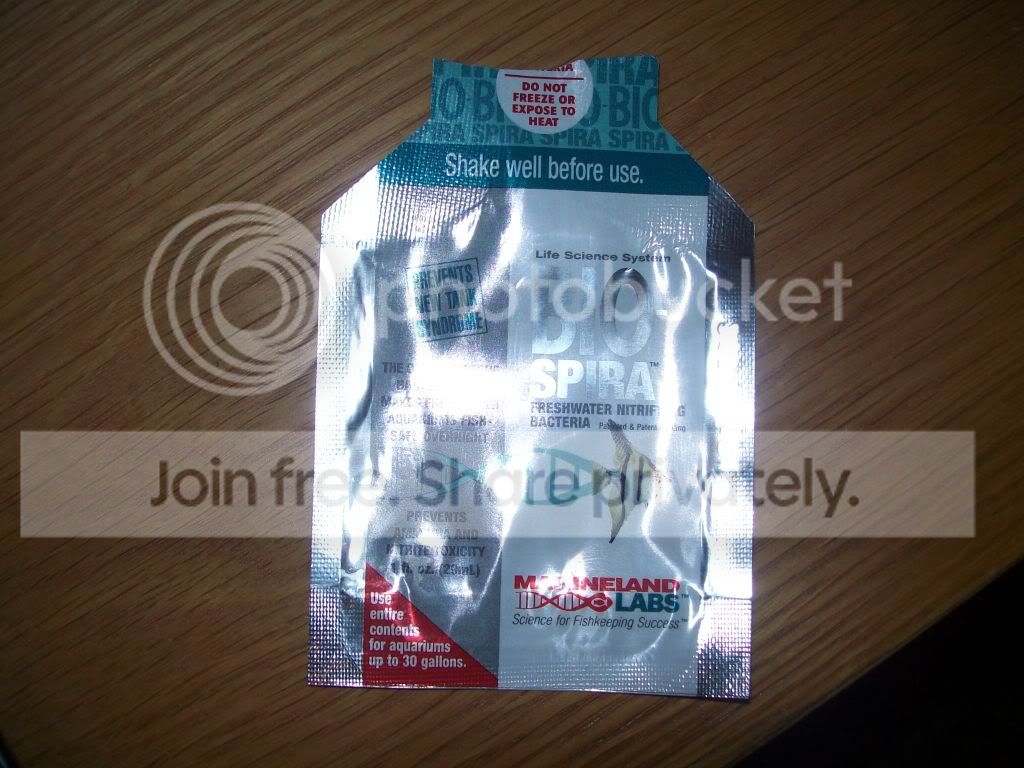
Even if they discontinued the freshwater one, I guess some places still carry it, or at least what is left...lol.
-FHM


Well, this was the only thing that was proven to work, as the package is kept refrigerated, which slows down the bacterias metabolism which makes the bacteria "dormant" until used.I don't believe in bottled/ packaged " Instant Cycles". It just doesnt make sense.

 as they discontinued freshwater ages ago
lol, yeah, they had this one there, only 2 left.it does work but that looks like the marine version
ignore ^^^


 /www.thatpetplace.com/pet/group/5426/product.web
 /www.patentstorm.us/patents/6265206/fulltext.html
Bacterial Additive Test. Six all-glass aquaria were established with an airlift undergravel filtration system (Model KF720, Neptune Products, Moorpark, Calif.) in a temperature controlled laboratory (mean air temperature 26.0° C.±1.5° C.). The aquaria were covered with glass lids but not illuminated other than room ceiling lights which were on a 14hr:10hr light:dark cycle. 6.8 kg of natural aquarium gravel (Kaytee Products, Irwindale, Calif.) was placed on top of the filtration plate. 30 l of city tap water, passed through activated carbon, was added to each aquarium. Filtered air was supplied to each aquarium from a common air source. 6 fish (Danio aequipinnatus) were placed in each aquarium and fed 0.5 g fish feed (Aquarian, Kal Kan Foods, Vernon, Calif.) daily over two feedings. Three of the aquaria (the treatment group) were each dosed with 8 ml of bacterial additive (Cycle.RTM., Rolf C. Hagen Inc., Mansfield, Mass.) on the first day and once every 7 days afterwards for an additional 3 weeks. The other three aquaria were the control group and did not receive an additive.
Results
Commercial Additive. The addition of a commercial bacterial mixture (CYCLE.RTM.) which contained Nitrobacter sp., but not Nitrospira sp., did not result in the detection Nitrobacter species by oligonucleotide probe hybridization experiments (FIG. 8). However, a band which co-migrated with a control derived from pure Nitrobacter DNA could be detected in the original commercial mixture by DGGE analysis. Nitrospira-like rRNA was readily detected in the aquarium. Nitrospira group specific probes indicated that the tank which received the additive had a significantly greater percentage of the Nitrospira species rRNA (FIG. 8). By day 16, approximately 5% of the eubacterial rRNA hybridized with the general Nitrospira group-specific probe, compared to only 0.33% of the eubacterial rRNA in the tank which did not receive an additive (FIG. 8). By day 50, the values were 3.39% and 1.52% for the additive and non-additive aquaria, respectively (FIG. 8). From these results it can be concluded that the commercial mixture does not promote the growth of N. winogradskyi, which it contains, but instead slightly promotes the growth of the Nitrospira-like bacteria by having some type of fertilization effect.


