JJJ
New Member
Just like to ask a few questions on KH /PH .
GH/KH and PH work hand in hand , I am not 100% clear on how, could some one explain it? does it effect CO2/oxygen levels?
I have a 40g planted tank, recently I had ph very low < 6, I don't know why? I just finished cycling the tank ammonia 0, nitrite 0 and nitrate 20, may CO2 levels cause the effect ( I started my ferts as soon as I finished cycling)
I manage to increase PH to 7 over 2 days by raising KH, added KH powder. I just got some kh/gh kits. My reading of KH is 4 dkh (70 ppm) and my GH is 8 dkh (145 ppm) and my ph has been 7 for 3 days. My tetras have lost their appetite since, they still look ok
To maintain a stable ph you'll need high KH, what value is considered high? i am concerned my KH is a little low but if I increase it, I may increase ph as well.
the tetras are slowly geeting their appetite back
What is an ideal level of GH and KH for tetra/ pleco?
Also what is the ideal level of CO2 in a 40Ggal tank?
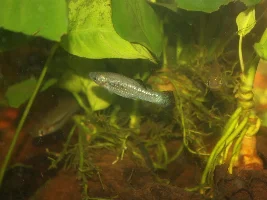
it is planted with 3 hygro's, 3 cypts, 1 baby tear and anbulia..
Thanks in advance
GH/KH and PH work hand in hand , I am not 100% clear on how, could some one explain it? does it effect CO2/oxygen levels?
I have a 40g planted tank, recently I had ph very low < 6, I don't know why? I just finished cycling the tank ammonia 0, nitrite 0 and nitrate 20, may CO2 levels cause the effect ( I started my ferts as soon as I finished cycling)
I manage to increase PH to 7 over 2 days by raising KH, added KH powder. I just got some kh/gh kits. My reading of KH is 4 dkh (70 ppm) and my GH is 8 dkh (145 ppm) and my ph has been 7 for 3 days. My tetras have lost their appetite since, they still look ok
To maintain a stable ph you'll need high KH, what value is considered high? i am concerned my KH is a little low but if I increase it, I may increase ph as well.
the tetras are slowly geeting their appetite back
What is an ideal level of GH and KH for tetra/ pleco?
Also what is the ideal level of CO2 in a 40Ggal tank?
it is planted with 3 hygro's, 3 cypts, 1 baby tear and anbulia..
Thanks in advance