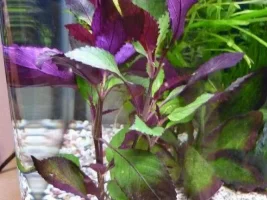
is there a way to remove the remnants of diatom algae from the glass, without a full tear down???

Magnum Man33 147

Fish Maniac
Tank of the Month 🏆
Fish of the Month 🌟
Joined
Jun 21, 2023
Messages
7,633
Reaction score
6,886
Points
113
Location
Southern MN
so I have rock hard water, and I’m just guessing here, that diatom algae, which has a silica cell wall, thrives in hard water… I have several tanks, that I can remove the “green” of the diatom algae, but it leaves a residue ( like hard water scale ) that will not come off, even with aggressive use of a razor on a stick, it acts like I would need to clean the glass with a strong acid to maybe remove it, which would require a full tank tear down… so, I’ve been living with this film on my glass… wondering if anyone has ever witnessed this, and if there is a tank ( fish ) safe method of removing it???

several of my soft water tanks also have this albeit to a lesser degree, as they had hard water in before, I switched them to RO, and I didn’t address this before switching the tanks over to soft water… I assumed that over time, in the soft water it would soften it, but it has not… I’m not sure what it actually is, if the diatom secretes a silica type glue to adhere to the glass, or if scraping the algae leaves part of their silica cell wall attached to the glass… but it’s almost like it etches the glass in areas…

these areas seem prone to various algae growth or regrowth, so I always have to clean these areas, while next to them, no algae grows…
 
Last edited:
this is a soft water tank, with algae eating fish in it ( my hillstream tank ) the green algae in this spot easily removes, but I haven’t been able to remove the diatom film, and that makes it prone to even soft algae growth, for some reason the clear areas next to it never need scraping, I can easily remove the green layer from this spot, but so far, have not been able to remove the cloudy spot on the glass, and new green algae quickly regrows on those cloudy areas… which look like hard water scale, after the green is scraped off…
IMG_9529.webp
 
Razor blades on sticks don't have the leverage. I use a painter's razor blade and a degree of my arm strength to really take that off. It isn't hard if you can get your arms in, and if you have long ape arms like I do.

I won an aquascaping razor holder in a raffle, and while it'll do spot jobs for a photo, for a whole tank it's like walking a stubborn dog on a unicycle.

I fear your set up won't let you get an arm in though, right. If you have to largely drain and move the tank a bit, a razor will do it. I used to have a turtle tank that someone had tried acid on. The glass was ruined.
 
I assumed that over time, in the soft water it would soften, but it has not…
Well your not wrong! Stuborn diatom algae breaks down with the right filteration, nitrofication cycle and clean up crew in your tank with the regular maintenance.
It takes time with above steps and then you could stay with razor blades on sticks or dish wash sponge with hard surface on it.
 
I actually use a specific “sticker scraper”, 18 inch steel handle, it’s much heavier duty, reduces some of the muscle needed, but still is not removing the base, only the soft algae on top…
 
I used to have a turtle tank that someone had tried acid on. The glass was ruined.
The wonders of ADHD 🤣 when I read this (regardless of all context that came before it) my mind immediately went to a tank shaped like a turtle that someone used to experiment with a tiny paper tab 🤦🏻‍♀️ I realised I was an idiot and now I'm sat here laughing like one 😁
 
This is more likely calcium or mineral scale combined with an algae biofilm, rather than a silica “glue” produced by diatoms. Hard water can leave deposits that trap algae and create a cloudy, rough-looking surface. If scraping no longer removes it, the glass may also be lightly etched.

A UV sterilizer can help reduce free-floating algae and improve overall water clarity, but it will not remove the existing film, dissolve mineral scale, or repair etched glass. The affected areas will still need manual cleaning.

For a stocked aquarium, lower the water below the affected area and apply white vinegar or diluted citric acid to the glass with a cloth or scraper. Let it sit briefly, scrub gently, and rinse the area thoroughly before refilling. Never pour acid directly into the tank or use soap or household cleaners. If the deposit is extremely stubborn, it may need to be cleaned during a teardown. Avoid metal razors on acrylic because they can scratch it permanently.

Using RO water can help prevent new mineral buildup, but it usually will not dissolve old deposits quickly. Also check the mineral and silicate content of your source water, keep the glass clean during water changes, and reduce excess nutrients and light to limit algae regrowth.
 
Last edited:
I used to use lemon juice on a Teflon coated saucepan safe scrubber. I live in a hard water are of UK.

Done with care when water reduced and many times rinsed off using a much thicker cloth lightly wetted, and then dried with a towel worked, but it was a lot of work. I also did not do right into the corners in case I 'missed a bit' when wiping off.

What I actually did in the end was put some black tape around the tops of my aquariums to stop this waterline annoying me.
 

Most reactions

Back
Top