Ehfimech

Clammie

New Member
Joined
Mar 17, 2010
Messages
46
Reaction score
0
Points
0
I recently got my new fish tank set up with my new Eheim 2213
it's set up (Bottom ---> top)
Ehfimech
coarse sponge
Ehfisubstrat
Ehfisynth
Carbon pad

I was wondering if anyone could tell me exacty what the Ehfimech does and how often the ehfisynth and carbon pad should be replaced?
Also, does any of the other media need replacing? How long will it last if it's just rinsed out? How often should it be done?

I've only had my filter set up since Thursday and already the ammonia levels have dropped right down.
I've kept up with daily water changes (% determined by the amount of ammonia) is this normal? Seems quite fast.
 
I was wondering if anyone could tell me exacty what the Ehfimech does and how often the ehfisynth and carbon pad should be replaced?
Also, does any of the other media need replacing? How long will it last if it's just rinsed out? How often should it be done?

I've only had my filter set up since Thursday and already the ammonia levels have dropped right down.
I've kept up with daily water changes (% determined by the amount of ammonia) is this normal? Seems quite fast.

I think the Ehfimech are ceramic rings on which the bacteria build and live, that convert your ammonnia and nitrites into nitrates, you basically leave these be and hardly ever rinse them, the bacteria thats living on them (or will be) is golddust and essential in your fishes survival. The ehfishynth, im not sure, i assume it catch and removes large amounts of solid waste and plant matter, in which case rinse it under the tap from time to time, start monthly and see how it goes, if its pretty clear extend the time. The carbon pad should be removed and not replaced after a month. No media needs replacing hardly ever, maybe some filter floss from time to time. Carbon will leach back what its removed after a month and its more trouble than its worth. Dont go by your instructions, they love to sell you more stuff. You dont need it. di
 
I believe this is a 40L/10G in a Fish-In Cycle with several Zebra Danios, hopefully I'm right on that.

If so, then the lowered ammonia level will be due to the water changes, not the bacteria, as the tank will not have really started its cycle yet. A Fish-In cycle without mature media takes a minimum of about 3 weeks to a month usually.

I also forget but assume you've found a good liquid-reagent based test kit to use to determine your ammonia, nitrite, pH and nitrate(NO3) levels?

Making initial daily water changes is a good thing to do at the very first before you've established a testing schedule, so that's a good thing you've been doing. However, once you have your test kit, you can settle in to 12 hour tests (usually people try for same hour, like 7am, 7pm or such.) Log the results in your aquarium notebook so you can look back at the trends in the future. Start by allowing the aquarium to go one or more extra 12 hour periods without a water change and see how much, if any, ammonia (or nitrite, but you won't have any of that yet) appears.

The goal is to be a detective and figure out what percentage and/or frequency of water changes will keep your ammonia (and nitrite(NO2)) below 0.25ppm until you can be home again to test and potentially (if its getting close to 0.25ppm) change water again. With only a few fish in the tank it can take a little while before you start to see the traces we're talking about, but its different with every tank.

The end of a fish-in cycle comes when you notice that you can go two full days with no water change and none of these traces showing up. When you notice that you should stop water changing and just keep testing for even more days, about a week, to ensure that no traces show up, before you declare it cycled. After its cycled you can slowly ease back on the frequency of testing and you can consider very small controlled additions of fish. For instance 2 or 3 small fish at a time with a couple weeks in between to allow the bacterial colonies to catch up to the fish addition.

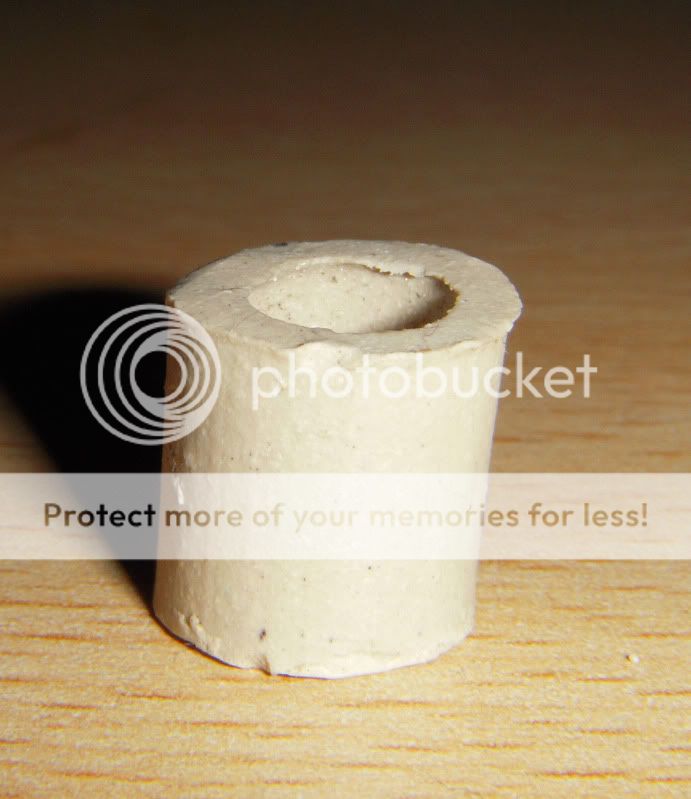
Eheim Ehfimech is a loose biological/mechanical ceramic ring media often placed first or very early in the water path. It has three functions: first, it "randomizes" the water flow into smaller, randomly directed streams of water, causing the water speed to slow. This helps it to acheive its second function, which is to trap larger particles of debris, the purpose of mechanical filtration. Its important for the rings to be dumped randomly in the media tray (never arranged in a pattern) for these two functions to work right. Thirdly, the ceramic surfaces of the rings serve as an excellent attachment surface for the two species of autotrophic (nitrogen cycle) bacteria we seek to grow, to carry out the biological filtration function. It is my feeling that Ehfimech carries out its functions somewhat better than some other brands of ceramic rings because the inner diameter of the rings is larger than those other brands. Ceramic media is meant to last a lifetime, with the normal maintenance of rinsing out the debris in tank water. (As with all biomedia, chlorinated/chloraminated tap water could damage your bacteria, so always rinse with tank water or dechlored tap water.)

Coarse sponges serve a similar purpose as ceramic rings except they take the mechanical pore size filtration down to a somewhat smaller level. They should be gently squeezed out in tank water, as opposed to dunking/swishing. Substrat/Substrat-Pro are sintered glass are bio/mech media that take the mechanical function still smaller and play an even more major role in providing bacterial surface area. Floss pads handle the "very fine" mechanical function for the smallest debris particles and can be gently squeezed out in tank water but may need to be replaced more often, as they begin to break down (its just a judgement call on your part, perhaps after several months of use - it can vary widely.) Carbon is totally different. It is a chemical filtration media and is not usually used on a regular basis. We bring it in when we need to remove medications, yellow tannins from wood or sometimes organic smells of unknown origin. It only lasts about 3 days normally and then is ready to be removed and thrown out.

~~waterdrop~~
 
I've had the fish now for about a week.
I've been using my ammonia test kit since Friday and the levels have mostly been high until this morning when it was on 0.25 ppm after 12 hours.
I'm changing the amount of water depending out how high te test shows the ammonia levels are.
Every twelve hours it seems to be high, but not this morning.
Should I try my nitrite kit when I get home and see of the levels are increasing or continue with the ammonia test for a while longer?
 
O dear! Every filter, even a nice external cannister like we've been talking about needs sometimes a couple of -months- of work (called fishless cycling) to turn it into a working "biofilter" prior to ever having fish!

But I'm sure you know that now, after having come here to the forum and the members here are great, they'll help you get through the Fish-In cycling situation and hopefully keep the fish alive. It sounds like you are already aware and doing the right things.

Nitrite can sneak up on you pretty quickly, so I'd go ahead and add that as a once a day test for the next week or two (meanwhile doing ammonia at twice a day at 12 hour intervals) and then let the nitrite test join the ammonia twice a day. As soon as the nitrite test picked up any nitrite I'd start also testing it twice a day.

~~waterdrop~~
 
couple of comments from Eheim here. Ehfimech is purely mechanical media. though some rings are for Bio action,(that would be EfhiBioMech.) these are not. as to how often bio media is changed? Eheim say every 3-5 cleans. however they have not fleshed out, quite, why it needs change. (clarification email awaited). as for carbon. it has little use, in tanks now. bin it and replace it with bio media. efhisynth should be replaced every clean. everything else can be reused, several times, at least. and you "media construction" looks perfect.
 
Interesting raptor, my understanding is that Ehfimech is not purely mechanical. If the ceramic surface were slippery, like marble or like a fine dinner plate then the bacteria would not be able to use it. These rings, however, are a nice rough surface, similar to the rough surface of the EhfiSubstrat pebbles that look like gray gravel (but are made of sintered glass I believe.) There may not be as much total surface area on the rings as on the gravel shaped glass but I still believe they add significantly to the biomedia capacity. The yellow/brown/dark-brown stains of the bacteria can usually be seen on the ring surfaces.

I think they just say it is mechanical only because that is indeed its primary role, but I think it really plays both roles.

~~waterdrop~~
 
Interesting raptor, my understanding is that Ehfimech is not purely mechanical. If the ceramic surface were slippery, like marble or like a fine dinner plate then the bacteria would not be able to use it. These rings, however, are a nice rough surface, similar to the rough surface of the EhfiSubstrat pebbles that look like gray gravel (but are made of sintered glass I believe.) There may not be as much total surface area on the rings as on the gravel shaped glass but I still believe they add significantly to the biomedia capacity. The yellow/brown/dark-brown stains of the bacteria can usually be seen on the ring surfaces.

I think they just say it is mechanical only because that is indeed its primary role, but I think it really plays both roles.

~~waterdrop~~

sorry waterdrop, but. ehfimech is, designed for a purely mechanical roll in filtration. it says so in black and white, on their site. and on the box (as i recall). yes Ehfimech does have smooth, almost shiny surfaces.
ehfimech-overall.jpg

(no idea what you are looking at, but it aint Ehfimech)
Ehfibiomech, is for bio action but it aint in the form of rings. though it does have roughened surfaces.

EHEIM Mech: Mechanical filter medium for effective water treatment
Packing sizes: 1 l, 5 l

Directly after the entry into the filter cycle, the water is swirled through the hollow ceramic material. Through this action, the coarse dirt particles are going down. The pre-filtered water treated in such a way then continues its route through the other filter layers. EHEIM Mech is easy to clean and can be used several times.
the above is Eheims description.
EHEIM bioMECH: Mechanical-biological filter medium

Packing sizes: 1l, 2l, 5l

Excellent mechanical filtration with special dirt-trapping pockets Optimum pore structure ensures faster and safer decomposition of toxins
the above is Eheims description.
notice, when bio action is a part of the media, Eheim say so. however, they still list any "mech" named media, as mechanical filtration. dilibratly separating them, from their Bio media.
 
No, I wasn't disputing what they -say- its for, I agree with you that they say, in all their literature that its mechanical. But what I was getting at is that I don't agree completely with what they say. I think they say it to simplify things but that things aren't that simple. Teeth are very shiny and smooth, but they can harbor a lot of biofilms! And I have a bunch of Ehfimech in my Eheim (as I'm sure you do too as you were probably one of my advisors before I got it :lol: ) and to me, its got a relatively very-fine-sandpaper sort of roughness. The texture doesn't strike me as all that different from the surfaces on the Substrat when you focus down past the bumpy gravel level. I realize were talking a lot less surface area in a bed of mech vs. a bed of substrat but I still think there are bacterial biofilms staining those mech rings. (I'll try to observe the texture and look of mine more closely next time I pull them out.)

WD :)
 
No, I wasn't disputing what they -say- its for, I agree with you that they say, in all their literature that its mechanical. But what I was getting at is that I don't agree completely with what they say. I think they say it to simplify things but that things aren't that simple. Teeth are very shiny and smooth, but they can harbor a lot of biofilms! And I have a bunch of Ehfimech in my Eheim (as I'm sure you do too as you were probably one of my advisors before I got it :lol: ) and to me, its got a relatively very-fine-sandpaper sort of roughness. The texture doesn't strike me as all that different from the surfaces on the Substrat when you focus down past the bumpy gravel level. I realize were talking a lot less surface area in a bed of mech vs. a bed of substrat but I still think there are bacterial biofilms staining those mech rings. (I'll try to observe the texture and look of mine more closely next time I pull them out.)

WD :)

thing is WD, Ehfimech is not porous. not in the least. break a ring up, you will see it is solid, showing no pores. so, as you say, some bacteria will adhere to the surface. but that is not a function of the media, rather a fact, affecting any surface in an aquarium.
talking to the people from Eheim. the bio function of their mechanical media. is not, directly, part of the nitrogen cycle (if we assume that cycle to be the break down of ammonia). rather a system to trap, and allow waste products to to break down to ammonia. letting the solid products drop to the void in the filter. whilst allowing the ammonia to rise to the Bio media. this job would, tend, to be done by the blue sponge, fitted to the mech media basket, using plain ehfimech. presumably this would reduce the resistance to water caused by clogging. allowing better flow, without decreasing the bio efficiency.

if, in reality, this is of any relevance (other than purely academic) to most users, is a mute point.
 
Ok Raptor (BBB :lol: ) I know when I'm out-described! I think I'm buying your argument. The contribution of the smaller amount of bacteria just due to the ring surfaces having some grip is probably too subtle to warrant the amount of credit I've been giving it as being almost as much a biomedia as it is a mechanical media.

Your description of the way that the coarse blue sponge "caps" the ceramic rings, creating a trap for all the larger organic debris and forcing it to be trapped or fall back down into the large open-water area below the bottom-most basket is really excellent and I admit I'd not thought of it that way and now see it as more clever than I'd previously pictured. And you're right, letting it have a place to hang around and decompose into ammonia would be important and I'd not really thought about that free area down there as so clearly serving that role in the system.

Thank you for sticking to your argument, I was being stubborn but now definately feel I've gained a more refined understanding of the design goals seen in my own filter.

You are also now causing me to question the correctness of the term "ceramic gravels" that has been mentioned on the forum. I wonder if virtually all (or some of the time?) instances of these "gravels" are really sintered glass. I know that Seachem Matrix and some of the others are. Aren't both Substrat and Substrat Pro made of sintered glass?

~~waterdrop~~
 
Ok Raptor (BBB :lol: ) I know when I'm out-described! I think I'm buying your argument. The contribution of the smaller amount of bacteria just due to the ring surfaces having some grip is probably too subtle to warrant the amount of credit I've been giving it as being almost as much a biomedia as it is a mechanical media.

Your description of the way that the coarse blue sponge "caps" the ceramic rings, creating a trap for all the larger organic debris and forcing it to be trapped or fall back down into the large open-water area below the bottom-most basket is really excellent and I admit I'd not thought of it that way and now see it as more clever than I'd previously pictured. And you're right, letting it have a place to hang around and decompose into ammonia would be important and I'd not really thought about that free area down there as so clearly serving that role in the system.

Thank you for sticking to your argument, I was being stubborn but now definately feel I've gained a more refined understanding of the design goals seen in my own filter.

You are also now causing me to question the correctness of the term "ceramic gravels" that has been mentioned on the forum. I wonder if virtually all (or some of the time?) instances of these "gravels" are really sintered glass. I know that Seachem Matrix and some of the others are. Aren't both Substrat and Substrat Pro made of sintered glass?

~~waterdrop~~

you know, WD. until you asked, i had no idea what substrate and Pro, were made of. lol but, yes, it's sintered glass. but, that is ceramic. though that may seem odd. sintering is the process used to fuse partials together, under pressure, with heat. but below the melting point of the medium. its the make up of the glass (components used that are not silica) that produces, "sintered glass ceramics". I'm with you on the Ceramic Gravel thing. that would, to me, be "sintered glass". though Seachem Matrix is a natural stone. honest! :hyper: and, would seem to have massive surface, area/volume. many many times more than Eheim substrate pro! :blink:
here is a review. though i know its from Seachem. it still makes interesting reading. Matrix v substrate pro and Micro Mec.
 
I've had the fish now for about a week.
I've been using my ammonia test kit since Friday and the levels have mostly been high until this morning when it was on 0.25 ppm after 12 hours.
I'm changing the amount of water depending out how high te test shows the ammonia levels are.
Every twelve hours it seems to be high, but not this morning.
Should I try my nitrite kit when I get home and see of the levels are increasing or continue with the ammonia test for a while longer?

Im by far an experienced fish keeper but any signs of ammonia/nitrite you need to keep doing water changes ever hour or less untill both are showing 0 . . .
 
I've had the fish now for about a week.
I've been using my ammonia test kit since Friday and the levels have mostly been high until this morning when it was on 0.25 ppm after 12 hours.
I'm changing the amount of water depending out how high te test shows the ammonia levels are.
Every twelve hours it seems to be high, but not this morning.
Should I try my nitrite kit when I get home and see of the levels are increasing or continue with the ammonia test for a while longer?

Im by far an experienced fish keeper but any signs of ammonia/nitrite you need to keep doing water changes ever hour or less untill both are showing 0 . . .

keeping Ammonia to 0 during a cycle, would not help it. neither, to me, would removing nitrites. both are vital for the cycle to work.
 
I've had the fish now for about a week.
I've been using my ammonia test kit since Friday and the levels have mostly been high until this morning when it was on 0.25 ppm after 12 hours.
I'm changing the amount of water depending out how high te test shows the ammonia levels are.
Every twelve hours it seems to be high, but not this morning.
Should I try my nitrite kit when I get home and see of the levels are increasing or continue with the ammonia test for a while longer?

Im by far an experienced fish keeper but any signs of ammonia/nitrite you need to keep doing water changes ever hour or less untill both are showing 0 . . .

keeping Ammonia to 0 during a cycle, would not help it. neither, to me, would removing nitrites. both are vital for the cycle to work.
If you think about it, a well-cycled filter that is keeping a mature tank at rock solid zero ppm ammonia and zero ppm nitrite(NO2) is, by definition, going to have a healthy autotrophic bacterial colony set that is matched to the bioload. Another thing that means, though, is that a perfectly adequate flow of ammonia from the sources in the tank (fish respiration, fish waste, excess fishfood, plant debris etc.) to the bacteria in the filter is actually too low for our test kits to register (!) (algae spores can certainly distinguish it :lol: )

Hang with me for a minute.. We've learned with fishless cycling that 4-5ppm ammonia during the first phase, 3ppm or so during the nitrite spike phase and back up to 5ppm for the 3rd and final phase are quite ideal at stimulating the correct two species to get to their full bioload colony sizes the quickest. Likewise, we know that Fish-In cycling has to sacrifice those ideal levels a bit since otherwise the fish would die straight out. So we change water in a pattern the rolls around between a tested zero ppm and a max of 0.25ppm and just keep on changing water until the filter passes the fish-in cycling test. In practice, what OM47 and I and many of the members helping out in the beginners section here in the last couple years is that it doesn't seem to matter whether the ammonia test results frequently hit down at zero, the fish-in cycle still happens in about the same time period (which still varies a lot between a few weeks and a few months of course, given all the other varibles in fish-in cycling and in beginners communicating on a forum.)

Theoretically it should be possible to just overwhelm all the ammonia if you, say, only had a few fish, had tons of filtration flow rate and went crazy with water changes, but hopefully we won't run into many rare cases like that!

~~waterdrop~~
 

Most reactions

Back
Top