Curious question about mouth brooders

SammyTargo

Fish Fanatic
Joined
Mar 7, 2023
Messages
105
Reaction score
61
Location
Toronto
Hello All,

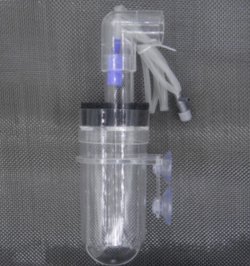
I found a random breeding tumbler in my storage that I don’t even know how I acquired, and then I became curious.

I had a question about mouth brooders and tumblers, since I have never bred them and have barely any experience with them. I don’t even own them 😅.

For the mouth brooders, I think they come mostly from Lake Malawi, I’ve seen a lot of people throw the eggs/fry in a tumbler, to stop fungal infections from killing the fry.

My question is whether it is needed, and new world mouth brooders or non mouth brooding cichlids ever need the tumbler? I had a spare one that I don’t even know how I got.
 

Attachments

  • IMG_8872.jpeg
    IMG_8872.jpeg
    199.8 KB · Views: 4
Mouthbrooders are many different things. Some pick up larvae after guarding eggs. Some start by picking up the eggs. Some share the mouthbrooding between male and female. Some provide extensive broodcare after the fry are released, working in pairs.
And then you have so called primitive mouthbrooders, like Malawi mbuna. There, the male only fertilizes the eggs, which are picked up and brooded by the female. He takes off looking for his next partner.
Once she spits out the fry, she's done. They're on their own. But since she's alone on the job and her mouth is full of eggs and then larvae, she doesn't eat. She loses weight. As soon as she unloads, in a fishtank, the male is right there ready to breed again. Being a mother too many times too quickly starves her, and she can die.
So you steal the eggs to give her a break, and if you are responsible, you give her a break to recover. The artificially raised eggs, larvae and fry give you what you want to sell. You can raise good numbers of them, and save the female from an early death.
You can also save the fry in an overcrowded tank with predatory species around. They hatch in the tumbler, and are kept oxygenated and clean by the water movement. You can then raise them in a separate tank.
 
I have always been curious about fish reproduction and how many ways this can happen. I had had an assortment of fish breed in my tanks which are not suited to the African Rift lake fish. But I really wanted to see moth brooding in action. In 2003 I was going to my very first weekend fish event, the OCA annubal event in The Cleveland area.

I picked this because a number of the people on the fish forum and chat room I frequented would be there. Don Ziliox, aka Zman, was in his early 70s and getting ready to mostly retire from the hobby. He was a legend in the Apisto breeding community. He offered to give me a pair of Pseudocrenilabrus nicholsi:
Pseudocrenilabrus nicholsi is a species of cichlid native to the Congo Basin in Africa. As other members of the genus Pseudocrenilabrus, it is a mouthbrooder.
The female held the eggs etc. her mouth. What I did not know at the time was that thi species was considered, inch for inch, one of th most aggressive cichlid species. To succeed took me a few tries, First one needs to remove the male after the female is holding as he will continue to harass her as he always wants to spawn. So I needed to remove him from the tank. The I got my first spawn and mom finally spit them and I was very happy to see mom and kids doing fine. And then 26 hours later only mom was left in the tank, She ate all the kids.

So the next try I managed to strip the fry when they were close to being released and I removed the female as well as the male. I was able to raise the fry to where they were too big to eat. When I returned the pair to the tank, he promptly killed her. So I recruited one of their daughters to become the new female of a pair.

But the whole process proved to be a fair amount of work on my part and I decided to sell and give away all of the P. nicholsi as I had gotten them so I could observe the whole moth brooding process. It was mission accomplished and I wanted the tanks for other uses.

Btw, I have never used a tumbler in all the years fish have spawned in my tanks. I have likely raised a few 1,000 fish born in my tanks over the past 25 years with even owning a tumbler. But I mostly worked with plecos. They are very helpful as they do all the work and then present me with healthy free swimming offspring.
 
But I mostly worked with plecos. They are very helpful as they do all the work and then present me with healthy free swimming offspring.
Plecos I found to be easy to breed, at least the bristlenose. I have bred them in the past, on requests via people saying they would buy. I do not like plecos. I think they are machines that mass produce waste and increase bioload. I prefer otocinclus or other algae eaters. But yes, they are quite simple when presented with the right conditions.
 

Most reactions

Back
Top