Brown Algae problems

Chinese algae eaters.
CAE does a good job with algae, but can get aggressive with other fish once they start to grow in size. They Damage the skin of slow moving and large fish by attaching on to them.
I had better success with SAE than Ottocinclus cat fish. The Ottocinclus I got didn't survive and just disappeared from my tank.
Right now my brown algae is combating with green hair algae since I pruned my dominant octopus Pogostomon. Their have been variable changes in the tank that is leeching nutrients to brown algae and green hair algae. The green hair algae is mildly taking over the stem plants.
Along with this shift I have found baby trumpet snails attached to all brown algea bogwood and driftwood.
Unfortunately the phosguard isn't available in sri lanka for me to try it and be "sold".
So I'm dependent on old school maintenance and hardwork to combat the algae.
 
I tried the same thing with no effect whatsoever. Like I said, aquarium chemistry is complex. What may have an effect in one instance has no effect in another. It's why there's so much conflicting information in the hobby.

In my experience, the most effective algae control has been Chinese algae eaters. Unfortunately, that's only true for juveniles. I'm now trying Otocinclus, which are almost as voracious. I've never been able to keep them alive for more than a month, but the group I have now appears to be healthy so time will tell.

Whether they're wild caught or farmed, I have no idea. The only thing I can say with certainty is they removed all the algae from my plants in less than 24 hours, and they are doing the same for my substrate. They feast on both brown algae and green dust algae. Hopefully, they have a normal life expectancy.
Agreed, every tank is different. I have always had a low phosphate reading but I guess if another tank has a higher reading, the Phosguard might become exhausted much faster before making an impact on silicates. As I said, it took me three rounds before I noticed much of a difference, then it was dramatic.
I always have SAE's but they never seem to make a big impact and when I tried Ottos they made no difference at all. I tried Nerites and they did a brilliant job of cleaning up the side of a very encrusted internal filter (stuff which I couldn't shift even with a razor blade!). However, once that was clear they moved on and I didn't notice any difference elsewhere. They certainly never venture onto my plants.
One other thing, I can't really see why this is connected, but as soon as the diatoms disappeared I had a lot of snails appear (those tiny Ramshorn one's). Nothing new has been put in the tank for many months and up until that point I hadn't seen a single snail in years, but in the space of a week since I saw the first one on the glass there were hundreds of the blighters!
Weird that they appeared from nowhere and weirder than this happened immediately after the diatoms were eradicated.
 
diatoms disappeared I had a lot of snails appear (those tiny Ramshorn one's).
Usually when I get detritus worms on the glass and Malaysian trumpet snails on the surface of the substrate its for breathing.
The SAE, CAE and Ottocinclus do a good job when they are young. Once they start to grow their diets must be complemented with higher nutrients. The norm is to put algae eaters before the diatom and cynobacteria flim spread. The mistake most aquarist do is put clean up crews after the algae has taken over. This is not good for the fish 😕.
 
I finally decided to get a mix of shirmps to combat my algae problem. These shirmps are from "Shirmp Gate Hikkaduwa" they were the only ones who does retail for aquarist like myself all over sri lanka.
I have gota pair of crossback gold, fire red, blue dream, snow ball and orange to match my discus easter egg color patterns.
So I hope the shirmps breed and change the discus eco-system by helping them produce fertilise spawns and fry in the aquarium.
But even if they don't breed ill be content with a new eco-system.
 

Attachments

  • VID-20251229-WA0030.mp4
    4.9 MB
  • VID-20251229-WA0029.mp4
    3.1 MB
Hey,

are you aware, that this color combination won't stay for long, and most of the offspring will turn to their wild form within a few generations?

You literally have every color line (red, black, yellow, orange) in existence now.
 
are you aware, that this color combination won't stay for long, and most of the offspring will turn to their wild form within a few generations?
Oh I didn't know that. This is the 1st experience with shirmps. I'm still researching how I'm gona keep them without dying in my aquarium.

My discus sometimes randomly go rambo with the cardinal tetras. So the shirmps will be a new addition to the aquarium.
 
Hey,

are you aware, that this color combination won't stay for long, and most of the offspring will turn to their wild form within a few generations?

You literally have every color line (red, black, yellow, orange) in existence now.

I've mixed shrimp colors before and the immediate offspring mostly revert to their original, wild color. Interestingly, the colors do come back after a few generations - often with different patterns and combinations. There are even some solid colored ones resembling the original shrimp.

There are still also natural-colored ones, although some of those have bright-colored highlights.
 
I bought a mixed colour group of Neocaridina shrimps a couple of years ago and I now have a lot of wild coloured shrimp. You can see photos of what I mean in this thread
 
Interestingly, the colors do come back after a few generations

Absolutely, they seem to "save" some of the genetic information somehow!
I love shrimp. No fish tank without. (Well ... one is without, to be honest. But they wouldn't survive in there.)
 
Neocaridina shirmps are silver bullets, they got such a fast reaction time to dodge danger. They are basically uncatchable for tank residents like my discus, bosemani rainbows and cardinal (fin nipping) tetras.
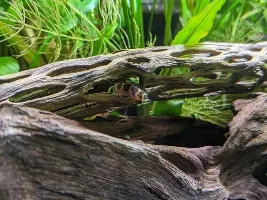
About Neocaridina shirmps is that they are always in hiding under logs or inside crevices avoiding danger during day. They forage out of hiding only when lights are out in my community aquarium.
The Internet says they are not nocturnal, but surprisingly they are very much active and nocturnal in my aquarium.
I'm starting to enjoy them!.
 

Most reactions

Back
Top