What's new

Brackish Water Tank

lillady27

New Member
Joined
Mar 4, 2008
Messages
1
Reaction score
0
Points
0
Hi there, this is my first post - this looks like a really good site for getting your questions answered :-)

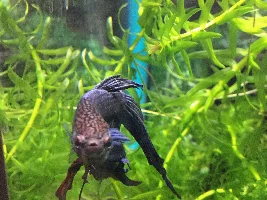
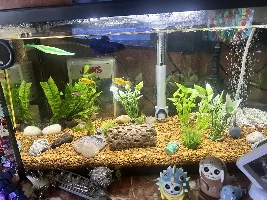
I have kept a tropical fish tank before but I am setting up a brackish water tank at the moment as I absolutely love the figure 8 puffer and bumblebee gobies. I keep on getting conflicting info on the amount of salt you have to add per gallon - Is it 2 tablespoons per gallon?

What will the lil puff eat - I have been told blood worms and brine shrimp but is there anything else i should be feeding it on a regular basis as in snails and cockles?

Your help would be appreciated.

Fanks x
 
For more info on everything brackish, post in the brackish fish section. There are quite a few knowledgable people that can provide you with more info than you can digest. Especially if nmonks responds to your post; he is the #1 source I would go to for anything brackish
 
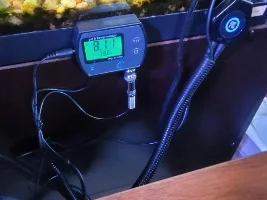
Well first you will need a hydrometer. It goes from 1.0000 to 1.030 (saltwater) Brackish is about 1.020. I have a green spotted puffer in full saltwater now. As they age they are going to need to go from brackish to saltwater. I have had Chubs for seven years now.

Now this is very important, you should never ever just dump the salt into the tank. This can cause a burn on the fish.

Start slow. For an example of adding the amount of salt in your tank with your hydrometer, you would got from lets say 1.014 to 1.016 each time you clean your tank you had that amount until you get to saltwater.

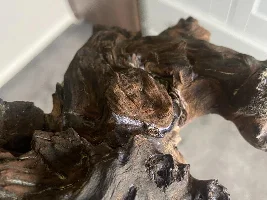
They need a stable but high ph, preferable hard water but not a necessary. You can use crushed coral for the gravel. Get some nice texas holey rock decorations, adding baking soda. Personally I think messing around with chemical buffers and Ph is very risky so personally I would not bother unless you see drops in your ph. Then you need to add a buffer.

For the addition of salt what I do is the day before I clean my tank I get a bucket and put the salt in the bucket and add hot hot water, it mixes in better and I leave an ait stone in it over night. Mix it well! Don't put the hot water in your tank, LOL. You will have fish stew.

So then fill my tank up with water from the tap with my python hose, get the bucket and slowly add the salt into the tank. Before I add the salt tank I do a couple of methods, leave the bucket of salt water over night with an air stone.

As for food they need snails and they will eat any live worms.

(Dry or freeze dry) My puffer even eats dry food such as krill, blood worms, algae crickets, river shrimp, cocktail shrimp. Prawns, squid. Basically in the fish section in any grocery store.
 
Well first you will need a hydrometer. It goes from 1.0000 to 1.030 (saltwater) Brackish is about 1.020.

Not quite correct. At 25 degrees C full salt water (35ppt salinity) will be around 1.025 to 1.026. Brackish can be used to refer to any water that is more salty than freshwater and less salty than full saltwater.

Practically one will usually not think of brackish until the SG is above 1.003 and below 1.018. 1.020 tends more to be thought of in terms of a weak marine tank (such as one for fish which tend to deal with a lower salinity far easier than inverts). Water at any point in the aforementioned range will be considered brackish.

For good guidance one should first head to the brackish section here (as noted above) and also check out the book by nmonks.
 
Not quite correct. At 25 degrees C full salt water (35ppt salinity) will be around 1.025 to 1.026. Brackish can be used to refer to any water that is more salty than freshwater and less salty than full saltwater.

That is what my hydrometer goes to.
 
That is what my hydrometer goes to.

Brackish is a very large range of salinities, hence how you end up with low and high salinity brackish occupants (Figure 8 puffers would not do very well long term in a tank with monos and scats as they tend to require different strengths).

Just because 1.030 is the maximum on the hydrometer does not mean it is saltwater strength (in most cases it is a lot stronger than marine conditions and will place undue srtess on the osmoregulation of any fish).

My refractometer goes up to about 1.040 or so, that does not mean I want to get the specific gravity anywhere near that level.
 

Most reactions

Back
Top