Anyone Know How To Use My Reverse Osmosis Thingy?

zeo

Fish Crazy
Joined
Aug 3, 2003
Messages
272
Reaction score
0
Hi guys,

I picked up a new tank today from ebay. A beautiful Vision 260.
The seller also included a few extra, one of them being a RO kit. I am planning on attempting a marine setup soon, so this seemed like a bonus.

The only thing is I have no idea on how to use this thing! I cant seem to find any brand name on it anywhere, so I havent been able to find any useful guides online.

I was hopeing one of you guys could give me a hand.
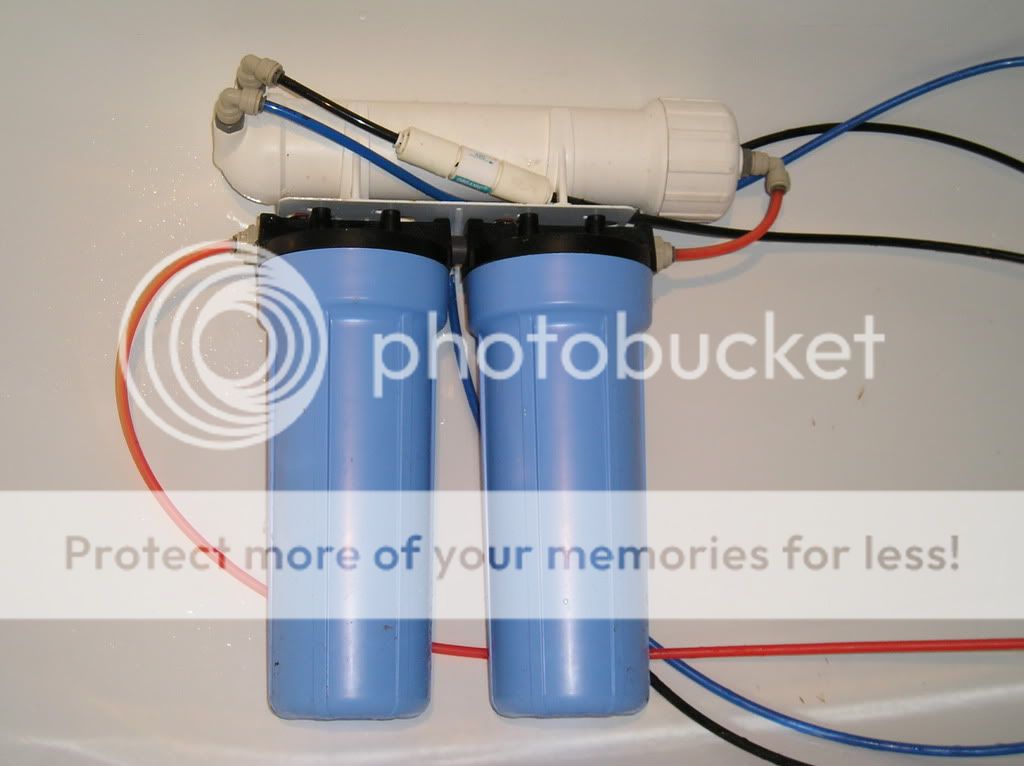
P1010071.jpg

I havent been able to open any of the canisters, so I dont know if there are any filters or something that needs to be replaced.

P1010072.jpg

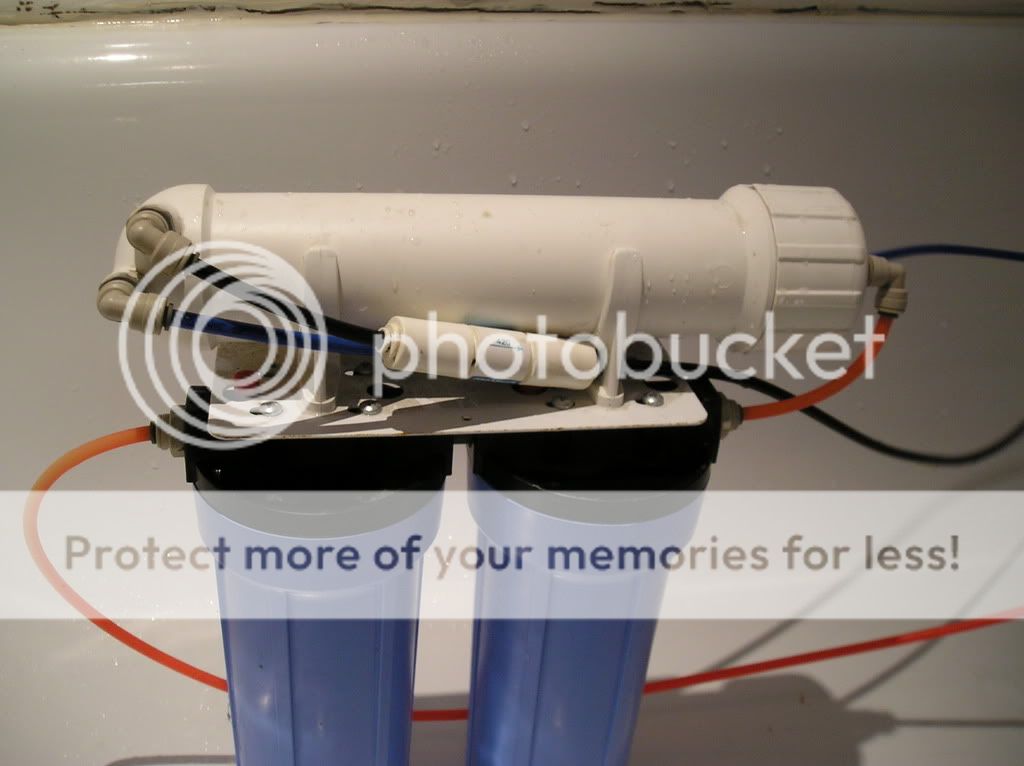
There are 3 tubes that I can see. RED, BLACK and BLUE. Which is for what?
P1010079.jpg

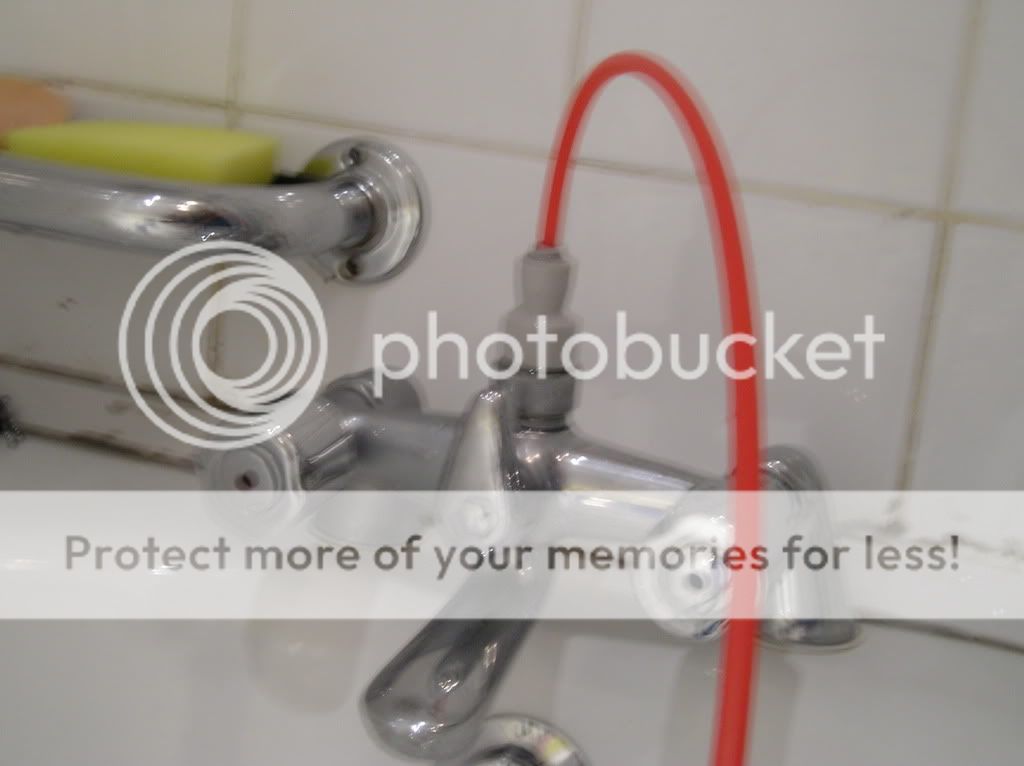
I've noticed that the red tube is connected to the IN PORT, so I've connected the other end to the tap.
P1010077.jpg

P1010078.jpg

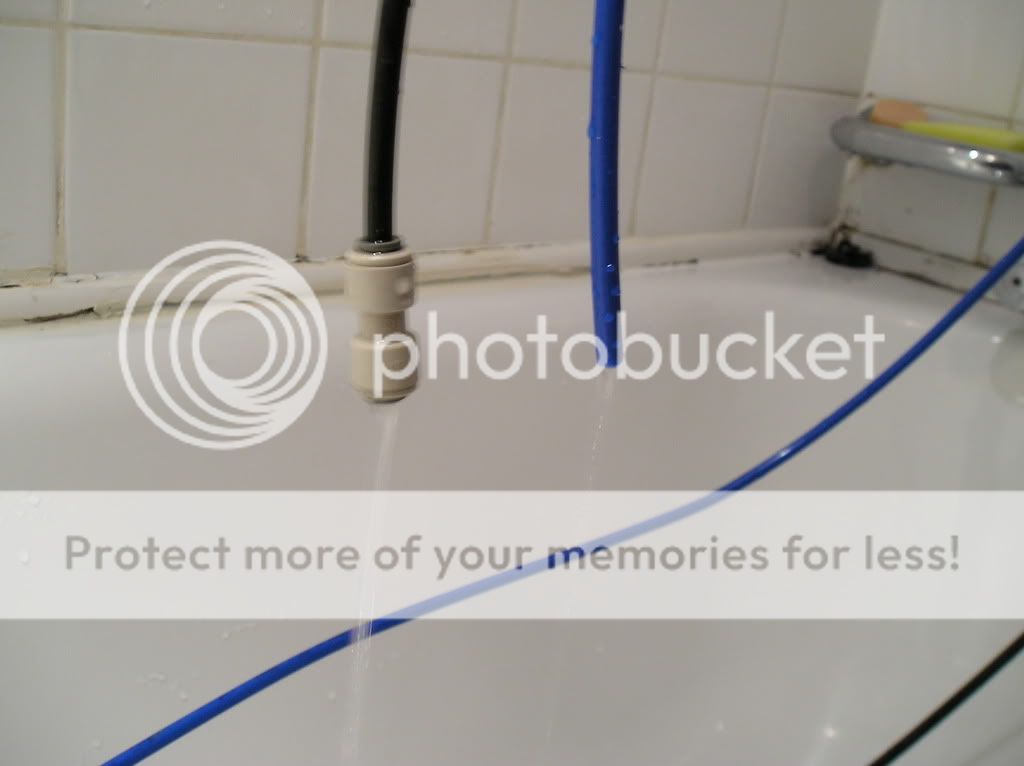
When I've turned the water supply on, water drips outs of both the black and blue pipes, so I'm unsure on which is for what?

Can anyone give me a hand with this?
 
If it's similar to mine then the only help I can give is:

Blue Pipe - Carries the good water from the unit to your bucket etc.
Red Pipe - Connects to your waste mains pipe
Black Pipe - Connects together the carbon filter and sediment filter
 
it looks like your black pipe is your waste water one, the water from your blue pipe is the stuff you want to collect
 
You may want to purchase a TDS meter to make sure the water that is comming out of the RO line is of descent quality. The previous owner may have never cleaned it out. It also might be extinguished.
 
Red pipe = tap water feed
Black pipe = waste water from discharge side of membrane
Blue pipe = pure RO water

The thick cylinder on the black pipe is the restriction orifice to keep the pressure maintained in the unit ( reverse osmosis works best at higher pressures )

Basic RO principle

tap water is fed through sediment filter and carbon block filter ( the two blue canisters below ) then enters the membrane ( big plastic cylinder at the top ) basically the membrane is sized only to allow pure water molecules through to the product ( good ) side and all the impurities are rejected and go to the brine ( waste ) side

Reverse osmosis is dependent on pressure and temperature and the figures quoted ( as GPD on the membrane ) are at the optimum pressure and temp so never expect to get to that figure

Expect to waste between 3 and 6 gallons for every one gallon of pure RO water that you make

A TDS meter is a good idea, TDS is total dissolved solids and is a measure of how efficiently the membrane works, our 200 gpd unit produces RO with a TDS of 2 whereas the water from the tap has a TDS of around 420

If the membrane has been dried out for any length of time it could be irreversibly damaged

Steve :)
 
Wow, thats a lot of wasted of water. Then again we seem to be have more then our fare share in UK at the mo.
I'll be sure to get that TDS meter.

Thanks guys,
Really appreciate it.

Zeo
 
Wow, thats a lot of wasted of water. Then again we seem to be have more then our fare share in UK at the mo.
I'll be sure to get that TDS meter.

Thanks guys,
Really appreciate it.

Zeo

No doubt though when August comes round they'll be putting in hose pipe bans again though!!
 
Red pipe = tap water feed
Black pipe = waste water from discharge side of membrane
Blue pipe = pure RO water

The thick cylinder on the black pipe is the restriction orifice to keep the pressure maintained in the unit ( reverse osmosis works best at higher pressures )

Basic RO principle

tap water is fed through sediment filter and carbon block filter ( the two blue canisters below ) then enters the membrane ( big plastic cylinder at the top ) basically the membrane is sized only to allow pure water molecules through to the product ( good ) side and all the impurities are rejected and go to the brine ( waste ) side

Reverse osmosis is dependent on pressure and temperature and the figures quoted ( as GPD on the membrane ) are at the optimum pressure and temp so never expect to get to that figure

Expect to waste between 3 and 6 gallons for every one gallon of pure RO water that you make

A TDS meter is a good idea, TDS is total dissolved solids and is a measure of how efficiently the membrane works, our 200 gpd unit produces RO with a TDS of 2 whereas the water from the tap has a TDS of around 420

If the membrane has been dried out for any length of time it could be irreversibly damaged

Steve :)

My TDS meter arrived today.

I'm getting a result of TDS 96. Mains water tap TDS is 531.
The RO unit is working, but is 96 good enough?
 
Hi Zeo,

Your RO is faulty, if you get TDS of 96 on the product side of the membrane it is allowing too many contaminants through.
Potential problems are that the membrane dried out when the changeover from last owner to you occurred or the membrane has a small tear in it.

The water is much better than original, but if you have a flush capability on the waste side ( which looking at the pic I dont think you have ) it may be worth giving it a flush
 
I left the RO unit running for a couple of hours, and results are now 19/20.

I know its not perfect, but is that good enough for now?

Getting prept to setup first time marine aquarium. No fish for prob another 2-3months.
 

Most reactions

Back
Top