A. Magoi help!

BullTerrierChild

New Member
Joined
Apr 7, 2025
Messages
51
Reaction score
18
Location
New York
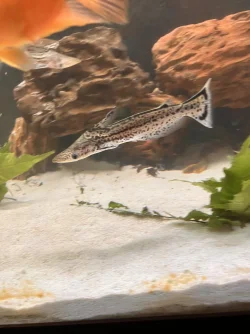
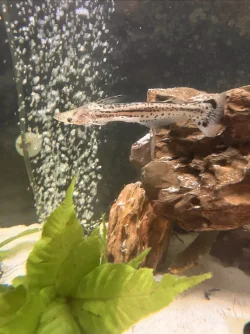
My favorite fish has to be the Orinoco Dolphin Catfish (A. Magoi, https://www.planetcatfish.com/common/species.php?species_id=298), so much so that I bought 4 of them for my 75-gallon tank. They are all in the 5–6-inch range with 2 males and 2 females. I have noticed that both males, however, have become very skinny with twig-like bodies, while the females seem to look fine. I will admit that I mix fish (especially cichlids) from different areas to try and see what happens, and the dolphins sometimes take small beatings. I'm not sure that this is the underlying issue, though, as the females again look quite healthy. I love all of my fish as pets and am not looking into rehoming- I just bought a new hiding space for the more aggressive fish though it's too early to tell if it works. Please tell me if you have any suggestions for getting my male magois back in shape! Thank you (Again, this is only an issue in the MALE fish, which elongated their dorsal fin sometime around April)!
 
I'll be unpopular - you need to rehome the four into a decent sized tank for them. They shouldn't be sharing with Cichlids, as the first beating will have shown.
Getting skinny like that is interesting. It could be stress., but I'd treat for parasites, just in case. It's the simplest solution, if it works, I'd look at diet, to see if that's your issue. I'd check temperature, though you know the basics on the fish. It may be too high. Then be sure the flow within the tank is extreme, for their high oxygen needs.
Feeder fish kill a lot of predatory fish, though the diseases and parasites they often carry. You could have something from that going on. You wouldn't be the first predatory fish keeper to hit that trap.

When I look at it - it's not a community fish being kept in a community, and that may be the start point. With most Cichlids, a 75 is a small aquarium.
 
Pictures of your catfish so we can check them for disease?
Do they eat normally?
What does their poop look like?
Do you see any thin red hairs sticking out of their butt?

Assuming they are eating well and getting a varied diet, the most common reason fish lose weight is due to intestinal worms. That is where I would start, by deworming all your fish. Section 3 of the following link has information on deworming fish.
 
I'll be unpopular - you need to rehome the four into a decent sized tank for them. They shouldn't be sharing with Cichlids, as the first beating will have shown.
Getting skinny like that is interesting. It could be stress., but I'd treat for parasites, just in case. It's the simplest solution, if it works, I'd look at diet, to see if that's your issue. I'd check temperature, though you know the basics on the fish. It may be too high. Then be sure the flow within the tank is extreme, for their high oxygen needs.
Feeder fish kill a lot of predatory fish, though the diseases and parasites they often carry. You could have something from that going on. You wouldn't be the first predatory fish keeper to hit that trap.

When I look at it - it's not a community fish being kept in a community, and that may be the start point. With most Cichlids, a 75 is a small aquarium.
Thank you for the suggestions!
 
Pictures of your catfish so we can check them for disease?
Do they eat normally?
What does their poop look like?
Do you see any thin red hairs sticking out of their butt?

Assuming they are eating well and getting a varied diet, the most common reason fish lose weight is due to intestinal worms. That is where I would start, by deworming all your fish. Section 3 of the following link has information on deworming fish.
Thank you, appreciate it a lot!!
 
Thank you, appreciate it a lot!!
Let me get some pictures to you and look at them more...

They have been like this for quite some time, but I am getting increasingly worried. I have a tank (5 1/2 gallons) that I can use as a hospital tank so I may try to "treat" the one in the worst condition of the 2 first. I know that they eat a lot less than they used to, and the females again seem perfectly fine.
 

Attachments

  • IMG_9689.jpeg
    IMG_9689.jpeg
    234.4 KB · Views: 56
  • IMG_9693.jpeg
    IMG_9693.jpeg
    264.7 KB · Views: 66
What are you feeding them?
How often do you feed them?

-------------------

They are really skinny. Deworm the tank asap. If you have other aquariums, deworm them at the same time.

Feed the fish more often until you deworm them and for a month after you have dewormed them. This will help the fish keep their blood level as high as possible so they don't die. When intestinal worms feed on an animal, they drain the blood out of the organism and the animal/ fish suffers from lack of blood and low blood pressure. Eventually this combination kills the fish or animal. Feeding the fish more often until deworming occurs will hopefully help the fish produce more blood to compensate for what they are losing, and help them recover faster after they have been dewormed.

If they don't improve within a few weeks of deworming then treat them for internal protozoan parasites. There is a product called API General Cure that treats tapeworm and internal protozoan infections and that could be used first. If it doesn't help them you will need something to treat round/ thread worms.

-------------------

There is a calculator/ converter in the "FishForum.net Calculator" under "Useful Links" at the top right of this page that will let you work out the volume of water in your tank. The link is below.

When you measure the height, measure from the top of the substrate to the top of the water level.

If you have big rocks or driftwood in the tank, remove these before measuring the height of the water level so you get a more accurate water volume.

You can use a permanent marker to draw a line on the tank at the water level and put down how many litres/ gallons are in the tank at that level.

Remove carbon from filters when using medications, including the deworming medication.
 
What are you feeding them?
How often do you feed them?

-------------------

They are really skinny. Deworm the tank asap. If you have other aquariums, deworm them at the same time.

Feed the fish more often until you deworm them and for a month after you have dewormed them. This will help the fish keep their blood level as high as possible so they don't die. When intestinal worms feed on an animal, they drain the blood out of the organism and the animal/ fish suffers from lack of blood and low blood pressure. Eventually this combination kills the fish or animal. Feeding the fish more often until deworming occurs will hopefully help the fish produce more blood to compensate for what they are losing, and help them recover faster after they have been dewormed.

If they don't improve within a few weeks of deworming then treat them for internal protozoan parasites. There is a product called API General Cure that treats tapeworm and internal protozoan infections and that could be used first. If it doesn't help them you will need something to treat round/ thread worms.

-------------------

There is a calculator/ converter in the "FishForum.net Calculator" under "Useful Links" at the top right of this page that will let you work out the volume of water in your tank. The link is below.

When you measure the height, measure from the top of the substrate to the top of the water level.

If you have big rocks or driftwood in the tank, remove these before measuring the height of the water level so you get a more accurate water volume.

You can use a permanent marker to draw a line on the tank at the water level and put down how many litres/ gallons are in the tank at that level.

Remove carbon from filters when using medications, including the deworming medication.
Thank you. One fish is currently in a 5-gallon hospital tank. I'll deworm that as well. How much longer do you think they have before they pass (just for a general estimate, I know that I need to act really fast)?
 
Thank you. One fish is currently in a 5-gallon hospital tank. I'll deworm that as well. How much longer do you think they have before they pass (just for a general estimate, I know that I need to act really fast)?
I usually feed them 3 blocks of frozen food a night, sometimes accompanied by algae wafers.

 
I wouldn't bother keeping one in a hospital tank unless it has some other disease that is being treated. Both fish have the same issue and the other fish might have it too (if it's worms then every fish in the tank will have them). They are also sociable so I would just move the single fish back into the main tank and treat that.

If it's intestinal worms, the fish could have a week to a month before they die. They are really skinny and need lots of food now and you should try to deworm them today if you can, or as soon as possible.

If it's an internal protozoan infection, they have 1-2 weeks tops.

If they have been getting skinny for more than a month, then it's more likely to be worms. Internal protozoan infections cause fish to lose weight over 1-2 weeks and the fish die within 2 weeks of showing symptoms (skinny belly). Intestinal worms can take months to kill fish.

-------------------

You need to feed the fish until they have fat stomachs. They are also predators and will eat fish and prawn/ shrimp. You can buy cooked or raw prawn from a supermarket and keep it in the freezer. Defrost one, remove the head, shell and gut (thin black tube in the body) if they haven't already been removed and throw those parts in the bin. then use a pr of scissors to cut the remaining prawn tail into pieces and offer a few bits at a time. Let the fish eat until full then remove uneaten food. You can feed prawn in addition to the frozen food you are using. You can also get frozen fish from shops to feed the catfish. Just keep it frozen and cut a small piece off and chop it up into bite size pieces and feed some to the fish.

I wouldn't bother giving them algae wafers because they are predators and eat meat based foods.
 
I wouldn't bother keeping one in a hospital tank unless it has some other disease that is being treated. Both fish have the same issue and the other fish might have it too (if it's worms then every fish in the tank will have them). They are also sociable so I would just move the single fish back into the main tank and treat that.

If it's intestinal worms, the fish could have a week to a month before they die. They are really skinny and need lots of food now and you should try to deworm them today if you can, or as soon as possible.

If it's an internal protozoan infection, they have 1-2 weeks tops.

If they have been getting skinny for more than a month, then it's more likely to be worms. Internal protozoan infections cause fish to lose weight over 1-2 weeks and the fish die within 2 weeks of showing symptoms (skinny belly). Intestinal worms can take months to kill fish.

-------------------

You need to feed the fish until they have fat stomachs. They are also predators and will eat fish and prawn/ shrimp. You can buy cooked or raw prawn from a supermarket and keep it in the freezer. Defrost one, remove the head, shell and gut (thin black tube in the body) if they haven't already been removed and throw those parts in the bin. then use a pr of scissors to cut the remaining prawn tail into pieces and offer a few bits at a time. Let the fish eat until full then remove uneaten food. You can feed prawn in addition to the frozen food you are using. You can also get frozen fish from shops to feed the catfish. Just keep it frozen and cut a small piece off and chop it up into bite size pieces and feed some to the fish.

I wouldn't bother giving them algae wafers because they are predators and eat meat based foods.
Thank you, API general cure is coming soon and I will be treating shortly.

Sadly, the fish that I have in the hospital tank will not be able to eat enough if in the big tank. He's so skinny that he'll be outcompeted per usual. I have to keep him in to ensure that he has a large stomach. Thank you!
 

Most reactions

Back
Top