A Few Thoughts On Issues Concerning Tankbusting Fish...

That actually looks really tasty :drool: .I'm a member of a monster fish forum, i've read a lot of stories of people who end up stuck with arapaima's (i believe they grow to over 9-10ft long), end up killing and barbequeing them- apparently they taste very good :good: .I've only ever known of one person to house an arapaima properly, and that guy had a 50,000gallon aquarium (no kidding! I've seen the picture diary of the making of it and everything), and i certainly don't expect many people to do that, so IMHO i think its totally acceptable to kill and eat such fish :) .
Can we have a link? Id love to see that!


Its on the monster fishkeepers forum in the articles section, the thread is titled "Building My 50,000 Gallon Monster Mega Tank", i'm not sure if i can post links to other fish forums though, lets see if this works;

http://www.####.com/forums/s...read.php?t=8952

Edit: nope it doesn't.


If you have a good pre filter before the water reaches your biological media there really isnt any need to clean more than once every two or three years to remove a bit of the bio film that develops and the only reason you do that is to prevent tunneling by the water where the water will find the path of least resistance and bypass the majority of the media, the pre filter collects all the solids and can be jet washed under a tap to get it clean again.There are freshwater protein skimmers but they require huge ammounts of pressure to work and are not suitable for conventional freshwater aquaria, but on jumbo scale tanks and ponds they are of great use, they work on a venturi principle by forcing air into a high pressure stream of water.The key to predatory tanks is masses of surface area over the filter media, sponges are next to useless and high tech media designed for koi ponds is the order of the day with a large ammount of flow over the media.

When you say a "pre filter", you mean something like a large powerful koi sponge filter which is good at filtering out large solids or something?

How exactly do these protein skimmers work and how much would one cost for an indoor pond in the region of 2-3000gallons?
 
No idea on cost but expect it to be a lot http://www.tmc-ltd.co.uk/pond/sander-freshskim.asp a pre filter could be a block of dense foam or a big wad of filter wool, anything that traps solids before they reach the biological media.


Thanks for the links, interesting stuff, can you really do less water changes with a protein skimmer though? What about the buildup of minerals in the tank from long term evaporation (and there would be a lot of evaporation in an indoor pond), which could cause the ph of the tank to crash or something?
 
For evapouration you would need an auto top up system with pure R/O water but yes protein skimmers really do lower the ammount of water you have to change because they remove organics before they can enter the nitrogen cycle. Coupled with a pre filter you can effectively remove at least 50% of the organic debri before it begins to break down.
 
For evapouration you would need an auto top up system with pure R/O water but yes protein skimmers really do lower the ammount of water you have to change because they remove organics before they can enter the nitrogen cycle. Coupled with a pre filter you can effectively remove at least 50% of the organic debri before it begins to break down.


Sounds like an aweful lot of equipment/money just to cut down on water changes but i suppose it could be worth it, i really don't know much on RO water systems, don't they produce only small amounts of RO water quite slowly?
 
Lots of worthwhile arguments on both sides here. I think I would feel a little uncomfortable about a solution (quietly euthanising the fish at home) that creates no inconvenience for the shop that sold it. They'll just carry on ordering these fish, why shouldn't they? The staff themselves may not realise the consequences of their growth potential. True, there is a case to be made out for caveat emptor- but that won't help the fish they get in as part of the next assignment. I think I would prefer a solution that involved pointing the problems out to them- even if the fish had to be euthanised in the end. Though obviously it would be better if a proper home could be found for it.
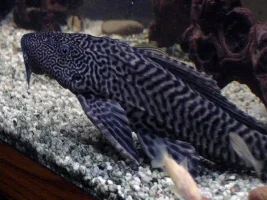
As for the advice given out on the forum, it doesn't usually (thankfully) involve RTCs, more commonly we're talking plecs or bala sharks. And then I don't have any qualms in suggesting either rehoming or getting a bigger tank. After all you don't need absolutely outlandish sizes for these fish, there are people around with the facilities. But I do think the shop assistant who has recommended bala sharks for a 15 gallon tank might as well do another spell of looking after the same fish instead of just ordering in a new assignment.
 
Hm i haven't seen that many RTC cases on the forum here recently, although i did seen one concerning an irredescent shark on here just the other week which was suffering from some severe stunted growth, i would say i've seen a lot more irredescent shark storys on this forum this year than RTC ones, although both are monster size growing fish.


Personally, I would feel better about rehoming a fish like a sailfin pleco to a lfs if the shop sold tanks at least 5ft long and 18inches-2ft wide, but then again a lot of the smaller shops don't sell such tanks, my most lfs for example only sells tanks that go to 20-30gallons, but sell plenty of bala sharks and common and sailfin plecos at the shop.
 
Yes, it is difficult. But my point is, if you don't go back and make a fuss, then they'll just carry on ordering more. Oh all right, they probably will anyway...
 
And I said a 15x6 tank is enough for an RTC where? I used that as an example of an lfs near me that has large tanks in its customers. It would, however, offer a decent life until at least 3 feet long.


You said this early on in the thread;

Pure maths would indicate that returning the fish to the lfs gives it a slightly better chance at a decent life. I know that a customer of one of my lfs has a tank over 6 feet in width (forget the length but 15 feet sits in my mind for some reason). So there is a chance, albeit slim.


Because we were talking about rehoming RTC via lfs to suitable size tanks, you said in the above quote "there is a chance" i.e. with the above example of the tank being adequate, which is just as good as saying that the tank is good enough- you mentioned nothing about the tank only being good for an RTC to the 3ft long point in your original post.
And even then, such a tank wouldn't be large enough in the long term.
In fact, you then said;

I think a 4-5 foot fish can turn around in a 6 foot tank front to back, unless the fish grows somehow while turning.

Which would back up my assumption that you thought the tank would be adequate, as otherwise why would you try to prove such a point?

Because you were saying a 4-5 foot fish couldn't turn around in the tank. I was using the large tank as an example of just how large a tank some people local can have.

How else did you expect these quotes to be interperated considering the context in which you said them?

As a statement first that I know of someone with a large tank, and then a statement that a fish can turn around in a tank wider than itself.

You bemoan the fact I don't state the tank would only be good for an RTC to 3 feet, I didn't even say it would be good enough for an RTC. Hell, I didn't even mention RTC in my first post. You assume straight away from my first post that I think that tank can hold anything you have talked about for life when I make no such inference. You mentioned far more fish than just RTC in that first post.


Tokis-Phoenix said:
Sounds like an aweful lot of equipment/money just to cut down on water changes but i suppose it could be worth it, i really don't know much on RO water systems, don't they produce only small amounts of RO water quite slowly?
You can do less water changes with a skimmer, that is why marine keepers pay such huge amounts for the massive ones to run larger tanks (where water changes cost a lot more due to salt costs). I would recommend using a filter wool bundle or sponge that is out of the water as a pre-filter. Then any physical waste is kept out of the water column, it is also far more effective like this IME.

To counter mineral build up you can invest in an RO system as suggested by CFC or use an algae turf scrubber, a filtration system that uses algae as the primary (and often eventually) the only type of filtration, pulling much out of the water. These can be so effective at nutrient removal that even in SW with a huge skimmer, no skimmate is produced as the algae overtakes everything at taking nutrients out of the water (including binding up ammonia before any nitrogen cycle). Many SW keepers go years without water changes using this.

You would still want to do water changes, but that would easily be done with a slow constant flow as I described above and not so many will be required. RO system production depends on the system's designed amount and the pressure of the water supply. 100+ gallons per day ones are not entirely uncommon, I would not be surprised to see 200+ gallons per day possible, and if your tank is evaporating that much you need to re look at its design and covering.

Large systems can have many fancy bells and whistles on them that make maintenance far easier.
 

Most reactions

Back
Top