Hey folks
I have a 20 gallon long that has been running just fine for over 6 months (my first tank though). When I started it I grabbed a whole bunch of sand from a river bed at the bottom of our garden in the hopes of getting a few cool "natural" critters and maybe some sharks teeth (people find them in the streams around Gainesville, Fl, which is where I live). While the sand looks great and the cone snails seem to love burying themselves in it, it is a serious pain the gluteus maximus! I can't siphon the tank from the bottom because the sand is too fine and just gets sucked up, along with tons of helpless baby snails. And every time the bottom is disturbed, say by adding a new plant, extremely fine sediments are suspended and the tank becomes murkier - if I'm careful I can keep it to a minimum, but if the bottom is disturbed a lot there's not much I can do about it. The murkiness seems to be a colloidal suspension that never settle out, and I literally have to leave it to the filter to clear up the water again.
Saying all that, I have learned to keep this issue to a minimum by changing the water regularly (since I can't clean the sediments) and by making the changes with a bucket by submerging it, which doesn't cause any turbulence or stir things up.
I recently added a spotted pleco who is significantly bigger than the rest of the fish in the tank (4 or 5 inches as opposed to the largest other fish I have, a black widow tetra of maybe 2 inches) to help keep the algae in check. Algae seems to do well, presumably because I can't flush out the sediments and associated nitrate from settled droppings and missed food etc. And then yesterday I added two small crabs, a red clawed and a mini crab. In total, I probably have 17 or 18 inches of fish in the tank now, which I don't think is overstocking for a 20-gallon (with a 30-gallon filter).
I got home last night after having added the crabs in the afternoon, along with a piece of driftwood so they could get out of the water, and the tank was inexplicably murky. It had been clear when we left yesterday evening, but was still murky by lunch time today. One neon tetra dead and one glowfish who does not look likely to make it
So, my question: is there any reason why a tank might go murky overnight (or even more quickly in this case). At this point I am putting it down to the pleco either getting a fright or a crab nip (though these crabs are only about the size of the pleco's tail!) and violently flicking his tail when it was resting on or near the bottom, and thus starting this mess. The pleco does have a favourite spot he likes to hang out on, with his tail close to the bottom, so it at least seems like a feasible explanation. But I thought it worth checking if there could be any other possible way to account for such quick murkification.
If anyone has any advice for dealing with sand beds I'd be interested in hearing that also. I've tried siphoning from just above the bed but this seems to be a fruitless effort. Not to mention that I can make a 50% water with a fraction of the time and effort that even a small change by siphon would take (especially since I invariably have to collect and return all the tiny snails that would otherwise be discarded with the water.
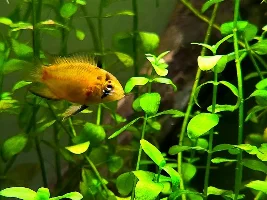
And finally, is there anything I can do to help out this glowfish? It's just floating helpless near the surface, occasionally floating on its side, or with head sinking down, but also occasionally making an effort to swim... I feel really responsible for these little guys and hate to see them suffering
Thanks very much. This can be one bittersweet hobby on the heart sometimes, huh?
I have a 20 gallon long that has been running just fine for over 6 months (my first tank though). When I started it I grabbed a whole bunch of sand from a river bed at the bottom of our garden in the hopes of getting a few cool "natural" critters and maybe some sharks teeth (people find them in the streams around Gainesville, Fl, which is where I live). While the sand looks great and the cone snails seem to love burying themselves in it, it is a serious pain the gluteus maximus! I can't siphon the tank from the bottom because the sand is too fine and just gets sucked up, along with tons of helpless baby snails. And every time the bottom is disturbed, say by adding a new plant, extremely fine sediments are suspended and the tank becomes murkier - if I'm careful I can keep it to a minimum, but if the bottom is disturbed a lot there's not much I can do about it. The murkiness seems to be a colloidal suspension that never settle out, and I literally have to leave it to the filter to clear up the water again.
Saying all that, I have learned to keep this issue to a minimum by changing the water regularly (since I can't clean the sediments) and by making the changes with a bucket by submerging it, which doesn't cause any turbulence or stir things up.
I recently added a spotted pleco who is significantly bigger than the rest of the fish in the tank (4 or 5 inches as opposed to the largest other fish I have, a black widow tetra of maybe 2 inches) to help keep the algae in check. Algae seems to do well, presumably because I can't flush out the sediments and associated nitrate from settled droppings and missed food etc. And then yesterday I added two small crabs, a red clawed and a mini crab. In total, I probably have 17 or 18 inches of fish in the tank now, which I don't think is overstocking for a 20-gallon (with a 30-gallon filter).
I got home last night after having added the crabs in the afternoon, along with a piece of driftwood so they could get out of the water, and the tank was inexplicably murky. It had been clear when we left yesterday evening, but was still murky by lunch time today. One neon tetra dead and one glowfish who does not look likely to make it
So, my question: is there any reason why a tank might go murky overnight (or even more quickly in this case). At this point I am putting it down to the pleco either getting a fright or a crab nip (though these crabs are only about the size of the pleco's tail!) and violently flicking his tail when it was resting on or near the bottom, and thus starting this mess. The pleco does have a favourite spot he likes to hang out on, with his tail close to the bottom, so it at least seems like a feasible explanation. But I thought it worth checking if there could be any other possible way to account for such quick murkification.
If anyone has any advice for dealing with sand beds I'd be interested in hearing that also. I've tried siphoning from just above the bed but this seems to be a fruitless effort. Not to mention that I can make a 50% water with a fraction of the time and effort that even a small change by siphon would take (especially since I invariably have to collect and return all the tiny snails that would otherwise be discarded with the water.
And finally, is there anything I can do to help out this glowfish? It's just floating helpless near the surface, occasionally floating on its side, or with head sinking down, but also occasionally making an effort to swim... I feel really responsible for these little guys and hate to see them suffering
Thanks very much. This can be one bittersweet hobby on the heart sometimes, huh?