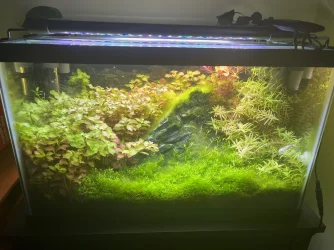
Stringy thin hair algae 10v Iwagumi

James_R

New Member
Joined
Jun 28, 2024
Messages
50
Reaction score
29
Location
New Jersey
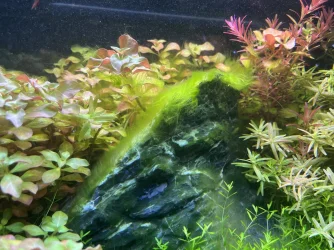
This algae started off as a little bit on my plants and now is taking over the tank, I inject co2 and use high light and APT ferts daily. I use
What is this and how do I get rid of
0 nitrite
0 ammonia
Ph 7-7.2
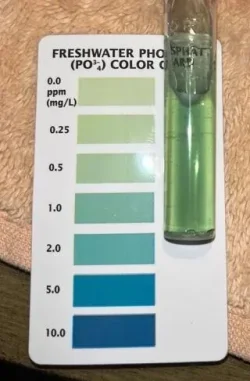
0-5ppm nitrate and I can’t tell my phosphate so ig 0? It’s hard to tell none of the colors matches
 

Attachments

  • IMG_3571.jpeg
    IMG_3571.jpeg
    417.8 KB · Views: 95
  • IMG_3570.jpeg
    IMG_3570.jpeg
    348.5 KB · Views: 76
  • IMG_3642.jpeg
    IMG_3642.jpeg
    46.6 KB · Views: 79
My best guess here is you are dosing way to much fertilizer. I am not familiar with APT. I have done multiple planted tanks for about 23 years. I ran one high tech tank with pressurized co2 for a decade. I fertilized this once a week using Tropica fertilizer and made sure I did at leat a 50% water change every week. Today Tropica makes two liquid ferts. http://tropica.com/en/ Tropica is one of the worlds leading producers of aquatic plants.

What is causing your algae is an imbalance between the ferts/lights/Co2. Algae thrives on such imbalances.
 
Personally, I think daily ferts are a little too much. But for a high-tech that might be the better way :dunno:
 
Green filamentous algae and it loves bright light and lots of nutrients.

I would reduce the fertiliser to a couple of times a week. if it continues after a month with twice a week fertilising, then reduce to once a week for a month and see if it helps.

Make sure you do a massive (80-90%) water change once a week before re-dosing with fertiliser. This prevents un-used fertiliser building up to high levels and potentially causing an imbalance. A lot of algae grow when there's an imbalance in the system. It might be from too much light or too much of one ingredient in the fertiliser. Doing a big water change before re-dosing helps keep everything at the correct levels so you don't get a build up of phosphorus, potassium or something else.

Try to gravel clean around the plants (going to be hard to do in your tank) or at least get among the plants to suck out any gunk that has built up there. This will reduce the unwanted nutrients that might be encouraging the algae.

Phosphorus (phosphate) isn't needed by most aquatic plants. Its main use is to promote root growth and thicken the cell walls in plants. This is great if you are growing bulbs or tubers in the garden but not that helpful in aquariums. Most aquatic plants have poorly developed root systems and take in most of their nutrients via their leaves. If you have a phosphate reading (yours isn't that high) it could be contributing to the algae. Reducing the fertilise regime to 2 times a week should help with this. If you still have a phosphate reading at the end of the week (just before you do your water change), then perhaps look for an aquarium plant fertiliser that doesn't have phosphorus in.

Potassium is another nutrient most aquatic plants don't use much of. In terrestrial plants it encourages flower and fruit growth. Most aquatic plants don't flower underwater but some do if they grow out of the water (Echinodorus, Hygrophila sp, Ludwigia sp). Vallis will produce small flowers that float on the surface. Water lilies and lotus produce flowers above the water (they send up a flower spike). Unless you are growing water lilies or lotus, you probably don't need any potassium in the fertiliser either. Phosphorus is more likely to cause algae problems than potassium is.

 
Green filamentous algae and it loves bright light and lots of nutrients.

I would reduce the fertiliser to a couple of times a week. if it continues after a month with twice a week fertilising, then reduce to once a week for a month and see if it helps.

Make sure you do a massive (80-90%) water change once a week before re-dosing with fertiliser. This prevents un-used fertiliser building up to high levels and potentially causing an imbalance. A lot of algae grow when there's an imbalance in the system. It might be from too much light or too much of one ingredient in the fertiliser. Doing a big water change before re-dosing helps keep everything at the correct levels so you don't get a build up of phosphorus, potassium or something else.

Try to gravel clean around the plants (going to be hard to do in your tank) or at least get among the plants to suck out any gunk that has built up there. This will reduce the unwanted nutrients that might be encouraging the algae.

Phosphorus (phosphate) isn't needed by most aquatic plants. Its main use is to promote root growth and thicken the cell walls in plants. This is great if you are growing bulbs or tubers in the garden but not that helpful in aquariums. Most aquatic plants have poorly developed root systems and take in most of their nutrients via their leaves. If you have a phosphate reading (yours isn't that high) it could be contributing to the algae. Reducing the fertilise regime to 2 times a week should help with this. If you still have a phosphate reading at the end of the week (just before you do your water change), then perhaps look for an aquarium plant fertiliser that doesn't have phosphorus in.

Potassium is another nutrient most aquatic plants don't use much of. In terrestrial plants it encourages flower and fruit growth. Most aquatic plants don't flower underwater but some do if they grow out of the water (Echinodorus, Hygrophila sp, Ludwigia sp). Vallis will produce small flowers that float on the surface. Water lilies and lotus produce flowers above the water (they send up a flower spike). Unless you are growing water lilies or lotus, you probably don't need any potassium in the fertiliser either. Phosphorus is more likely to cause algae problems than potassium is.
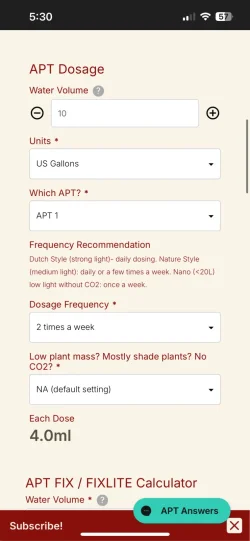
Thank you with all this information! wanted to be sure would you recommend dosing 2x a week be with the same amount of a daily dose I’ve been doing - 1ml - or more like the calculator suggests? Appreciate all the
 

Attachments

  • IMG_3655.png
    IMG_3655.png
    190.2 KB · Views: 47
The online calculators only give an average for a specific tank (usually a heavily planted tank). There are lots of variables including the actual plants grown, lighting times and intensity, CO2 and other things that come into play with plant tanks.

If you are adding fertiliser daily and getting filamentous algae, then reduce the fertiliser for a bit and see if it helps. Keep adding the same dose you are currently adding (1ml) but only dose a couple of times per week instead of daily. Even if you add it every second day instead of every day, it might help. The worse that will happen from less fertiliser is the plants won't grow as quickly. You can increase the dose after when things settle down and the algae has gone but for now I would start off with reducing the fertiliser.
 
There are certain types of fertilizers that don't contain phosphorus or nitrogen (but have all the other macros, including potassium and magnesium) that are specifically designed to minimise the risk of algae outbreaks. You can also experiment with increasing CO2 or water flow, if the fauna can take it. Or - bioload permitting (!) - add a small group of amano shrimp (completely got rid of the problem in my case). Or dim the lights (e.g. by adding some floating plants like salvinia, if you don't want to change the light fixture altogether). 5ppm nitrate is perfectly fine for a planted tank, even a bit on the low side, so my money would be on excess phosphorus (especially the ratio of P to N) + light.
 

Most reactions

Back
Top