

We've discussed this phenomenon before, specifically with regard to Discus. Though there are three described Discus species, DNA evidence suggests many more ESUs (Evolutionarily Significant Units). I suspect this is true for all cichlid species with a massive natural distribution. For Festivums, the actual revision of Mesonauta of the same year, '25, adds but one 'new' species but, as is the case for Discus, the paper you cite suggests there's a lot going on there, evolution-wise.This is the other paper i mentioned published in march 2025 that suggest other species of Mesonauta exist:
(it is just an abstract as $$ are needed for the full paper)
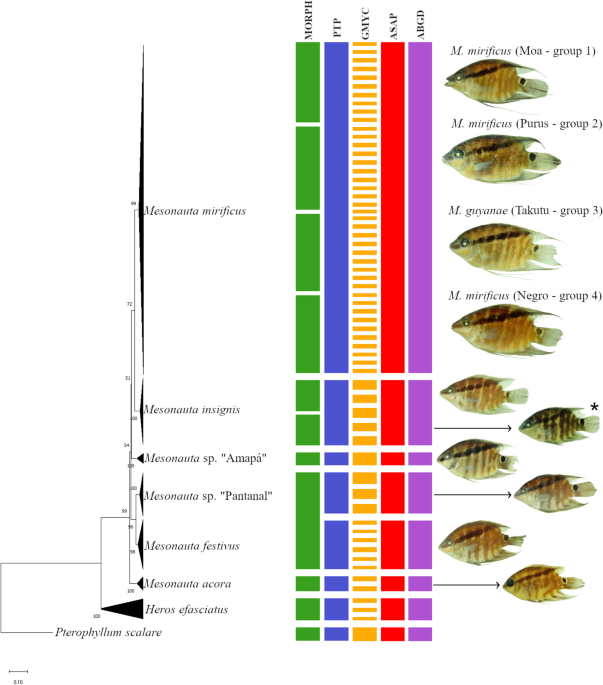
Species delimitation in Neotropical fishes of Mesonauta Günther 1862 (Cichliformes: Cichlidae) - Organisms Diversity & Evolution
From Neotropical cichlids, Mesonauta accomplishes six described species, but although Mesonauta have few described species, putative new species are referred to this genus. Considering that understanding the boundaries of each species could help in phylogenetic context, here, we use a...link.springer.com
In my own area of special interest, Nannostomus, the DNA results are still coming in and suggest tremendous diversity, raising the distinct possibility of numerous ESUs if not actual individuated species. Way back in the '60s, characin authority, Jacque Gery, described the Nannostomus genus as, 'actively evolving.' Aren't we all.
Bottom line, I think we're witnessing the very definition of a species changing before our eyes.
Last edited:


