What's new

South American Cichlid Photos

BullTerrierChild

Fish Fanatic
Joined
Apr 7, 2025
Messages
135
Reaction score
82
Points
28
Location
New York
Here is a collection of some of my cichlids residing in my 75-gallon aquarium:


IMG_3761.webp

Stunning Uaru Cichlid (Uaru Amphiacanthoides) obtained from family.

IMG_3755.webp

Red Spotted Turquoise Severum (Heros Efasciatus) bought around a year ago.

IMG_3758.webp

One of my 4 Blood Parrot Cichlids (Amphilophus citrinellus × Vieja melanurus).

IMG_3753.webp

Festivum Cichlid (Mesonauta ???) that I bought after it was surrendered to my local fish store for eating angelfish eggs. It is one of my personal favorites.

IMG_3760.webp

2 of 3 OTHER Festivum Cichlids (Mesonauta ???) of a different genus than the Festivum above. One of these had a freak accident with a crab and lost his top jaw as shown, but he has survived like this for almost 2 years, so I think euthanasia would be unnecessary. This entire genus is very hardy from my experience!


IMG_3757.webp

Lastly for this thread, a BEAUTIFUL Inirida Spotted Severum (Heros sp.'Inirida'). I am beyond lucky to have this fish in my collection!

Thanks for taking a look!
 
If you can determine the species names of the Festivums, it would be very appreciated!
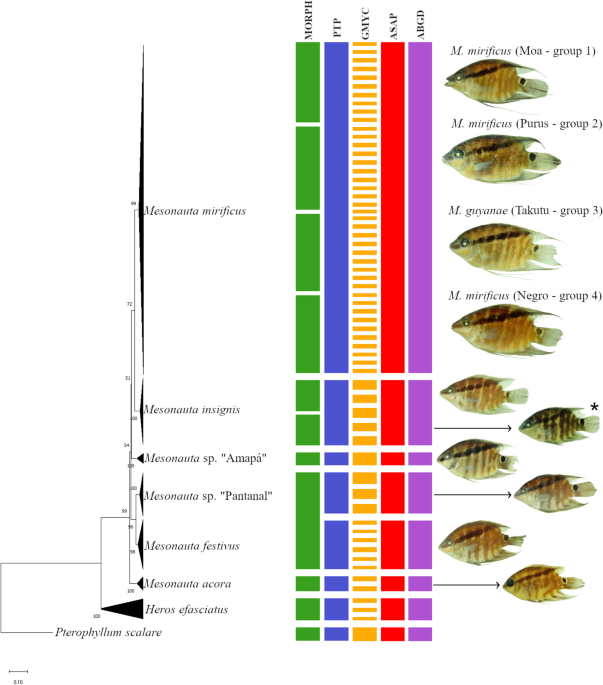
The genus is Mesonauta - festivum is a common name for a specific species of mesonauta. They are very hard to identify - i have two species (sold as egregius (these have blue around their eyes) and mirificus but neither look exactly like published papers with regards to stress lines. Also a 'friend' from another forum pointed that the genus has been recently (1 yr? 2 yr?) been divided further into more species and there is a new paper discussing them.

I will say the mirificus are a large fish and have never attempted to breed; i have quite a few f1 m. egregius and they stay quit a bit smaller - and their blue around their eyes can be quit charming.

The top one is like mirificus or festivus the lower one i've never seen before and looks quit odd in the picture.

Oh and i should mention they love angelfishes eggs ;)
 
The genus is Mesonauta - festivum is a common name for a specific species of mesonauta. They are very hard to identify - i have two species (sold as egregius (these have blue around their eyes) and mirificus but neither look exactly like published papers with regards to stress lines. Also a 'friend' from another forum pointed that the genus has been recently (1 yr? 2 yr?) been divided further into more species and there is a new paper discussing them.

I will say the mirificus are a large fish and have never attempted to breed; i have quite a few f1 m. egregius and they stay quit a bit smaller - and their blue around their eyes can be quit charming.

The top one is like mirificus or festivus the lower one i've never seen before and looks quit odd in the picture.

Oh and i should mention they love angelfishes eggs ;)
Thank you so much! I was aware that "Festivum" was a species name, was just (wrongfully) using it as a general name for the genus. The ones in the lower picture have been with me for almost 3 years (I believe). Very pleasant and hardy fish with the exception of the instance a while back when they obsessively preyed on smaller fish...:dunno:The top one, on the other hand, hasn't had such incident yet (as I got him later) and seems to be a mirificus!

I was also unaware of the new divisions, thanks for bringing it to my attention!
 
The latest revision mentioned above was in '25 and added a 7th species, M. karipuna.

"Festivums" has been common parlance in the hobby for over a century. Only one species was recognized until 1991, Cichlasoma festivum, when Kullander erected the new genus, Mesonauta, and identified six species that were being passed off as one. But 'Festivums" persisted as a common name for all of these closely related cichlids with an oblique bar on their flanks.

This situation was not unlike that in Discus. The first species described in 1840 was Symphysodon discus, and "Discus" persisted as a common name to refer to the several species of Symphysodon that were subsequently described with different taxonomic names.

Meanwhile, nice bunch of cichlids you've got there.
 
Last edited:
The latest revision mentioned above was in '25 and added a 7th species, M. karipuna.

"Festivums" has been common parlance in the hobby for over a century. Only one species was recognized until 1991, Cichlasoma festivum, when Kullander erected the new genus, Mesonauta, and identified six species that were being passed off as one. But 'Festivums" persisted as a common name for all of these closely related cichlids with an oblique bar on their flanks.

This situation was not unlike that in Discus. The first species described in 1840 was Symphysodon discus, and "Discus" persisted as a common name to refer to the several species of Symphysodon that were subsequently described with different taxonomic names.

Meanwhile, nice bunch of cichlids you've got there.
I'll have to check - i was too lazy to look at the paper but I thought they said the division produced 2 or 3 new species but i didn't pay that close attention. Karipuna isn't in the trade and is an odd ball that should be easy to recognize. I wouldn't be shocked if it ends up in a different or own genus given the dna divergence.

I've speculated that some of the species of mesonauta have different stress marks depending on catch location since i've seen quite a few that diverge from the 6 listed species. But it begs the question if they are simply the same species with variation in markings or different species.

I know my two species do not exactly match one of the 6 drawings but they match each other !
 
I have a bit of a hard time seeing blood parrots as South American, as they seem to have originated in Asian fishfarm labs. Yes, the raw materials were South American, but the product is Asian. But that's a quibble - those are nice fish you have.
 
I have a bit of a hard time seeing blood parrots as South American, as they seem to have originated in Asian fishfarm labs. Yes, the raw materials were South American, but the product is Asian. But that's a quibble - those are nice fish you have.
That's what I meant when adding them. Thank you!
 
I'll have to check - i was too lazy to look at the paper but I thought they said the division produced 2 or 3 new species but i didn't pay that close attention. Karipuna isn't in the trade and is an odd ball that should be easy to recognize. I wouldn't be shocked if it ends up in a different or own genus given the dna divergence.

I've speculated that some of the species of mesonauta have different stress marks depending on catch location since i've seen quite a few that diverge from the 6 listed species. But it begs the question if they are simply the same species with variation in markings or different species.

I know my two species do not exactly match one of the 6 drawings but they match each other !
Interesting, my 4 used to hide in the plants and display their bars when I had swordplants (the severums ate them). I should've paid closer attention...
 
The latest revision mentioned above was in '25 and added a 7th species, M. karipuna.

"Festivums" has been common parlance in the hobby for over a century. Only one species was recognized until 1991, Cichlasoma festivum, when Kullander erected the new genus, Mesonauta, and identified six species that were being passed off as one. But 'Festivums" persisted as a common name for all of these closely related cichlids with an oblique bar on their flanks.

This situation was not unlike that in Discus. The first species described in 1840 was Symphysodon discus, and "Discus" persisted as a common name to refer to the several species of Symphysodon that were subsequently described with different taxonomic names.

Meanwhile, nice bunch of cichlids you've got there.
This is the other paper i mentioned published in march 2025 that suggest other species of Mesonauta exist:
(it is just an abstract as $$ are needed for the full paper)

 
I have a bit of a hard time seeing blood parrots as South American, as they seem to have originated in Asian fishfarm labs. Yes, the raw materials were South American, but the product is Asian. But that's a quibble - those are nice fish you have.
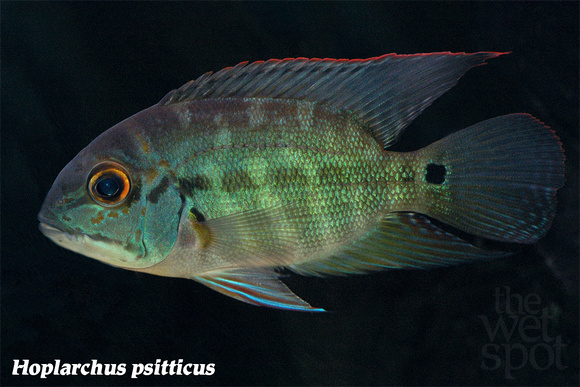
Blood parrots maybe not but there are of course true wild caught parrots - and boy do they have lovely colours - oh wait there are also wc parrot cichild (hoplarchus psittacus) tangle-up used to have them all the time.

I do realize that 'blood' parrot refers to the monster created in asia.

In fact if one wishes to own a true parrot cichild; lives in usa and don't mind paying shipping they are available today:


Make sure you have that ultra soft water available along with a fist-full of nuts (no clue which type)!
 

Most reactions

Back
Top