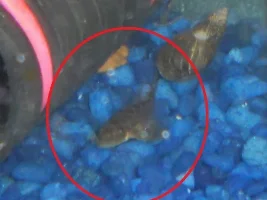
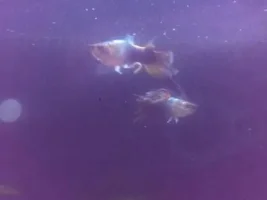
so, what are all the critters found in a mature tank, and if they aren’t added, where do they come from???

Magnum Man35 150

Fish Maniac
Tank of the Month 🏆
Fish of the Month 🌟
Joined
Jun 21, 2023
Messages
7,647
Reaction score
6,900
Points
113
Location
Southern MN
talking all the micro critters that seem to be in a nicely matured tank… we add dead leaves for critters to grow on as fish fry food, so, I’m mostly talking about the smaller stuff… seed shrimp and smaller… and if you have a growing population of fish at the fry stage, can these critters thrive in a tank full of fry, or do they need to be added regularly???

I’ve been really happy with the dwarf crays I’ve added recently… the word is still out, on weather they can thrive ( reproduce ) in a tank full of fish???

maybe these larger critters would reduce the population of the smaller???

right now I’m using a few larger tanks, that had tilapia in previously, and being a fish that produces a lot of waste, there has been lots of mulm I vacuum out weekly… I’m guessing that’s a food source for most of these small critters, and perhaps, a lot of fish fry as well???, and I may be sucking out lots of the micro fauna, when I vacuum substrate ( soon it will be reduced to a level, that I’ll just do water changes ) and have the sponge filters and hang on back mechanical filters, as the substrate is just a shallow layer of river pebbles…

thoughts, and or your experience with micro fauna???
 
I believe that flying insects can infiltrate aquariums. I have never observed it though.
 
A lot of the organisms that can end up in your tank come from eggs, cysts, etc. that come in from plants, wood, leaves for tannin etc. When I don't add outside materials to a tank, and dip all the plants and hard scape in a bleach solution the numbers of other organisms such as seed shrimp are generally absent. When I relax that rule a bit I end up with all sorts of different items in the tank. I also noted that the fish you keep also affect what you find, some fish are much more likely to eat that seed shrimp before you every see it. When keeping a shrimp tank I noticed a lot more unique critters in the tank.
 
Everything we add has a bioload, including tapwater. Chlorination kills many pathogens, but water's water, and it carries microscopic life. It's been years since I saw seed shrimp. Non tissue culture plants add, stuff is airborne, and the eggs and such of bugs come in.

I figure we're constantly breathing in beasties.

Bugs bring bugs, not just breezes. Your hands are probably a good source. The fish you add have gutloads. Houseplants and cats and dogs near the tank add in, as do other people.
 
A lot of the microorganisms come in from our tap water. Some of them come in via the air. For a single bacteria cell humidity can be all the moisture they need.

And then a lot of them actual colonize in the private pipes of our homes or those of the water supply system.

Bradley, T.C., Haas, C.N. and Sales, C.M., 2020. Nitrification in premise plumbing: a review. Water, 12(3), p.830.

Abstract​


Nitrification is a major issue that utilities must address if they utilize chloramines as a secondary disinfectant. Nitrification is the oxidation of free ammonia to nitrite which is then further oxidized to nitrate. Free ammonia is found in drinking water systems as a result of overfeeding at the water treatment plant (WTP) or as a result of the decomposition of monochloramine. Premise plumbing systems (i.e., the plumbing systems within buildings and homes) are characterized by irregular usage patterns, high water age, high temperature, and high surface-to-volume ratios. These characteristics create ideal conditions for increased chloramine decay, bacterial growth, and nitrification. This review discusses factors within premise plumbing that are likely to influence nitrification, and vice versa. Factors influencing, or influenced by, nitrification include the rate at which chloramine residual decays, microbial regrowth, corrosion of pipe materials, and water conservation practices. From a regulatory standpoint, the greatest impact of nitrification within premise plumbing is likely to be a result of increased lead levels during Lead and Copper Rule (LCR) sampling. Other drinking water regulations related to nitrifying parameters are monitored in a manner to reduce premise plumbing impacts. One way to potentially control nitrification in premise plumbing systems is through the development of building management plans.

I cycled my first tank with fish. I cycled all the ones thereafter without fish and ultimately I cycled filters in my own small bio-farm. <y tap water comes from our privately owned well. The tank had no live plants. So the only ways the cycle could possible have been established was because seed bacteria came in with the water, from the air of on the fish. I find the latter hard to believe. But it is not entirely impossible because some of the bacteria are free swimming in the water as part of the species survival strategy. If things go south for all the bacteria in the bio-films, these free swimmers are potentially supposed to end up in a better place where they can be the start of a new colony. So maybe some of these free swimmers got stuck to the fish I bought.
 

Most reactions

Back
Top