New JAKA today !

Back in the fold

That One Guy
Staff member
Global Moderator ⚒️
Supporting Member ⭐
Joined
May 25, 2019
Messages
6,600
Reaction score
10,040
Points
113
Location
On the banks of the Yellowstone
Cliff Claven delivered a jewel today ! Beautiful pictures of beautiful fish and some interesting reading .
IMG_2925.webp
IMG_2924.webp
 
I thumbed through it and drooled over the photos when it arrived and started reading it this morning. What a great issue!
 
I'm not a member anymore, so I don't receive it. I wish they had a straight up online version like the other clubs generally do - it would allow foreign 'members' to offer a little financial support without having to pay for the whole membership that they only get the journal for. Who wrote the articles on ogoense 80-24 and especially on zygaima?
 

Attachments

  • 8024m1 (640x427).webp
    8024m1 (640x427).webp
    46.4 KB · Views: 29
  • Aphyosemion zygaima.webp
    Aphyosemion zygaima.webp
    82.7 KB · Views: 33
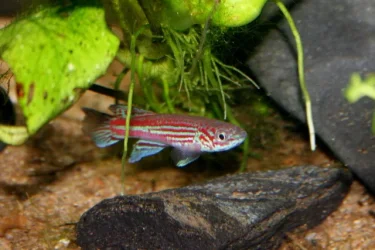
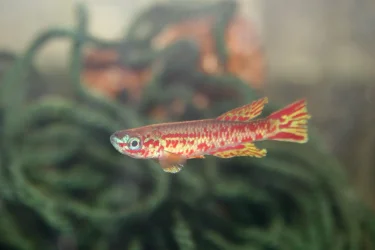
A. ogoense is just a cover photo by Tony Terceira. The article on A. zygaima is a reprint from Killi Revue, Killi Club de France, and is written by Yoann Colonnier.
 
Ah, that's a good article. I have it here in the original. I think that ogoense photo has been used before. I've become quite aware of older JAKA contents and covers as I've been sorting through many years of my inherited box of revues. My friend was a member of the KCF, AKA and the CKA when it existed. There was a time when ordinary hobbyists made great contributions in a 'citizen scientist' way. What I'm reading is of extremely high quality - as good as the commercial productions.

I'm always tempted by the JAKA, but geography/politics makes to impossible for me to participate in anything but passively receiving the journal. The border has become a very large thing in recent years. I'm still a member of the French and the British killie clubs.
 
So you guys inspired me, and I started on the long process of organizing my stacks of JAKAs and other killie club reviews by year, into accessible boxes with key articles noted on the exterior. I've already found a number of articles I need to reread, and that may offer clues as to how I can solve some puzzles I've been working on with my killies.

Once mine are done, I'll start on my big box from my friend. His go way back. I have a bunch starting in the 90s, but I seem to have loaned quite a few to people over the years. Pierre was an easy going man, but it's clear he valued this knowledge and the organization needed to access it. His copies are neatly ordered and will fill all the gaps and add a few more years. I have learned that he was gathering information for years before he contacted me and asked if I sold killies. I didn't, but I gave him a bunch and that got him started.

You see the knowledge grow as you look at these things. A fish is reported on, and then a few years later, more discoveries are made or more research is done, and then after a few more years... it's a lovely process.
 
Got my issue yesterday, albeit, this month's issue is much thinner compared to my other issues. And just like the other issues, it does deliver great images and reading materials.
 
Yeah ! New JAKA in the mail today . A long article on collecting in Cameroon by Jaap Vlaming , the 2026 AKA Show roundup and results and an article on a fish that interests me . Fundulopanchax scheeli . I briefly speed read the article about the scheeli and the author talks about his preference of putting the eggs on peat , in this case coconut coir , and I just DO NOT understand the reasons . He says he has more control over the number and development of the eggs . @gary perhaps you could address this technique . I don’t recall it ever having been mentioned here on The Great TFF Forum .
IMG_4055.webp
 
Enjoying the new issue. The Cameroon article is especially terrific.
 
Yeah ! New JAKA in the mail today . A long article on collecting in Cameroon by Jaap Vlaming , the 2026 AKA Show roundup and results and an article on a fish that interests me . Fundulopanchax scheeli . I briefly speed read the article about the scheeli and the author talks about his preference of putting the eggs on peat , in this case coconut coir , and I just DO NOT understand the reasons . He says he has more control over the number and development of the eggs . @gary perhaps you could address this technique . I don’t recall it ever having been mentioned here on The Great TFF Forum .View attachment 387932
The reason why some people put eggs on peat/coir is that they can hatch them at the same time as opposed to water incubation. With water incubation, only one or two eggs would hatch a day. Killifish fry would grow at the same rate when doing dry method as opposed to water incubation. Though to be honest, I never had the best luck in keeping non-annual killifish eggs in peat.
 
I have some Fundulopanchax scheeli here now. In the past, the species bred like guppies in my tanks, but these ones are less cooperative. They want to lay their eggs in gravel and dislike mops.

The problem addressed with eggs on peat is as @Crispii says.

I'd add that some eggs are very prone to fungus, and the long incubation of most killies increases that danger. A tetra can hatch in 24 hours. A scheeli can take 14 to 21 days. That's a long stretch. So isolating them from each other so that fungus has trouble spreading is a strategy. Peat has an antiseptic edge with its acidity.

You also have the rarely talked about 9 day rule. If I collect eggs over 2 weeks, the ones picked and incubated in water in the first 7 to 9 days will do fine, and the fry will grow well. They'll grow so well that there is a high chance the fish from day one's hatch will eat the fish that hatch after day 9.

This can leave you with a lot of growout containers. Tetras dump a lot of eggs that all hatch at once. Most killies we keep spawn daily for periods, and that steady, slow increase can complicate life for us.

All good reasons, but I don't use peat or coir except for annuals. I live in a backwater city in a country with only a few dozen active killiekeepers and a killing cold climate for 6 months. I have to keep my generations small, and just raise the fish for myself and the local club.
 

Most reactions

Back
Top