I used to want to try every 'new' fish that showed up from nature. Working with an importer of rare fish, I got to see and keep a lot of things most hobbyists have never seen in stores. Now I'm retired and living in a seaside town where seeing guppies is an event. I don't have access to the fish that an aquarist living in a more densely populated place would. Ah, but I still have wishlists. I'm slowly filling them in as I find fish that may not be rarities, but that I liked and want to maintain for as many generations as I can.
Yesterday, I got a breeding group of Iriatherina werneri, the threadfin rainbow (not really a rainbow). I have a tank of Hoplisoma atropersonatus, a cory I fell in love with years ago. I have a pile of baby Pelvicachromis taeniatus in with their parents, and would love to find Pelvicachromis kribensis again (not the easy to get hobby krib). There's a not well known Genus of western African Cichlids, Benitochromis, that I hope to get one of on a trip to Europe next winter.
I'm a killie keeper, and would like some Procatopus and Platopochilus lampeyes. There are a couple of species of African killies I'd jump at a chance to keep, if I ever find them. I'd also love to find some of the small barbs and Distochodids of western Africa, but I doubt I will.
Once you get past the mental barrier of having one tank (and I'm a ways past that one), quests will do you good. You learn what
@Back in the fold is discovering - there are fashions in fish availability and if for whatever reason the trade turns against what you like, you can be out of luck unless you've discussed with like minded people. Right now, all sorts of predatory fish are fashionable, a reflection of our times, I guess. Fish you think are common now can be eliminated from the hobby by the development of 'sports' or hybrids, or by genetically modified versions. The hobby can lose interest - a shift that caused dozens of Apistogramma dwarf Cichlids to become unavailable or really expensive. Wars can cut supplies off, and wild stocks of fish from environmentally destroyed regions can dry up, literally.
If you work through something like the Baensch Atlases of aquarium fish and then look around you at the hobby, our choices are shrinking really fast and so many fish many take for granted are already in the rear view mirror for us. Sometimes it becomes a matter of breeding and maintaining them, or saying good bye. The market's shrinking fast.


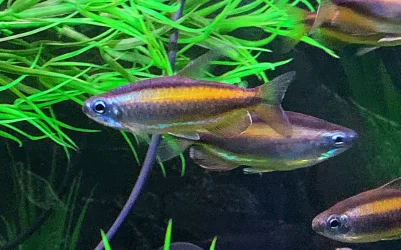
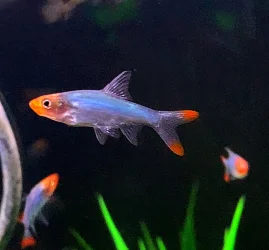


 what a stunner!
 that was really sad watching them drop one by one...but the Boesemani are unaffected.