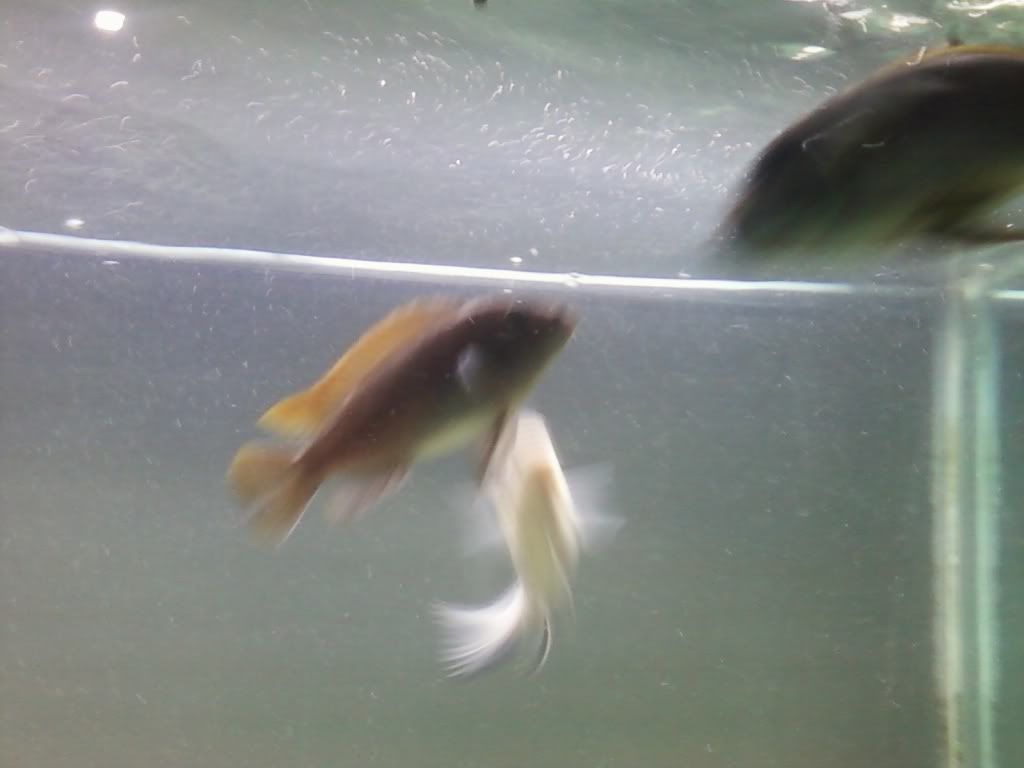
My African Cichlid Mutalated

mjzuverink

Fish Fanatic
Joined
Sep 15, 2009
Messages
124
Reaction score
0
Location
Grand Rapids , MI
hey i have a 110 gallon tank. i swiched the rocks around yesterday which may have thrown my africans off , they seemed fine but when i woke up they were all beatin him up. he is missing many scales and is barely swimming/moving. right now i have him in my 55 gallon i had cycling for the convicts im going to get. he is just laying on the bottom on his side breathing. does he have a chance of living or should i flush him? HELP PLEASE!
 
I have no experience with africans but NEVER FLUSH A DEAD OR LIVE FISH. Sewer systems are built to break down human waste, not dead fish!

In any case, you can give him a better chance by...
-Keeping his water super clean to prevent infection
-Keep the tank lights off to reduce stress
-Feed lots of high-protein live or frozen foods to help him regrow his tissue.

All right I'll leave the rest to the cichlid experts ;)
 
Is he unable to maintain balance.
Can you issolate him.
 
yes he is very week. when i put him in the tank he plummetted to the bottom and layed on his side breathing. he "flops" on his side trying to swim about ecery twenty seconds.

and yes he is alone now in a 55 gallon aquarium at 78 degrees and the lights off
 
He could of damaged his swim bladder or its a bacterial infection.
 
Not good.
I think I would add an internal bacteria med seen as he's on his own.
 
I would just preform a water change on main tank to be on safe side.
He could of already been ill and they had ago at him.
Or they have just beaten him up.
I would still try a bacterial med so you have tryed everything for him. Bless his little heart.
 
Depends on the med. Whats your location.
Its more the parasite meds that can damage the plants.
Antibitoics wipe the beneifcal bacteria out in the filter.

Some info on bacteria infections.

The third type of infection produced by Aeromonas is by no means the least. This form is often the most virulent (potent) and can be rapidly fatal. This insidious form does not produce any noticeable external ulcers. The most notable feature is a behavioral change in which the infected fish generally become listless and lethargic. Some fish may lose color or appear darker. The fish do not feed, frequently seem off balance and may sink to the bottom laying on their sides. The course of the disease is rapid, and by the time the behavioral changes are noticed, the entire population of a tank may succumb, sometimes in a day or so. This is an internal infection, with the bacteria being found in the kidneys and blood of these fish. The bacteria produce potent toxins that account for the severity of the disease.
 
its wierd, those symptoms match how he is very well but i just cant imagine what could of happened over night. last night he was eating fine a aggressively , he usually eats the most out of them all. this morning he was laying behind the rocks with everyone nipping at him :( but it sounds like it could very well be the bacterial disease. how much are the meds and where can i get them? are they pretty commonly found. i live in grand rapids mi, US

here he is last night i took this picture actually :( he is the purply one lol sorry its a horrible pic

0917092335.jpg
 
It depends how severe it is.
Sometimes it can be gas or just be winded. it might correct its self. But I don't want to build your hopes up as he's not sounding good.
I would just see how he goes.

Some info for you on swim bladder.


Swim Bladder Disorder


The Swim bladder is a gas-filled sac located inside the fish’s body cavity just above most of the other internal organs. This sac is what gives the fish buoyancy and controls equilibrium. The amount of gas in this sac changes as the fish rises and sinks in the water, enabling it to swim, hover and move in the water. Without the use of the Swim-bladder organ a fish is unable to control it's own movements.


Symptoms:

Fish with a swim bladder disorder appear to have an abnormal swimming pattern, usually with their tail end up. They also appear to have difficulty maintaining equilibrium. They may even float upside down or appear to be stuck at the surface of the water, being unable to swim down, or they may lie on the bottom, unable to rise. Fish with a swim bladder disorder will continue to try and feed, showing a normal appetite.


Cause:

The most common cause of swim bladder disorders is improper diet. An improper diet can lead to intestinal gas or intestinal blockages. Intestinal blockages can irritate the bowel, giving bacteria or other parasites an entry point where they can then cause damage to the swim bladder. Swim bladder disorders are most common in the larger, deep-bodied varieties of Goldfish. Fish also fed a lot of dried foods, especially pellets, are most susceptible. This condition is frequently observed in the later stages of Malawi Bloat, which is primarily due to an improper diet as well and intestinal irritation.


Treatment:

Because this disorder is due principally to an improper diet, a change in their feeding needs to be made. Dried foods with lots of protein should be kept to a minimum. Pellets and other dense foods should be soaked prior to feeding or completely eliminated from their diet. Foods with lots of fiber should be introduced, such as zucchini, squash, spinach, romaine lettuce, peas, and grated carrots. If you suspect that the fish is victim to a bacterial infection, treat the fish with a medicated food.

 

Most reactions

Back
Top