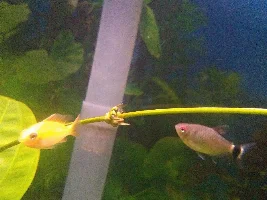
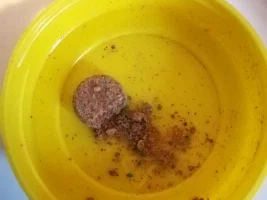
I seem to be losing the war

plebian

Fish Crazy
Joined
Oct 7, 2022
Messages
314
Reaction score
296
Points
63
Location
Southeast Asia
I've never had any luck with aquarium plants. It's not that I can't grow them, it's that they seem to be algae magnets. I've always had a problem with brown algae, but it wasn't that difficult to control via weekly maintenance when I had no plants. Every now and then I would have an issue with cyanobacteria, or black algae, but both were easily dealt with via spot treatment. I tried both physical and chemical removal of the brown algae from plants, but it doubled time spent doing maintenance and the plants never looked good for more than a few days. I would just give up. I tried many different plant species, always with the same result.

I recently planted a species of Hygrophila, acquiring a group of Otocinclus shortly afterwards. I thought my troubles were over. The Otos cleaned out so much brown algae so quickly I was actually worried I might lose a few to starvation. Algae-free, my plants were absolutely thriving. That situation lasted less than a month. Not only has the brown algae returned in force, but I'm now fighting green spot and black algae. So far, the green spot algae has been restricted to the glass and small portions of the substrate, so it's been manageable. The Otos are still keeping the plants free of brown algae, but the plants are now being colonized by black algae which the Otos won't touch.

It seems all but inevitable I'll be throwing in the towel, sooner or later, and my aquarium will once again be plant-free.
 
So the plants stopped growing? And algae started growing instead? Because if your plants stopped growing there is some other issue. Honestly black algae is a tough one. Its been my bane as well. And the bane of many others tanks. Its not that bad to have some black beard algae but you should be able to control it atleast with regular water changes and a decent dosing schedule for your plants along with proper photo period. Unless there is something in your water itself that is causing the issue.
 
I've never had any luck with aquarium plants. It's not that I can't grow them, it's that they seem to be algae magnets.
I have the same trouble, except that I can't grow them. Not stems anyway. But I did figure out the algae problem-less light for shorter duration, no ferts, and amano shrimp. Took about a week for 12 of them to clean up a 20L and it's been algae-free ever since. They eat the black stuff too.
 
I think it's good to dose atleast something and its usually a little bit of potassium. I would start there if I did any fertilizer most people can get away with just that. No fertilizer work for some but not others. It really depends the plant. Try out what works in your tank. Each tank is different. When you dose just dose in small amounts. Its safest that way so you dont affect algae. Even the healthiest tanks have some algae. Its not a bad thing as long as it doesn't overrun the tank. And keep the light down. It doesn't have to be very intense light.
 
amano shrimp
These would actually work for me as they're too large to interest my discus. I'd still be concerned that they'd be under constant stress, as there isn't much (any really) shelter.

I really don't understand all the fumbling with lighting and ferts. Yes, too much fertilizer and strong lighting will likely increase algae, just as it stimulates plant growth.

However, I can't see how reducing ferts and/or lighting could possibly have a greater effect on algae than it would have on plants. Algae will grow where plants can't. In any case, my problem is less about algae per se than it is about how it negatively affects my plants. All the talk about plants "out competing" algae just seems like so much nonsense to me. In my experience, as described above, plants seem to have the exact opposite effect and the algae always wins out.

BTW - I don't use ferts and my lighting would be considered moderate at best.
 
I've always had plants in my tanks, lots of them. But I've never been a planted tank person, and the plants have been afterthoughts. If they survive, good. I am very methodical with fish, but haven't paid the necessary attention with plants. I have learned that like the word 'fish', the word 'plants' is so vague it's close to meaningless.
I can say with my 59 years of fishkeeping sample that different plant species demand very different water, and species that have grown out of control in some houses have been unable to grow in others with different water. Hygrophilia difformis seemed twinned with cyano every time I grew it - I assume it was the minerals it took up giving the bacteria a good environment. It's an ongoing issue. Rotala indica always gets black algae on it, but in the same tank, Limnophila sessiflora can stay completely algae free.
Rotala will be attacked, but Vallisneria americana won't.
However, if I had Discus tanks with the heat those fish need, everything would change. We all have different water and lighting as well.
My approach is that plants are inexpensive and I keep trying them until I find ones that work here, in my conditions. In my last house with similar readings and pH, I could grow plants that I can't here, and vice versa. There, I had cyano problems. Here I have clumped black algae issues.
I wouldn't give up, but would consider a two year battle to find the right plants reasonable. It's frustrating and at times, seemingly random.
 
These would actually work for me as they're too large to interest my discus. I'd still be concerned that they'd be under constant stress, as there isn't much (any really) shelter.

I really don't understand all the fumbling with lighting and ferts. Yes, too much fertilizer and strong lighting will likely increase algae, just as it stimulates plant growth.

However, I can't see how reducing ferts and/or lighting could possibly have a greater effect on algae than it would have on plants. Algae will grow where plants can't. In any case, my problem is less about algae per se than it is about how it negatively affects my plants. All the talk about plants "out competing" algae just seems like so much nonsense to me. In my experience, as described above, plants seem to have the exact opposite effect and the algae always wins out.

BTW - I don't use ferts and my lighting would be considered moderate at best.
We can all agree algae is probably going to show up no matter what. Algae is always present in nature. The fumbling with lights and ferts is to grow the best plant possible. Because you can get some really nice looking plants with a good fert routine and a decent light. Then just clean the algae out if you dont want it there.
 
Try reducing silicates by using Phosguard or similar. After 50 years of tolerating brown algae (diatoms) these totally disappeared after I tried this, and I'm now 4 months totally diatom free.
I added a small quantity of the media and replaced it after 3 weeks having noted only a very slight improvement. After another 3 weeks there was a more noticeable improvement so I changed it again. I then went on holiday and came home to a total absence of algae.
Four months on I haven't yet had to replace it again but I test for silicates weekly and will do so if these start to register.
I also used to have what I assumed to be tiny amounts of cyanobacteria in certain nooks and crannies. It wasn't a problem but that too has vanished.
 
Yes, Otos can handle most forms of algae but BBA (Black beard algae) is one of the few things it really doesn't touch. Amanos will eat them, but you mentioned they will be stressed. Nerite snails will eat them, but they are slower, and the plants are slightly harder for them compared to hardscape and glass.

Another option to cure the plant from the algae is to dip it in hydrogen peroxide for about 2 to 5 minutes to kill the BBA, using a mix of 2-3ml of hydrogen peroxide per gallon of water. The algae will often bubble and then turn pink, red, or white within 24–48 hours, signaling that it is dying.

Last thing that you could try is to eliminate food for the algae. BBA thrives in conditions where there is excess nitrates. Either get rid of the bioload, or add more plants to starve it of its nutrients. I don't know what substrate you have and what plants are valid, but the plants I find to be the most nutrient-sucking are stem plants like rotala, or floating plants.

The easiest plants for people without the most suitable aquariums for planting (best would be an aquarium with natural substrate like pea gravel/sand, or soil of some kind; artificial gravel isn't best suited for planting). If there isn't a suitable substrate in the tank, use floating plants and possibly epiphytes such as anubias, buce, and especially java ferns. Floating plants will work but the best ones for nutrient consumption is duckweed, though perilous and impossible to eradicate (I have this issue across all of my tanks).
 

Most reactions

Back
Top