Help treat dwarf petricola with suspected algae

Neonlights

Fish Fanatic
Joined
Dec 6, 2020
Messages
110
Reaction score
45
Location
United Kingdom
I haven’t posted in a long time as my aquarium has been a very happy place for the past 12 months. In fact, my dearf petricola bred! It’s the first time I’ve ever bred egg-laters (and I wasn’t even trying to!).

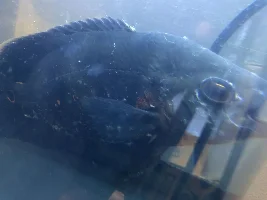
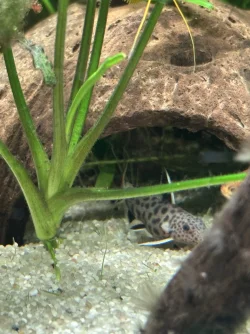
It’s a beautiful little fish but this evening I noticed a white mark/growth on its side. I’ve added aquarium salt to the tank, but is there anything else I can do?

I only have this one tank so no option for a quarantine aquarium. @Colin_T you provided me with advice a year ago that saved my cory (still happy and healthy today), do you have any suggestions?
 

Attachments

  • IMG_3566.jpeg
    IMG_3566.jpeg
    317.8 KB · Views: 83
I just remember I have NTLabs anti whitespot and fungus treatment which has worked a treat in the past. Should I add this now (with the salt in there), or do a water change and then add it?
 
Need a couple more pictures.

How long has it been like that?

Is it still eating normally?

The fish has a pink head, which usually indicates an infection. It might have been spiked by another fish or injured by a rock and the white stuff is inflamed tissue covered in excess mucous.

--------------------

Treatment until more info is to do big (75-80%) water changes and gravel clean the substrate every day for a week or two. This dilutes any disease organisms in the water and reduces the chance of further infection.

Wipe the inside of the glass down to remove any biofilm that can harbour pathogens.

Clean the filter if it hasn't been done in the last 2 weeks. Wash filter media in a bucket of tank water and re-use the media. tip the bucket of dirty water on the lawn outside.

You can add salt if you like but do the water change, gravel clean and filter clean first, then see how the fish looks after a couple of days of water changes. If it's no better than add salt.
 
I just remember I have NTLabs anti whitespot and fungus treatment which has worked a treat in the past. Should I add this now (with the salt in there), or do a water change and then add it?
It's not white spot and fungus can be treated with clean water and salt.

Do water change, gravel clean, filter clean first, then momnitor for 24-48 hours. If it clears up within that time, then don't do anything else except water changes and gravel cleans for another week. If it doesn't improve, try the salt with or without the medication. But it depends on what other fishes are in the tank?
 
@Colin_T thanks! I’m not sure how long it’s been like it as he’s very timid but he looked ok a couple days ago and he’s eating normally (just not as visible/confident as he was a week ago, but I think that’s just a change in behaviour as he matures).

When you say wipe the inside glass, should I clean it with the razor blade scraper I have or just wipe with a cloth?
 
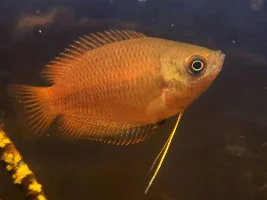
Other fish are a cory, a honey gourami, some tetras and an oto, as well as shrimp. I used the salt previously, safely, with the same fish in it.
 
@Colin_T thanks! I’m not sure how long it’s been like it as he’s very timid but he looked ok a couple days ago and he’s eating normally (just not as visible/confident as he was a week ago, but I think that’s just a change in behaviour as he matures).
How many Synodontis petricolas do you have?
These are social fish that need to be kept in groups. They also come from Lake Tanganyika, which has water that is hard (GH 350ppm+) and has a high pH (8.5).

What is the pH, GH and KH of the tank water?


When you say wipe the inside glass, should I clean it with the razor blade scraper I have or just wipe with a cloth?
Just use a clean sponge or cloth to wipe the inside of the glass. Over time you get a slimy substance on the inside of the glass and this is called a biofilm. It contains numerous bacteria, viruses, protozoans and other harmful things. Wiping the glass down each week or even once a month removes this biofilm and the harmful pathogens living in it.

If you are using a kitchen sponge (something for washing dishes), make sure it is free of soap and doesn't have anti-mould agents in it. Cheap sponges from a shop are less likely to have these additives compares to more expensive fancy brands of sponge. They usually have information on the packet of sponges saying contains mould inhibitors, etc. If it has that, don't use those sponges.
 
Thanks, did a big water change and clean today (I do 40% change every 7-10 days) and finally the synodontis appeared this evening. Perfect shape, nothing wrong whatsoever! Whatever it was, it was something stuck to his side but not a growth. Needless to say, I’m very relieved.

We’re in the process of buying a new (bigger) house and we’re in (Feb/March) I’m buying a larger aquarium with a rock and sand setup for the synodontis and some other compatible breeds.
 
The white lump was excess mucous produced by the fish in response to something irritating it in that part of the body. Fish naturally have a thin layer of clear mucous over their head, body and fins. When they are stressed or injured, they produce more mucous and in bad cases it can look like a cream, white or grey film or patch on the body. In this case, I am assuming the fish was injured at that point and had inflammation in the side of the face (pink colour under the skin on its head). In response to the injury, the fish produced excess mucous over the wound to protect it. That showed up as a white lump, which has since gone after a few days.

Basic first aid for fish is to clean the tank, filter and gravel to dilute disease organisms and harmful substances (chemicals, nutrients) in the aquarium. Then do big daily water changes and gravel cleans each day for a week or two. This dilutes all the bad stuff and gives the fish the best chance of recovery, or at least buys you some time to try and work out what is wrong.
Having your fish recover after a few days with good water is a good outcome :)
 

Most reactions

Back
Top