Bolivian Ram Sexing

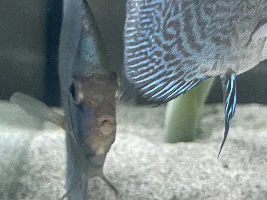
My bolivian ram sex?


  • Total voters
    10
That, most likely a female.
because u used the method described in ur other post?

With females, after the stomach the body curves upwards before the anal fin.
In males, after the stomach the body curves downwards before the anal fin.
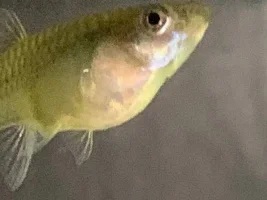
it is a male. when sexing these fish its a good idea to look at as many traits as possible not just one. the picture demonstrates how ur method "can be unreliable" as stated previously
 
That, most likely a female.
because u used the method described in ur other post?

With females, after the stomach the body curves upwards before the anal fin.
In males, after the stomach the body curves downwards before the anal fin.
it is a male. when sexing these fish its a good idea to look at as many traits as possible not just one. the picture demonstrates how ur method "can be unreliable" as stated previously

And your evidence for merely saying it's a male is?
 
it doesnt have a round tummy like females do. its ventral fins are long-ish and pointed, has a bumped head shape and small vent
from a previous post in this thread. the fish i posted has the traits described above
 
it doesnt have a round tummy like females do. its ventral fins are long-ish and pointed, has a bumped head shape and small vent
from a previous post in this thread. the fish i posted has the traits described above

Which means, your word vs mine. Which therefore proves. Um. Give me a minute. wait. nearly there. NOTHING.

Modern domesticated fish are bred specifically for beauty. Modern females can share colours and finnage exactly the same as males.
And vent sizing means little IMO.
 
Based on the pictures I would agree that the ram is male, and am pretty sure of that.

FF - I agree with meguro that the fish she posted a picture of is male. And also she is completely correct that with rams no one trait is often enough to base the fishes sex on. I tend to prefer to go on behaviour rather than physical traits where possible (hence why buying as a group is normally the best method), but I pick groups based on lots of physical markers.
 
Funnily enough, I take a longer look at the area near the ventrilo and it has a downward slope on the body.

Talk about fools rush in. My apologies.

But that therefore still doesn't disprove my theory.
 
@neo83 - Just to add that I think buying another 3-4 fish would be a good idea if you have the oppurtunity to rehome them as and when pairs form. They tend to build a hierachy in a group so are alright living together. But if you get a group then you can buy yourself a definite male, and 2-3 that are showing mainly female markers. Then when you get them home and they settle you'll start to see the sex specific behaviour. For example out of my group of 4 I reckon I have 2 males and 2 female. As the definite male only allows the other 'male looking' fish to swim arround in 1/4 of the tank. But the two female looking fish are often ushered towards the far end away from the possible male, as far into the big males territory as possible and surprisingly enough towards a large flat piece of wood that he tends to display over... edit to add: the rest of the time the two female looking fish are allowed into either 'males' territory. And when they're in the smaller males area this is when I normally see lip locking between the two 'boys'.

Also the two female looking fish rarely tend to lip lock with eachother. But will lip lock with the two males every now and then, and when done there is often a bit of persuing and displaying by the male. And the two male looking fish will lip lock the most out of them all, but when finished the larger definite male will often swagger off, presumably happy that he has put the other male in his place an re-affirmed that 3/4 of the tank belongs to him.
 
Which means, your word vs mine. Which therefore proves. Um. Give me a minute. wait. nearly there. NOTHING.
u posted this about ur method
I have been told it is the most reliable way
so apparently its not even ur word but someone elses. the picture is of my own male but ur free to disagree about its sex if u want

And vent sizing means little IMO.
have u even observed these fish irl? females have a markedly larger vent

It's in a 125 litre (33 US gallons) tank with an Apistogramma Viejita pair (hopefully).
i only asked to make sure u werent putting too many dwarf cichlids in a tank. even if u end up with 2 males or 2 females they should be fine in ur size tank
 
Thanks meguro and FF for the debate and much appreciated. Bolivians do seem to cause us a bit of a trouble, dont they? :rolleyes:

@neo83 - Just to add that I think buying another 3-4 fish would be a good idea if you have the oppurtunity to rehome them as and when pairs form.

Thanks C101 for your comments. My tank (125 litre) is almost fully stocked currently and definitely not possible to get 4 or 5 to find a pair. My current setup is:

Tank: Fluval Roma 125
Size: 125 litre / 33 US gallons
NH3, NO2: 0ppm
NO3: 40ppm (tap water 38-40ppm)
pH: 7.6

Plants: Amazon swords, Hygrophila Polysperma, Crypt wendtii, Crypt becketii, Pygmy Chain sword, java moss, java fern

Stocking:

10 Harlequin Rasbora
4 Guppies (all males)
3 Platys (all males)
1 Pearl Gourami
1 Bolivian Ram
2 Apistogramma Viejita (bought seperately but both are wooing each other)

I understand having two dwarf cichlid pairs in a 125 litre is pushing it, but i have read numerous threads and the main thing i suppose is to have as many hiding places as possible. I'm constantly watching the cichlids' behaviour and recently after witnessing a bit of lip locking between the bolivian and apisto male, i have moved some java fern on bogwood to the middle of the aquarium and currently it's kind of like a seperation in the middle. I do however want to continue monitoring them and want to make sure they'll be able to co-exist. Is my thinking wrong?

I do have to admit that i only wanted to have a single bolivian ram since the start and even after getting the apisto pair. But i love the bolivian most and really want to get a female for it. Did you come across having two dwarf cichlid pairs in a 125 litre with enough hiding spots?

Here is my current picture of the tank as of yesterday
My Fluval Tank


Thanks

It's in a 125 litre (33 US gallons) tank with an Apistogramma Viejita pair (hopefully).
i only asked to make sure u werent putting too many dwarf cichlids in a tank. even if u end up with 2 males or 2 females they should be fine in ur size tank

Thanks meguro. Do you think 2 dwarf cichlid pairs is a big no-no for my 125 litre then?

 
Well technically I have 4 pairs in my 150l... but I don't have any other fish in there, and I've designed the tank specifically so that they can all co exist.

The dimensions of the bottom of my tank are 36 x 18, so quite a bit bigger than your average 150l tank. But even having said that I reckon that with enough cover and hiding places you should hopefully be fine with a ram pair and an apisto pair.

The only problems I can see are if your current ram doesn't actually pair with the one you put in with it. If he doesn't pair with it, even if it's female, then he will chase it out of his territory which is likely to be straight into the apistos territory... then the apisto will force it back out of it's territory... so you see where I'm going with this.

Definitely worth a try though. Oh and when you're watching the fish, try to see if either sets it's boundary further out than the other, and move the central decoration to suit. For example my large ram set his territory as 3/4 of the tank with regards to the other male. So I moved decor accordingly. One thing to note though is that although his territory is 3/4 in relation to the other male ram. The dwarf flag cichlids haven't set up a territory but are allowed anywhere in the tank by the rams. And the n. transvestitus mainly defends 'his' cave, but also uses the whole tank without any problems from either the dwarf flags or rams. He also doesn't cause any trouble, cept near 'his' cave.
 
Well technically I have 4 pairs in my 150l... but I don't have any other fish in there, and I've designed the tank specifically so that they can all co exist.

The dimensions of the bottom of my tank are 36 x 18, so quite a bit bigger than your average 150l tank. But even having said that I reckon that with enough cover and hiding places you should hopefully be fine with a ram pair and an apisto pair.

The only problems I can see are if your current ram doesn't actually pair with the one you put in with it. If he doesn't pair with it, even if it's female, then he will chase it out of his territory which is likely to be straight into the apistos territory... then the apisto will force it back out of it's territory... so you see where I'm going with this.

Definitely worth a try though. Oh and when you're watching the fish, try to see if either sets it's boundary further out than the other, and move the central decoration to suit. For example my large ram set his territory as 3/4 of the tank with regards to the other male. So I moved decor accordingly. One thing to note though is that although his territory is 3/4 in relation to the other male ram. The dwarf flag cichlids haven't set up a territory but are allowed anywhere in the tank by the rams. And the n. transvestitus mainly defends 'his' cave, but also uses the whole tank without any problems from either the dwarf flags or rams. He also doesn't cause any trouble, cept near 'his' cave.

Thank you very much for the advice and i'll try my luck with a female bolivian ram. Hopefully i can make a deal with the LFS to see if they don't pair, then may be i can exchange for another female. Currently they seem to be wandering into each others territories, but the apisto male at least seem to know his territory. Hopefully the hygrophila plants and crypt wendtii on the left of the tank will grow soon and give the apisto a bit more dense area. I'm not a big fan of guppies, so may be i can rehome them or give them back to the LFS if it does any good for the female to be added. fingers crossed.

Thanks
 

Most reactions

Back
Top