Black neons

GaryE

Moderator
Staff member
Global Moderator ⚒️
2x Fish of the Month 🌟
Joined
Oct 14, 2011
Messages
10,047
Reaction score
17,717
Location
Eastern Canada
Once upon a time, the black neon tetra was an exciting new fish in the hobby. That time was around 60 years ago, and they've been a favourite common tetra ever since.

When I first saw them, I was told they'd stay rare because no one could breed them. That was wrong info, and they've proven to be not very hard to reproduce. Still, I wanted to try as a kid, and I've finally gotten around to it.

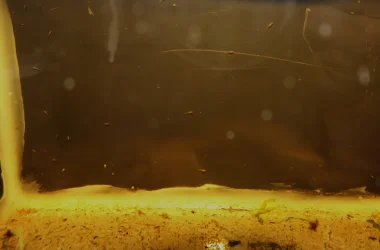
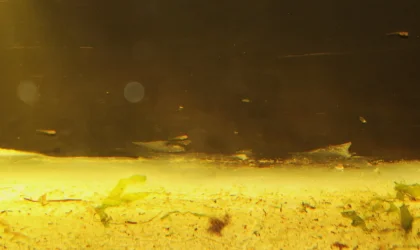
The first picture is young black neons from my first batch, before they went to my friend's pet store. The second 2 are from today, of the latest batch (which I plan to keep, although there are a lot in that tank.
 

Attachments

  • black neon babies.JPG
    black neon babies.JPG
    317.7 KB · Views: 99
  • blakbeonbabes2.JPG
    blakbeonbabes2.JPG
    144.2 KB · Views: 73
  • blackneon babes1.JPG
    blackneon babes1.JPG
    150.9 KB · Views: 79
Excellent . I don’t know why but I’m always impressed when anybody breeds Tetra’s . I’ve never known anyone who has nor have I .

I always thought it was the pinnacle of fish breeding. They're often common, and when you breed them, it doesn't put money in your pocket. They're cheap fish, in general. But the old timers, the William T Innes generation bred them, and there's a mystique to that. If like you and me, people read those old fish books, you develop an appreciation for the hobby before it was a mass consumption thing. People couldn't afford big shoals, so they made them.

When I was quite young I had a very old acquaintance who told me of the first importation of neon tetras to Montreal. He said all the well to do aquarists rushed down to a store near the docks where a sailor had sold some. They went for $5 each. Back then, in the not so great Depression, my grandparents shared a flat with another family with a total rent of $2 a month. People who were into fish bred them, or else.

The ones I've bred so far have been as easy as my killies. It's my tap water more than my skills. If the water's soft (pH isn't key, so far) you have a shot at breeding a lot of these fish fairly easily. They aren't livebearer or Cichlid easy, but they just take prep.

You need good food. They breed better with live food in their diet. Get the temperature right, have soft water and manage lighting (that's where the 'work' is now - understanding lighting species by species, as light kills some eggs).

So now I know they are no pinnacle, and aren't that hard if you put your mind to it. But I'm glad a lot of people THINK it takes super skill, because there's something to be said for doing something relatively easy when people think it's really hard!
 
Isn’t that something what guys paid for fish back in those days ? I’ve read that same thing in several sources so it has to be true . But , yeah , Tetra breeding is the pinnacle of breeding tropical fish . You say it’s easy once you get it set up but getting set up properly isn’t as easy as you make it sound . It takes a knowledgeable and experienced eye that only a breeder of many other fish has .
 
Before I discovered and adopted the colony method for characins, I set up pairs and trios. The early efforts were not encouraging. I remember when my N. beckfordi and N. marginatus first spawned. I was beyond thrilled. It was as if I had cracked the enigma code.

And years later when I got the lovely and very expensive N. espei to spawn, I was beside myself. I just had to tell somone who would understand. This was before the internet and forums. So I said to myself, "I know. I'll write to Stan Weitzman at the Smithsonian." I did. Heaven knows what he made of it, but he not only wrote back extending hearty congratulations, but sent me a huge parcel of his papers about Nannostomus, Carnegiella and other characins, and that launched a decades long correspondence with periodic fish swaps.
 
I have a bunch with my b. cupido. They bite my fingers.
 
Before I discovered and adopted the colony method for characins, I set up pairs and trios. The early efforts were not encouraging. I remember when my N. beckfordi and N. marginatus first spawned. I was beyond thrilled. It was as if I had cracked the enigma code.

And years later when I got the lovely and very expensive N. espei to spawn, I was beside myself. I just had to tell somone who would understand. This was before the internet and forums. So I said to myself, "I know. I'll write to Stan Weitzman at the Smithsonian." I did. Heaven knows what he made of it, but he not only wrote back extending hearty congratulations, but sent me a huge parcel of his papers about Nannostomus, Carnegiella and other characins, and that launched a decades long correspondence with periodic fish swaps.

That's an advantage with the forum. In my local club if I talk about breeding a fish that was very difficult to succeed with, there's no reaction. So few people breed their fish that it's uninteresting if we do.

Here, if it's exciting to me, I do get a few people who get it. Honestly, 25 years ago in my local club, there were more breeders than buyers. They used to keep track of species bred at every meeting, and there were easily 30 active members who had bred and brought in more than 50 species - not counting decades of members who had done so but left.

Sometimes I feel as if the hobby has lost its way - as if gardeners stopped growing flowers and just bought cut flowers instead. The discussion would be about how to keep them fresh looking, rather than how to grow and propagate them summer after summer.

Tetras in general may be hype as far as pinnacles go, but pencilfish beyond beckfordi? That's really something worth recognizing.
 
Excellent . I don’t know why but I’m always impressed when anybody breeds Tetra’s
I am too; I think congratulations are in order. I've always been of the opinion that anyone seriously interested in fishkeeping should try breeding, even if it's easy livebearers. The level of preparation required can help to achieve a more complete understanding of what good husbandry really is, and the animals you keep will be the better for it.

Years ago I had a basement full of tanks dedicated to breeding and was able to pull off some real miracles....or at least, it was miraculous to me! I have a thing for Misgurnus anguillicadatus and while it took 3 years I finally managed a small brood. And I was beyond amazed when I could get Pantodon buchholzi to breed. (Actually, it's not the breeding that's the hard part, it's keeping the fry alive)

I don't have the time or really the inclination to do it anymore, although my CPDs have forced me into it since I can't just leave eggs lying around.

Just my long-winded way of saying Nice Job!!!
 
I like the tangent here. I see Biotodoma being bred. Loaches and Pantodon... it isn't just tetras but difficult fish overall - ones we need to work at that impress me. They don't have to be rare or unknown, but they have to be curious and kind of uncooperative...

But you can't usually breed those until you've learned the basics. I'm breeding these black neons, glowlights, cardinals, Pristellas and such to develop skills to try more expensive tetra I can't afford large groups. If I get more than I need, I have a friend with a struggling pet shop.

I have these probable cyanotaenia, maybe melanostichos, and the margitae. I can get nice newly found tetras, but the cost is prohibitive unless I pretend I was alive in 1952 or 1932, and was into fish I couldn't really afford. I come from a long line of working class hobbyists, people who somehow made space and time for a hobby they enjoyed. But I learned from cheapskates.

You need space. Probably some kind of home produced food - either live food or made at home aimed at the needs of the species. A few good fishbooks supplemented by sites like Seriously Fish and if you're a visual earner, youtube videos from people who had gotten into the projects you like. And off you go.

Cichlids take rearing space, non territorial fish are easier, and you figure out quickly seeing fry is easy. Raising them is a whole other kettle of fish.
 
I like breeding fish and raising fry . Any fish at all . I agree with Gary that the hobby is losing something and that the majority of aquarists are becoming like gardeners who buy cut flowers . ( I really liked that ! ) I have an idea that I want to do Betta’s one more time and @gwand has inspired me to try a dwarf cichlid . I could probably do an Apistogramma in a twenty . Watching cichlids raise fry is something no aquarist should miss but Tetra’s ? Tetra’s are still the Holy Grail of breeder success .
 
Tetras in general may be hype as far as pinnacles go, but pencilfish beyond beckfordi? That's really something worth recognizing.
I'll tell you a secret. For most of the Nannostomus species, if you put several individuals in a densely planted tank with plenty of cover above and below, provide them with soft, acidic water, a temp in the upper 70s F, provide plenty of quality food (live or frozen BBS, daphnia and cyclops work for me) and no predators, they will spawn and the fry will one day emerge from the plant cover. But don't tell anyone.

One note, I have found that N. espei prefers the old-fashioned method--separate the sexes, condition, and spawn in pairs.
 
I like the tangent here. I see Biotodoma being bred. Loaches and Pantodon... it isn't just tetras but difficult fish overall - ones we need to work at that impress me. They don't have to be rare or unknown, but they have to be curious and kind of uncooperative...

But you can't usually breed those until you've learned the basics. I'm breeding these black neons, glowlights, cardinals, Pristellas and such to develop skills to try more expensive tetra I can't afford large groups. If I get more than I need, I have a friend with a struggling pet shop.

I have these probable cyanotaenia, maybe melanostichos, and the margitae. I can get nice newly found tetras, but the cost is prohibitive unless I pretend I was alive in 1952 or 1932, and was into fish I couldn't really afford. I come from a long line of working class hobbyists, people who somehow made space and time for a hobby they enjoyed. But I learned from cheapskates.

You need space. Probably some kind of home produced food - either live food or made at home aimed at the needs of the species. A few good fishbooks supplemented by sites like Seriously Fish and if you're a visual earner, youtube videos from people who had gotten into the projects you like. And off you go.

Cichlids take rearing space, non territorial fish are easier, and you figure out quickly seeing fry is easy. Raising them is a whole other kettle of fish.
I've never attempted to breed anything beyond dwarf cichild; and some of them are quite difficult but most are pretty easy; but I have two dithers i'd like to breed one of these days though i haven't made the space or time for it - those are the n. epesi and H eylios - of course my reasons is pretty selfish having both species they are too expensive to buy in numbers so i want to breed them to increase my population. I guess when i get done with my toy rams in a year i'll move some into the 10s and lower the temp a bit and see what happen. I'm hopeful that breeding them is as easy as mixing fish and water which seem to be the case with most fishes though cardinals are an exception to the general rule with a blackout period required.
 

Most reactions

Back
Top