What's new

African Dwarf Frog

StroiterGames

New Member
Joined
Feb 21, 2021
Messages
14
Reaction score
1
Points
3
Location
Uk
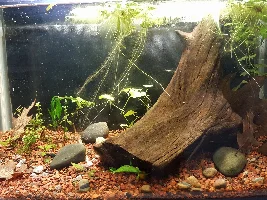
I have a 27 gallon fish tank and on it i have 4 neon tetras, 4 guppies, 3 salfin mollies, 2 ballon mollies, 2 platys, 1 reed loach, 1 pleco and 2 catfish. I was wondering if i could add a african dwarf frog to my tank. None of the fish are agressive, exceot for my alpha Salfin molly as it headbutts others soecially his male rank mate, but other than that they are all chill.
Btw the reed loach does not attack any other fish he is actually very peaceful.
 
I was wondering if i could add a african dwarf frog to my tank.
No.
Frogs should not be kept with fish. If the fish get sick, any medication used to treat them will usually kill the frog. Frogs also eat small fish, shrimp and snails. Some fish will pick on the frog.

--------------------
On a side note, you should check the pH and GH of your tank water. You have guppies, platies and mollies that require hard water with lots of mineral content, and neons and a few other fishes that need soft water with very little mineral content. Having the two groups in the same tank can shorten the lives of the fish if the water chemistry (pH, GH & KH) is wrong for them.

The GH (general hardness), KH (carbonate hardness) and pH of your water supply can usually be obtained from your water supply company's website or by telephoning them. If they can't help you, take a glass full of tap water to the local pet shop and get them to test it for you. Write the results down (in numbers) when they do the tests. And ask them what the results are in (eg: ppm, dGH, or something else).

Tetras, barbs, gouramis, rasbora, Corydoras and small species of suckermouth catfish all occur in soft water (GH below 150ppm).

Livebearers (guppies, platies, swordtails, mollies) occur in medium hard water with a GH around 200-250ppm.

If you have very hard water (GH above 300ppm) then look at African Rift Lake cichlids or use distilled or reverse osmosis water to reduce the GH and keep fishes from softer water.

 
No.
Frogs should not be kept with fish. If the fish get sick, any medication used to treat them will usually kill the frog. Frogs also eat small fish, shrimp and snails. Some fish will pick on the frog.

--------------------
On a side note, you should check the pH and GH of your tank water. You have guppies, platies and mollies that require hard water with lots of mineral content, and neons and a few other fishes that need soft water with very little mineral content. Having the two groups in the same tank can shorten the lives of the fish if the water chemistry (pH, GH & KH) is wrong for them.

The GH (general hardness), KH (carbonate hardness) and pH of your water supply can usually be obtained from your water supply company's website or by telephoning them. If they can't help you, take a glass full of tap water to the local pet shop and get them to test it for you. Write the results down (in numbers) when they do the tests. And ask them what the results are in (eg: ppm, dGH, or something else).

Tetras, barbs, gouramis, rasbora, Corydoras and small species of suckermouth catfish all occur in soft water (GH below 150ppm).

Livebearers (guppies, platies, swordtails, mollies) occur in medium hard water with a GH around 200-250ppm.

If you have very hard water (GH above 300ppm) then look at African Rift Lake cichlids or use distilled or reverse osmosis water to reduce the GH and keep fishes from softer water.
i know this is off topic but i have catfish and they seem to be sourced from harder water breeders. and i have hard water in guppy tank. they are fine if they have been in hard water for a long time right?
 
Fish that come form soft water (water with low mineral content) can develop calcium deposits in their organs and fins if they are kept in hard water (contains lots of minerals) for any length of time. This can shorten their life depending on how their body deals with the excess mineral build up. If there is only a small amount of mineral build up in their body, they might live a normal life, but if they get lots of mineral build up in their organs, they could die in a year or two.
 

Most reactions

Back
Top