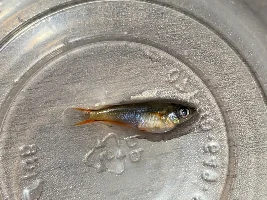
with global pollution, and climate change… which fish come from areas with better water than we can provide in our aquariums???

Magnum Man34 148

Fish Maniac
Tank of the Month 🏆
Fish of the Month 🌟
Joined
Jun 21, 2023
Messages
7,641
Reaction score
6,894
Points
113
Location
Southern MN
caffeine thought of the day… we have nitrates in our ground water here… I use RO to soften, and remove as much from the water as I can, for my aquariums… it would seem most water sources are polluted in some form, from trash, mining run off, industrialization, even acid rain into pristine areas… even fish farm areas are likely not using RO clean waters… I’m wondering how much that contributes to the life spans of our fish, as there is often a high death rate on new fish, and often “unexplained fish death” of fish we have kept for a while in our tanks, that could be contributed to life before our aquariums???
 
Most places have better water than our tanks. We humans are filthy beasts, but we haven't ruined everything.

Rural areas in North America and the UK with nitrate tap seem to have cows and large scale agriculture around them. In Benin, I encountered a US cult that was polluting a river by refusing to obey local regulations about keeping their herds out of the rivers, and they were doing a lot of damage. But farther away from their base of operations, the water seemed fine according to the frustrated locals.

In Gabon, large plantations run by western and especially Chinese companies were messing with some rivers. Illegal and legal gold mining were doing major harm. But most villages drank directly from local streams and rivers, and knew which ones were poisoned with pesticides and mining.

We tested the water in every stopping point on our trips, and I did the same on my own in Central America, where I had a tiny tiny bit of exploring. The water was still good away from towns and villages. If the forest was standing, there was a chance we hadn't fouled our nest.

We have a long reach as a species. But I'd wager 99% of surviving fish species have better wild habitats than 99% of fishtanks. That is skewed a bit because tiny fish like we can keep in aquariums tend to inhabit shallow water, small creeks and brooks, as large predators can't hunt in them. Those habitats are easily polluted, but also relatively useless to humans and often run through forests, or they'd evaporate.

Wider issues like climate change won't spare them though. Waterways vanishing because the forests are gone or the temperatures are changing, combined with swamp draining and human population growth are trouble.
 
I'll just hit on rivers. My apartments 'back yard' borders a nature reserve. Right behind my apartment you can sometimes catch a trout but they are not the best eating. They are perfectly safe to eat but, due to runoff from ranches, the meat is more mushy than firm.

A few miles down the waterway the fish are totally fine with firm meat. The thing is that the pebble river substrate filters the water as it passes. This is why I prefer under gravel filtration in a tank as it is as close to nature as you can get... in my opinion.

Sure global warming affects many fish species as does our raping the environment. Still, global warming is a natural cycle of our planet as are ice ages. Both cause species extinction and, actually, the evolutionary development or other species. What I fear is that our influence has caused the global warming to go faster than evolution can keep pace.
 
In our narrow little aquaristic world, we like tiny fish. Tininess is an adaptation to extremes - it's safer to be in extreme environments because larger generalists can't survive in there to eat you, but when those environments change...

As bad as the environment gets out there, our tanks are almost always worse. My 120 gallon tank should really only have a shoal of 15 small fish in it, if I want it to be good. There are 30 fish in there - and technically, that's overcrowded. We use test kits to see how far we can push our luck with our fish, when if we cared about water quality, stability and natural behaviour, we'd stock at a fraction of what we like to do. I have 10 gallon, 40l tanks with two small killifish in them. Compared to what I saw in nature, that's overstocking.

Really with every fish, we need to know some things we rarely do, if we want to feel we've given them conditions as good as those they come from from. How many of us know:
the exact temperature ranges of our fish;
the exact water parameters over a year for them;
the flow or agitation of their native waters;
where they like to live in relation to that moving water;
exactly what they eat;
if they have symbiotic relationships with other species;
or even if the fish we have have been shaped by human fishbreeders tastes, and not by natural selection?

Yesterday I kayaked on a fair sized lake. I was looking to see Fundulus diaphanous, a killifish. I covered a couple of km of flat, large pebbled bottom, and saw no young fish. Zero, nada. And then I hit a few dozen metres of sand substrate, and if I'd wanted those native killies, I could have scooped them with a hand net. They were there in shoals of hundreds, along with sunfish and bass juveniles. They seemed to be sifting the sand and having a grand life there. How many of us consider substrate if we keep similar tropical fish? I'm guilty of choosing substrate according to budget, and as an example, we read aquarists tying themselves into knots trying to justify using inappropriate substrates for cory type catfish. If one of you had a Fundulus diaphanous tank with pebbles and I got a shot of 2 or 3 intrepid fish crossing the pebble zone to get to where they wanted to be, there'd be a hundred posts saying there were photos of them with non sandy conditions. That's how we roll.

If we ever collectively decide to choose the fish and then set the tank up for them, rather than setting up the tank and getting fish for it based on their appearance, we'll be on our way to offering really good habitats. That won't happen.
 
my best tanks are my most natural ones and lately most are less crowded… the fish are fed less and nibble more on what the tank provides… I’m personally doing more of a sustenance diet, rather than a fat and happy diet, and lately have been feeding my fish the same… they seem to be thriving… not only are they eating less, but by doing so, are polluting the water less, less left over food polluting the water, and by nibbling around the tank more, they are actually helping keep everything clean… these few tanks have become quite stable, requiring almost no maintenance… these are both open topped tanks, with plants growing out, and my routine has been, one top off of water, and the 2nd time they get low, they get a 1/3 water change, otherwise every 3-4 months, the front glass gets scraped, and the filter cartridges get rinsed out…

still every once in a while, there are unexplained fish deaths… I’m just trying to better understand those… sometimes they are wild caught, some times they are farm raised… in the wild there is certainly a mortality rate, even though many may live a long life… they are just easier to pay attention to, under the microscope of our tank glass, and I’m well aware of how damaging our presence is, on our surrounding environment here with industrialized agriculture… still with a little care, most animals will bounce back… they trapped 8 large beavers out of our field drainage ditch this spring, that dammed up the ditch and blocked the field tile from working… I didn’t personally see the dam this spring m, but a couple years ago, they had to remove one, that was made entirely out of corn stalks, robbed from the fields… the higher life forms are fighting back, just curious if some of man’s pollution is having a negative effect on our fishy friends ???

 
We found a stream in Gabon, surrounded by very cool and often uncatalogued species. But in that one, nothing lived. A local ran up as we were getting our gear, and told us not to go in as an out of sight mega farm had allowed pesticides in, and the water would make us sick. So yeah, we're wrecking the place, even in remote hard to get to areas. There's no escaping us.
 
Our well water is pretty good quality. For one where I am in the region is a 4 acre zoning per home. Then there are a number of bird sanctuaries, horse lovers big properties and estates. There is no commercial farming either. Plus we are in the middle of a lot of the reservoirs which supply NYC.

Parameter-wise it is decent. Over he past 26 year the pH has remained between 6.8 and 7.3 but has mostly been dead neutral. The TDS under normal conditions are about 85 ppm. The lowest I have seen it is 53 and the highest is 120. It depends on rainfall levels over time.

(edited for typos only)
 
Last edited:
I don't use RO water or anything else but treated tap water. Depending on the time of year my tap water varies between around 6.2-6.7 as to PH. I only get fish that are fine within that range.

A big problem with aquarium water health is the chain pet stores as they just want a sale without concern for the water needed by the fish. They will happily sell you a SA cichlid that needs soft water even though they know, if they even know anything, that the local water is hard. Some of the employees of such stores will even try to sell fish that they know will not do well as they figure that the buyer will blame themselves for not doing right and keep buying more fish. I don't like a lo of restrictions but think that any shop that sells live critters should be regulated to species that can do well with local water.

While not dealing with water conditions I remember going in to a local chain shop to get meal worms for a rope fish. I over heard a sales person tell the customer that a common pleco would be fine in a 5 gallon tank they were getting for their kid. I interrupted and warned hat a common pleco can reach 2 feet in length. The sales person was not happy. ;)
 
Back to the original question... which areas? I think the answer is direct - look at where there are high human numbers, and expect nature to be stressed or destroyed. The so called developed world is bad for biodiversity - anywhere near a city is compromised. Nature is everything and it finds a way - I found a canal in the centre of a city in view of the highrises but fenced off as it had carried drinking water since the 1920s, and it was full of fish that hadn't been seen in numbers elsewhere in the region for decades. But that's a precarious life.

A Mexican fish surrounded by farms, a US fish near a southern city, a European coastal Aphanius group killie, fish around the great Asian metropolises, fish around African cities or in the oil extraction zone of Nigeria - it's where the humans are that's worse. We spread out into wilder places with industrial farms, factories and forest destruction, but the first line of destruction is our backstreets.

There are still wild places, often protected by bandits and meaningless human wars so they are too dangerous to explore or exploit.
 
Always trust that we humans are stupid and will behave accordingly. Profit is more important than preserving any species.

Consider this- The oceans of the world are all connected unlike fresh water bodies. Whether you believe in global warming or not, were are all smart enough to understand testing the pH and temperature in our tanks. The oceans are becoming warmer and more acid. If this hits the point where fish numbers are dropping because they can no longer live in the parameters, we have a problem.

According to the Google AI (which probably has this right),

Over 3 billion people (roughly 40% of the global population) rely on ocean fish and seafood as their primary source of animal protein. For many vulnerable coastal communities, especially in developing nations and island states, this dependency can account for up to 70% of their daily protein intake

What do we think will happen if the changes in water temperature and pH start to wipe out the fish in the oceans? What do we think 3 billion people will do? Will they just willingly starve to death or might they figure going to war for food makes more sense? How many of us live in places from where the remaining food originates?

(edited to fix a lot of typos, sorry. and to change the word people in the first line to we humans)
 
Last edited:

Most reactions

Back
Top