What's up with my angel?

Ryan_M

New Member
Joined
Jan 3, 2022
Messages
6
Reaction score
0
Points
1
Location
Courtice
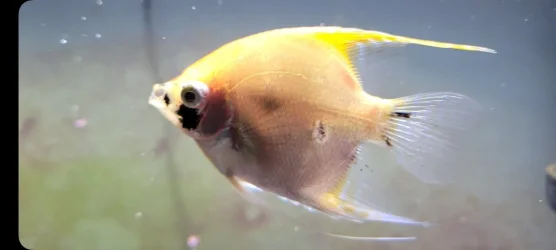
I noticed yesterday one of my angels isn't doing well. It's staying near the surface, labored breathing, and no interest in eating. It has a spot on its side where the scales are absent, is a little concave, and is darker in center. I haven't found anything like it on google. Anyone have any ideas?
 

Attachments

  • Screenshot_20230827_191346_QuickPic.webp
    Screenshot_20230827_191346_QuickPic.webp
    52.5 KB · Views: 90
How long has the tank been set up for?
How long have you had the fish for?
What other fishes are in the tank?

How often do you do water changes and how much do you change?
Do you gravel clean the tank when you do a water change?
Do you dechlorinate the new water before adding it to the aquarium?

What is the ammonia, nitrite, nitrate and pH of the water?
What sort of filter is on the tank?
How often and how do you clean the filter?

--------------------

The wound on the side looks like a bite possibly from a suckermouth catfish. It depends on how long it took to appear. If it popped up overnight, then it's probably a bite.

Is the fish's mouth normally stuck open like it is in the picture?

--------------------

BASIC FIRST AID FOR FISH
Test the water for ammonia, nitrite, nitrate and pH.

Wipe the inside of the glass down with a clean fish sponge. This removes the biofilm on the glass and the biofilm will contain lots of harmful bacteria, fungus, protozoans and various other microscopic life forms.

Do a 75% water change and gravel clean the substrate every day for a week or until the problem is identified. The water changes and gravel cleaning will reduce the number of disease organisms in the water and provide a cleaner environment for the fish to recover in. It also removes a lot of the gunk and this means any medication can work on treating the fish instead of being wasted killing the pathogens in the gunk.
Make sure any new water is free of chlorine/ chloramine before it is added to the tank.

Clean the filter if it hasn't been done in the last 2 weeks. However, if the filter is less than 6 weeks old, do not clean it. Wash the filter materials/ media in a bucket of tank water and re-use the media. Tip the bucket of dirty water on the garden/ lawn. Cleaning the filter means less gunk and cleaner water with fewer pathogens so any medication (if needed) will work more effectively on the fish.

Increase surface turbulence/ aeration to maximise the dissolved oxygen in the water.

 
How long has the tank been set up for?
How long have you had the fish for?
What other fishes are in the tank?

How often do you do water changes and how much do you change?
Do you gravel clean the tank when you do a water change?
Do you dechlorinate the new water before adding it to the aquarium?

What is the ammonia, nitrite, nitrate and pH of the water?
What sort of filter is on the tank?
How often and how do you clean the filter?

--------------------

The wound on the side looks like a bite possibly from a suckermouth catfish. It depends on how long it took to appear. If it popped up overnight, then it's probably a bite.

Is the fish's mouth normally stuck open like it is in the picture?

--------------------

BASIC FIRST AID FOR FISH
Test the water for ammonia, nitrite, nitrate and pH.

Wipe the inside of the glass down with a clean fish sponge. This removes the biofilm on the glass and the biofilm will contain lots of harmful bacteria, fungus, protozoans and various other microscopic life forms.

Do a 75% water change and gravel clean the substrate every day for a week or until the problem is identified. The water changes and gravel cleaning will reduce the number of disease organisms in the water and provide a cleaner environment for the fish to recover in. It also removes a lot of the gunk and this means any medication can work on treating the fish instead of being wasted killing the pathogens in the gunk.
Make sure any new water is free of chlorine/ chloramine before it is added to the tank.

Clean the filter if it hasn't been done in the last 2 weeks. However, if the filter is less than 6 weeks old, do not clean it. Wash the filter materials/ media in a bucket of tank water and re-use the media. Tip the bucket of dirty water on the garden/ lawn. Cleaning the filter means less gunk and cleaner water with fewer pathogens so any medication (if needed) will work more effectively on the fish.

Increase surface turbulence/ aeration to maximise the dissolved oxygen in the water.
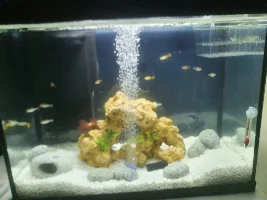
It's a 37g tank that's been running for about 3 years, had this angel for nearly a year. It's in my daughters room (who's not with me 100% of the time) so I sometimes only see it maybe every few days. I found the issue when she came to stay with me and I was doing a water change. So I don't really know how fast the sore appeared. Tank mates are 1 other angel, 4 rainbows of various types (only one I know for sure is a boesemani) , a honey gourami, and an albino loach. I haven't seen any signs of aggression ever. All the other fish look healthy and are acting normal.

pH = 7.3
Ammonia = 0ppm
Nitrite = 0ppm
Nitrate = 10-20ppm (test kit colours are nearly identical so hard to tell exactly)
KH = 4°
GH = 9°

I do ~60% changes weekly. I have one of those Python type siphons so water conditioner is added to the tank as its being refilled. I do a bit of the gravel when I start the syphon but it's not a 100% thorough job. Filter is an Eheim 2226 and gets cleaned every couple of months.

I wouldn't say the mouth is stuck open but due to heavy breathing it doesn't really close fully either. I did see a new behaviour this evening that was worrisome. It shook almost violently like a seizure for a few seconds, then went about its thing like nothing happened. Info I googled was pretty scattered about it but I found more than once it's a thing angels can sometimes do for mating or showing dominance. Both of those things don't seem to fit since the other fish are completely leaving it alone.
 
Can you post a picture of the rainbowfish so I can ID them for you and a pic of the albino loach?

Maybe post a video of the angelfish too if you can.
Upload videos to YouTube, then copy & paste the link here.
If you use a mobile phone to film the fish, hold the phone horizontally (landscape mode) so the footage fills the screen and doesn't have black bars on each side.

---------------------

You can try adding some salt or using a broad spectrum liquid medication (not an antibiotic) that treats bacteria and fungus and see if it helps. I would try salt first and if there's no improvement after a few days with salt, add the broad spectrum medication. You can normally use broad spectrum medications with salt.

Give the tank and filter a clean before treating or adding salt.

SALT
You can add rock salt (often sold as aquarium salt), swimming pool salt, or any non iodised salt (sodium chloride) to the aquarium at the dose rate of 1 heaped tablespoon per 20 litres (5 gallons) of water. If there is no improvement after 48 hours you can double that dose rate so there is 2 heaped tablespoons of salt per 20 litres.

Keep the salt level like this for at least 2 weeks but no longer than 4 weeks otherwise kidney damage can occur. Kidney damage is more likely to occur in fish from soft water (tetras, Corydoras, angelfish, Bettas & gouramis, loaches) that are exposed to high levels of salt for an extended period of time, and is not an issue with livebearers, rainbowfish or other salt tolerant species.

The salt will not affect the beneficial filter bacteria, fish, plants, shrimp or snails.

After you use salt and the fish have recovered, you do a 10% water change each day for a week using only fresh water that has been dechlorinated. Then do a 20% water change each day for a week. Then you can do bigger water changes after that. This dilutes the salt out of the tank slowly so it doesn't harm the fish.

If you do water changes while using salt, you need to treat the new water with salt before adding it to the tank. This will keep the salt level stable in the tank and minimise stress on the fish.

When you first add salt, add the salt to a small bucket of tank water and dissolve the salt. Then slowly pour the salt water into the tank near the filter outlet. Add the salt over a couple of minutes.
 
Hi Colin, thanks for all your help. Unfortunately I didn't get to do the things I wanted to do this evening (like a good clean of filter, glass, and gravel. As soon as I got home I got an emergency call for work. It's now 3AM and I'm just having dinner lol. I did at least get salt in the tank. I'll be sure to preserve the salt concentration when I get to doing a clean.

I suppose good news is behavior and condition hasn't worsened that I can tell. When I came in the room it swam around almost normal for a bit, which may be a positive. I did get a video for you. I'll get to posting the pics of the rest of the fish later.

 
Is there much/ any aeration in the tank?
Try raising the filter outlet a bit and increase aeration if you can and see how the fish responds. If it's still gasping (breathing rapidly at the surface) like that after a few hours of increased aeration it is in bad shape and probably dying.

Do you know if it's poop is normal and coloured or white and stringy?
 
So it's been a week and not much has changed, maybe marginally better? The fish is still gasping but is not at the surface all the time now, maybe only half the time. The wound seems very slightly smaller, tough call. I need to start changing some water, do you think I should keep on the salt or start diluting it?

Sorry should have answered your questions earlier... no direct aeration. I angle the sprayer bar a bit up to get surface agitation. I raised it to get more active aeration and there was no noticeable change in the fish's behavior. Also no noticeable white poops, I have black gravel so I'd suspect it'd stand out.
 
Yes keep the salt in the tank for at least another week.
If the salt level is at 1 heaped tablespoon per 20 litres (5 gallons), increase it to a total of 2 heaped tablespoons of salt per 20 litres.

Is the angelfish eating normally?

Is there any way you can increase aeration a bit more?
 

Most reactions

Back
Top