What's new

Setting up a new tank, any tips for live plants and doing uncycled for the first time?

CarnivorousPlant

New Member
Joined
Mar 16, 2021
Messages
38
Reaction score
20
Points
8
Location
Australia
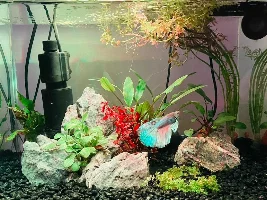
So about two weeks ago my betta that I've had for three years died ☹️. I am planning to get a new betta (ironically i was already planning to get a second betta some time in the next few months, but now that I've lost gerard i guess i dont have to buy a second tank to have another fish.) and I thought I'd take this opportunity to redo my tank setup.

I've always wanted to have live plants, but as I mainly keep goldfish which eat everything that's never been an option. When I set up the tank for the first betta I just used stuff I already had which wasn't in my main goldfish tank - fake plants - but they've gotten kind of old and crusty by now, and also the one plastic plant that my old betta used to sit in was like her favourite special plant, so it feels disrespectful to her fishy memory to immediately give it to another fish. Also it's kinda spikey, which was fine for my original betta as she was a female with shorter fins, but if I get a more typical long finned male betta I think it could be a hazard. TLDR: I want new plants, real ones.

This is my first time properly growing plants (not counting some disasterous attempts in my early days, at least the goldfish got a good snack), and I want something pretty low maintenance so I was thinking of just getting some anubias to start with as I hear they're really easy. The tank is next to a north facing window which I leave uncovered so it gets a lot of sunlight during the day. As anubias are hardy low light plants would I be correct in assuming this will be enough without needing to install any lights? are there any other kinds of plants that would also do well under these conditions? If I'm not trying to grow the plants really huge how regularly do I need to fertilise them? Is it even nessasary to fertilise them at all or will they be ok with just picking up some nutrients from fish waste, assuming there are not a huge amount of plants?

Other info: The tank is 25 litres, heated to ~26°C. With the old betta it was cycled and I had a filter in it and changed the water about 50% every week. Obviously I'm going to clean everything before putting a new fish in just in case (the old one had a tumor which was definitely what killed her, so I'm not hugely concerned about infectious diseases or poor water quality being what killed the old betta and then also killing the new one, but better safe than sorry.). The filter is super old and the plastic is starting to crack so I'm thinking instead of replacing it I will try doing the tank uncycled with 100% weekly water changes as that seems to be the reccomended betta keeping method on this site. Am I correct in saying that 100% weekly can be achieved by doing 50% twice a week? If anyone has any tips for doing uncycled for the first time that would also be really helpful. I'm used to doing stuff with goldfish - cycled tank, massive filter, regular partial water changes - so this will be new territory.

thank you 😁
 
Bettas are equipped by nature to handle the rougher edges of the cycle more easily. They're air breathers, with their inner ear evolved into a breathing apparatus. It's an adaptation to low oxygen in their original warm, often swampy home habitats, and it allowed them to thrive in the era when the cycle wasn't known about and filtration wasn't invented.

It doesn't mean we should ignore the basics, as a cycled tank is always better, but they have been maintained via water changes alone for a very long time. We tend to date the start of the hobby to the 1600s, but that's just the west. Goldfish, Paradise fish and Betta splendens go back farther than that.

So you have room to work. You have to bear in mind the large fins aren't natural, and as they fold, they trap fungus spores and general dirt. So the water should be kept clean. 100% weekly is reasonable, but the fresh water should be the same temperature as that which is being replaced, and treated to remove chloramines or chlorine, depending on what's used where you are.

Anubias can be a good choice. If you get a long finned male, he will probably have been raised with or exposed to antibiotics in his water. The farms do that for growth and to protect the marketable fins, but it gives us fish with minimal gut flora. It takes a few weeks to recover, and since the fish hasn't been permitted to swim (that would also damage the fins, which you can expect to see splitting a bit at first, with use) you'll have an out of shape fish pulling immense fins with terrible drag. Anubias leaves are good resting points for long fins, as they are rubbery/rigid.

If you have gravel, Cryptocorynes are good. That'll give you time to look around and see what stem plants do well in your region (if you add a light with a timer). Crypts are shade plants like Anubias. Beware with the sunlight though, as algae could be a problem. Shade plants grow slowly and don't take a lot of nutrients from the water, so a good front glass scraper will probably be called for.
 
as a cycled tank is always better,
so would you reccomend it would be better to go with a cycled tank after all? This is what I have done with my previous betta and my goldfish so I know how to do it and it would in some ways be easier. I have cycled tanks currently running that I could take seeded filter media from to have it up and running pretty quickly, I just thought uncycled seemed to be what was reccomended in the betta care info post on here so it might be better to do that than buy a whole new filter have that running all the time if it isn't nessasary.

Beware with the sunlight though, as algae could be a problem
I've never had a problem with algae in this tank before in the position that it's in, but would that become a concern if I had plants and was fertilising them?
 
also on the topic of fins - I think it's unlikely I'll get one with the super huge/long fins as I'm not really a fan of the look and a lot of the time I think those fish seem overbred and miserable (which is hypocritical of me as someone who is into fancy goldfish but oh well.). That said, my plan for aquiring a betta is just to go down to my local aquarium store some time this week, look at their fish, and see which one I like best. Most of the bettas available tend to be the long finned males, so I imagine that's what I'll end up getting.
 
I do not believe in cycling with fish, especially for beginners. If you have never done it that way, it doesn't matter how many fishless cycles you have done, you are still a beginner at fish-in.

I wrote 3 of the cycling articles here. Two of them deal with how to save fish when a fish-in cycle goes wild. I have and held and walked a number of member here through a fishless cycle from start to stocking. I refuse to help anybody start a fish in cycle.

It is really simple as far as I cam concerned. No how badly off the rails any fishless cycle goes, not fish will be harmed or killed. The cycle will just take longer. In doing a cycle with fish in, mistakes can and will harm fish.

I did only one cycle with fish in a tank, it was my very first tank 25+ years ago. I consider myself able to do a fish-in cycle safely, but I never do so for the reason above. I am only human and I can make a mistake. Sometimes real life interrupts the best of our plans and if that happens during a fish-in cycle, harm and death may still be the result.

One never needs to cycle a tank if you can replicate nature in its rainfall and siring fed bodies of water, and do a lot of water changing regularly. But in most of nature bacteria etc. take care of the cycling chores. One can also start with a bunch of plants and stock slowly, Plants use ammonium and nitrate and they do not make nitrite. But one of the best advantages of doing a fishless cycle is the ability, most of the time, to fully stock a tank right away. Not doing close to this can turn it back into a fish in cycle.

As always, this is just my opinion and others may not agree.
 
Last edited:
If you have never done it that way, it doesn't matter how many fishless cycles you have done, you are still a beginner at fish-in.
I have done fish in cycle before and I've never had a fish die from it.

Not doing close to this can turn it back into a fish in cycle.
so are you saying that if i try keep the tank uncycled with regular water changes it may start to cycle anyway due to fish waste so its better to just cycle it from the get go?

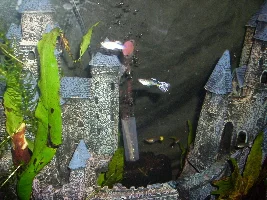
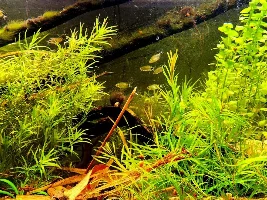
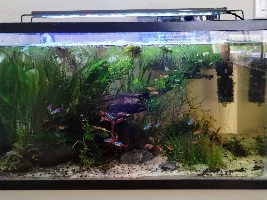
ok context idk if you have read my ofher posts but i decided to go cycled as i aready have a bunch of cycled filter media and thats what ive done in the past so i thought it would be an easier option for me, i have now set up 2 betta tanks.

I am not planning to add more than a single betta to either of these tanks, so stocking density is very low. I have other cycled tanks up and running so the filter media, substrate and decorations i have used for setting up new betta tanks was taken from cycled tanks and will have bacteria in it. This is the same thing I did when i got my first betta in this exact tank a few years ago and the cycle had no adverse affects on her. As the stocking density is so low and I'm putting in so many things with donor bacteria on them (which will remain in the tank by the way i dont intent to remove any of the filter media substrate or decorations and put them back in the tanks they came from) it's barely a cycle, as im not establishing a new bacteria population, im moving an old one to a new location. If anything the amount of bacteria here will probably reduce as some of the stuff is coming from a tank with a much higher stocking density than one singular fish, and this new tank has live plants which will also take up some of the ammonia.
 
Last edited:
That is not a real fish-on cycle described above. One way to accelerate a cycle is by seeding bacteria. This can be obtained from cycled tanks by moving media, decor, substrate or plants. You can also rinse out cycled media in a new tank. You can buy cycled media if you know where to look: https://angelsplus.com/products/active-sponge-filter

One can also buy live bacteria. Only two brands will contain the exact nitrite converters as they are patented. The two brands that do contain them are Dr. Tim's One and Only or Tetra Safe Start or Safe Start+.

One can also use a mix of the above. I have used Dr. Tim's, moved all sorts of things from cycled tanks and squeezed out foam media. To jump start my bio-farm, I use it all.

You should not have a problem re cycling as you describe it. If you are worried at all, do not feed the fish for at least the first day after you put them in. Then test for ammonia twice within about 24-36 hours. If you have no ammonia at all your are in great shape. I think you should see 0s.

They other part of this is not any level of ammonia is dangerous. If you read the ammonia section in the 2nd Rescue article, it explains how to know when you should change water for a given ammonia reading in a specific tank or if if is OK to nothing but monitor. If you know about Total Ammonia and the how in water there is both ammonia NH3 and ammonium NH4 which greatly differ in their potential to do harm.

Because of your seeding and plants you are starting with a decent amount of bacteria and ammonium using plants. Under optimal conditions the ammonia bacteria can double in about 8 hours. Slower are times closer to 10 are more likely in tanks, So, if one is short 1/3 of what they need it is only a matter of hours before they will be there. If the ammonia (NH3) is low, you can wait that out safely.

I am just not in favor of doing fish in cycles. The more one does, the greater the odds are something does go wrong by accident or due to other of life's unexpected challenge. And then the fish pay the price.
 
I'm new-ish to live plants myself and one thing I know for sure is that you'll have better luck in a seasoned tank than in one that is merely "cycled." I have no idea why, but I think it has something to do with a plants ability to bounce back after melting from making the conversion from emersed to submerged. Anubias seem to handle it better so I think that's a good choice. Definitely keep them out of the sun. Typical green algae is easy to remove but if you get black or bba that stuff just will not come off.
 
Definitely keep them out of the sun.
how much sun is too much sun?
I have it next to a window that gets quite a lot of light, i was more worried about there being not enough light as i havent got any artificial lights on the tank, but is it possible that if its right next to a sunny window then that will sctually be too much light for shade plants like anubias and they could get burnt
 
Erm, 13.7 minutes? Honestly I have no idea. Funny thing about light requirements is the recommendations are all over the place depending on the source. Anubias are universally considered "low light," but IME so far grow more quickly with more light. But, not fast enough to avoid getting covered in algae. I guess all you can do is put them in and keep a close eye on them. If they're getting blasted with full sun for more than 4/5+ hours or so I imagine you're going to have trouble. Maybe put them behind a piece of hardscape, or fast growing stems that like that kind of light? I suppose you could also put a frosted background on the side of the tank facing the window to diffuse the light a bit.
 

Most reactions

Back
Top